

The best sourcing agent for China is the one who can verify factories, control samples, protect your payment terms, and hand clean shipment data to your 3PL before inventory leaves China. If you’re comparing a sourcing agent for China right now, judge them by factory access, fee transparency, QC discipline, and logistics fit, with Alibaba screenshots treated as a starting point only.
Sourcing Agent For China Selection Criteria
1. Define product specs, target landed cost, and defect limits.
2. Ask for factory names, business licenses, and export history.
3. Compare fee models in writing.
4. Run a paid sample and inspection.
5. Choose the agent who can connect sourcing, QC, freight, and fulfillment handoff without hiding supplier data.
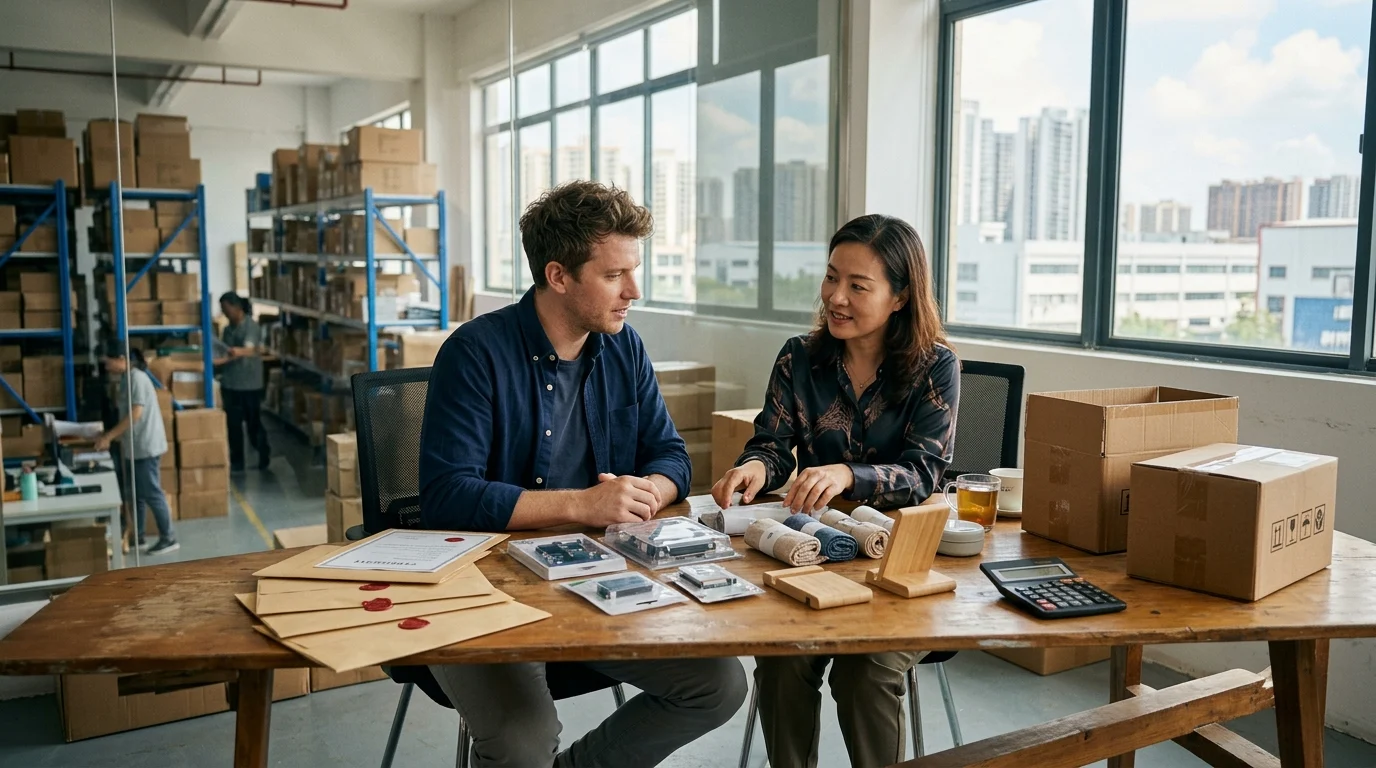
A sourcing agent is useful when your order volume has outgrown casual supplier hunting. For a brand shipping 200+ daily orders, a late container or wrong carton label doesn’t create a small headache. It can break ad campaigns, push Amazon FBA stockouts, and force your support team to answer the same “where is my order?” ticket 300 times.
The best agent starts with your buying math. If your target retail price is $39, your landed cost probably needs to sit near $8 to $12 after product cost, packaging, freight, duties, and fulfillment handling. A good agent works backward from that number. A weak agent sends five random quotes and waits for you to pick the cheapest.
Use this first filter:
| Selection point | Good sign | Bad sign |
|---|---|---|
| Supplier access | Names factories in Shenzhen, Ningbo, Yiwu, Dongguan, or Foshan | Only sends Alibaba links |
| Fee model | States commission, inspection fees, and sample costs upfront | Says “factory pays us” with no detail |
| QC process | Defines sample approval and pre-shipment inspection | “We check everything” |
| Logistics fit | Asks about carton size, SKU count, destination country, and 3PL rules | Only discusses EXW unit price |
The right sourcing agent for China should also admit when they aren’t the fit. If you’re buying one container of a standard commodity, like clear PET jars or generic kraft mailers, a specialized trading company may move faster. If you’re building a custom electronic device with firmware, tooling, and safety testing, you need a product development partner plus independent quality control.
Sourcing Agent For China Models Compared
There are four common China sourcing models: freelance agent, sourcing company, trading company, and full supply chain partner. They overlap, but they behave differently when something goes wrong.
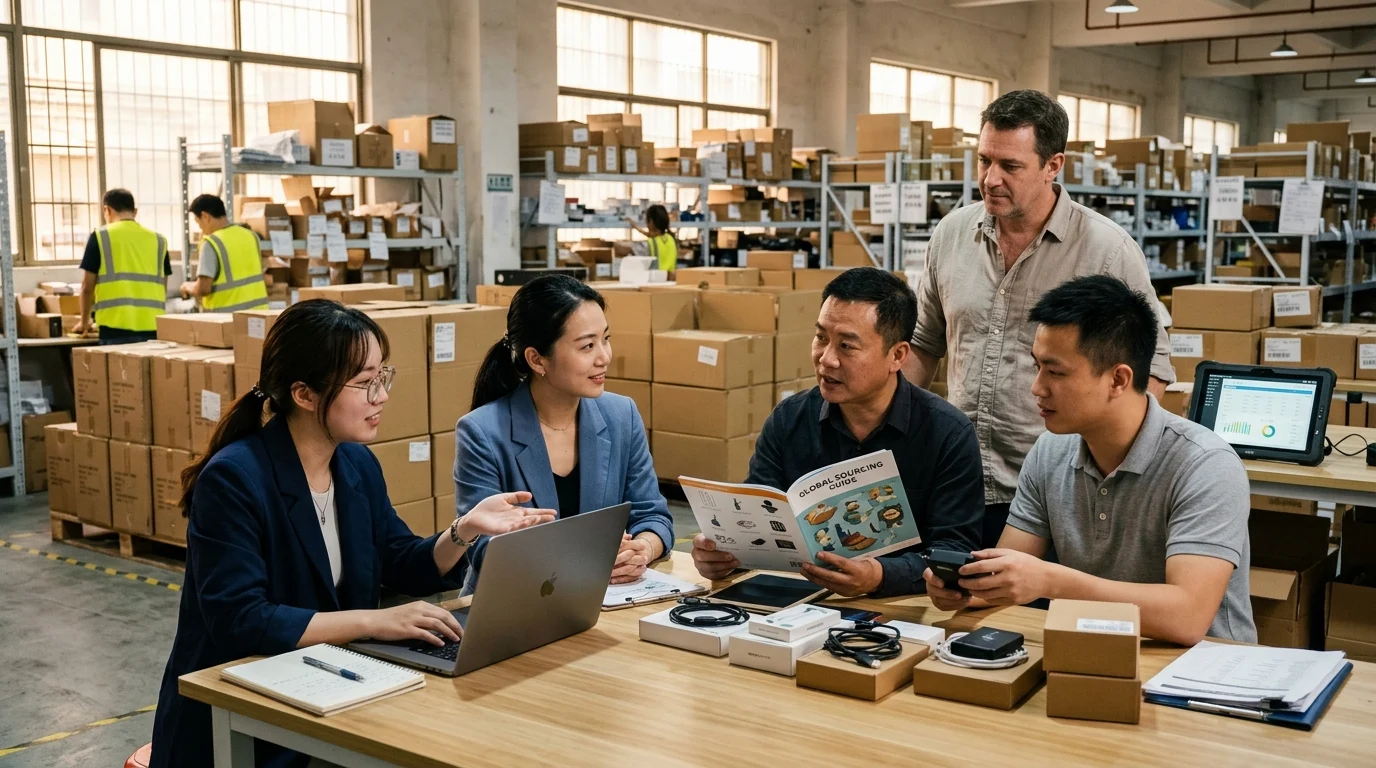
A freelance agent can be cheap and fast. This works for a simple SKU, a small test order, or a buyer who already knows product specs cold. The drawback is capacity. One person can’t inspect a sewing line in Guangzhou, chase carton labels in Ningbo, and manage air freight quotes to Dallas in the same afternoon.
| Model | Best for | Typical drawback |
|---|---|---|
| Freelance agent | Simple products, small trial orders | Limited backup if they get busy |
| Sourcing company | Multi-SKU e-commerce buying | Higher service fees |
| Trading company | Standard catalog goods | Supplier identity may stay hidden |
| Supply chain partner | Scaling brands with repeated orders | Needs more onboarding detail |
A trading company isn’t always bad. In Yiwu categories such as low-cost party supplies, phone accessories, and home storage, trading companies can combine small MOQs from several factories into one shipment. That can beat direct factory buying when you need 40 SKUs and each SKU only sells 20 units per day.
But custom products are different.
If you need a private-label pet travel accessory with 900D Oxford fabric, zinc alloy hardware, Pantone-matched webbing, and branded insert cards, supplier visibility matters. You want to know who cuts fabric, who sews, who packs, and who owns the final inspection. Hidden layers add cost and slow answers.
For scaling e-commerce brands, the strongest setup is usually a sourcing company or supply chain partner tied to fulfillment planning. That’s where a team like FlexFulfills can help connect product sourcing decisions with inventory flow, pick-and-pack needs, and cross-border shipping plans instead of treating sourcing as a separate island.
China Sourcing Agent Supplier Verification
A good agent doesn’t “find a factory” and stop. They prove the factory can make your product at the quality level your customers expect. That proof should include a business license, export records where available, factory photos or video, production line details, and a written quote tied to your actual spec sheet.
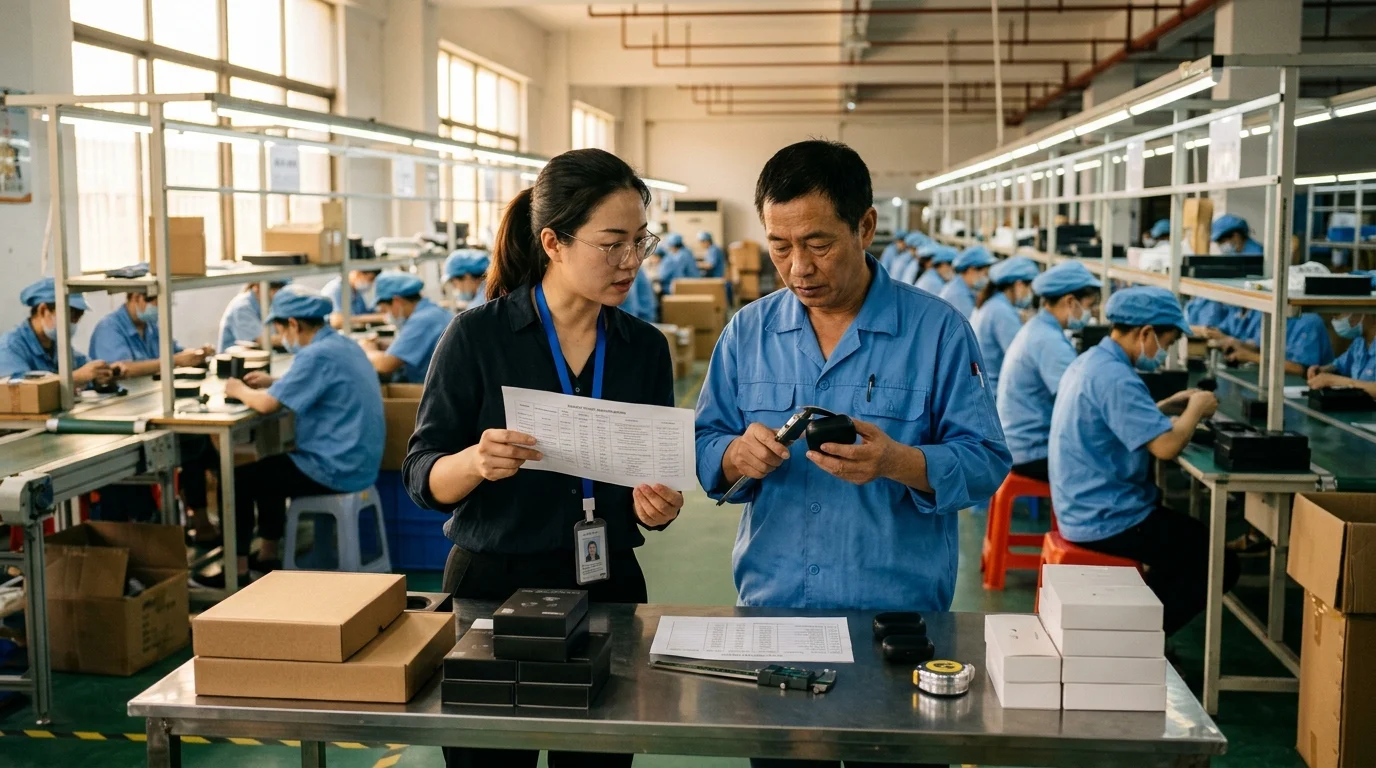
Ask for boring documents. Boring is good.
For example, a stainless steel bottle RFQ should name the steel grade, coating type, lid material, capacity tolerance, carton drop-test requirement, barcode placement, and packaging material. “500 ml bottle, black, logo printed” invites quote games. Factory A quotes 201 stainless steel. Factory B quotes 304 stainless steel. Factory C quotes 304 stainless steel but changes the lid gasket to cut cost. You won’t catch the difference from a pretty sample photo.
Use this supplier check before paying a deposit:
- Business license name matches the quote and bank account.
- Factory address matches the production site, not only a sales office.
- Product category matches the factory’s main work.
- Export experience matches your destination market.
- Sample is made with final materials, final logo method, and final packaging.
- Quote lists Incoterm, MOQ, lead time, payment terms, carton size, and unit weight.
- Agent confirms whether the supplier is a factory, trading company, or subcontracted workshop.
U.S. buyers should also think about import responsibility early. U.S. Customs and Border Protection says the importer of record remains responsible for entry accuracy, duties, taxes, and compliance even when a broker is used. CBP importer guidance is blunt on this point: your agent’s mistake can still become your bill.
This advice doesn’t apply the same way to every product. Apparel, toys, cosmetics, food-contact items, electronics, lithium batteries, medical products, and baby products carry very different testing and labeling risks. A sourcing agent who is excellent at yoga leggings may be the wrong person for Bluetooth speakers with lithium cells.
Sourcing Agent For China Costs And Contracts
Cheap sourcing gets expensive fast when the fee structure is vague. You need to know who is paid by you, who is paid by the supplier, and whether the agent earns a hidden margin on unit price. Hidden margin isn’t always evil, but hidden margin plus hidden supplier identity gives you almost no control.

Common fee models look like this:
| Fee model | Normal range | Best use |
|---|---|---|
| Flat project fee | $300 to $2,000+ | One product search or supplier audit |
| Commission | 3% to 10% of order value | Ongoing sourcing and order management |
| Built-in margin | Varies | Trading company or bundled buying |
| Monthly retainer | $1,000+ | Multi-SKU brand with frequent orders |
The contract should name the product spec, inspection standard, payment milestones, and what happens if the goods fail inspection. A workable payment pattern is 30% deposit and 70% after passed pre-shipment inspection. For a first order with a new factory, avoid 100% upfront unless the order value is tiny enough that you can treat it as market research.
Incoterms matter because they decide who carries cost, risk, and export or import tasks at each point. The International Chamber of Commerce publishes Incoterms 2020 rules, and U.S. Trade.gov explains that each term assigns export and transport responsibilities. In plain English: EXW can look cheap, but it pushes more work to you; FOB is cleaner for ocean freight; DDP may be easy on paper but risky if duties and import compliance aren’t transparent.
For many e-commerce brands, FOB or FCA works better than EXW because the supplier handles export-side steps and you keep more control over international freight. DDP can work for small parcels and test orders. For containerized inventory, ask who is importer of record, what HS code is used, and whether duties are being declared correctly.
A real agent will answer those questions without drama.
Sourcing Agent For China Quality Control
Sampling is where sourcing gets real. The first sample proves whether the supplier understood the product. The second sample proves whether they can repeat it. The production inspection proves whether the goods in cartons match what you approved when everyone was still being polite.
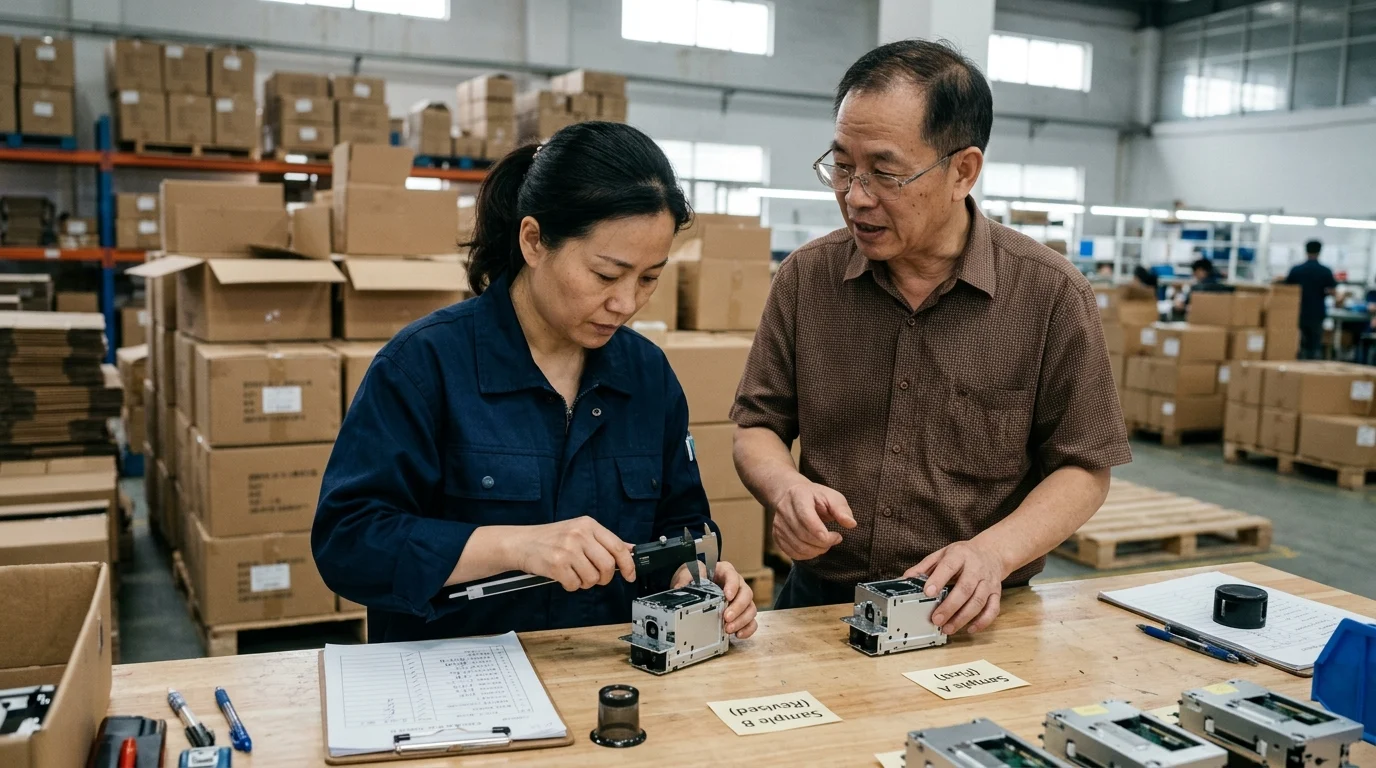
For a scaling store, pre-shipment inspection should happen after at least 80% of goods are packed and before the final balance is paid. That timing gives the inspector enough finished inventory to check, while you still have payment pressure if defects appear. For consumer goods, AQL 2.5 for major defects and AQL 4.0 for minor defects is a common inspection setup, though higher-risk categories need tighter rules.
Don’t outsource judgment entirely. Give the agent a written defect list.
For a private-label backpack, “bad stitching” is too vague. Write: loose thread over 5 mm, zipper jam after three pulls, logo tilted more than 2 mm, webbing color outside approved Pantone range, carton crushed, barcode unreadable, inner polybag missing suffocation warning. That list sounds fussy until a warehouse receives 4,000 units and half the barcodes won’t scan.
A practical QC flow:
1. Golden sample approved and sealed.
2. Final spec sheet signed by buyer, agent, and factory.
3. Inline inspection for custom or high-risk products.
4. Pre-shipment inspection before balance payment.
5. Carton label, SKU, barcode, and packing list check.
6. Final photo or video record before pickup.
This is where sourcing connects to fulfillment. If your warehouse requires carton labels on two sides, master carton weight under 22 kg, scannable FNSKU labels, or SKU-level packing lists, your sourcing agent needs those rules before production starts. FlexFulfills often sees the pain later: cartons arrive, labels are wrong, units must be relabeled by hand, and the “cheap” order burns labor budget.
A sourcing plan should include fulfillment rules from day one. For brands that want one operating rhythm from factory to warehouse, China sourcing and fulfillment planning is the better conversation than supplier search alone.
Sourcing Agent For China Red Flags
The worst sourcing agent doesn’t look bad at first. They reply fast, sound friendly, and send polished photos. The problem appears when you ask for proof.
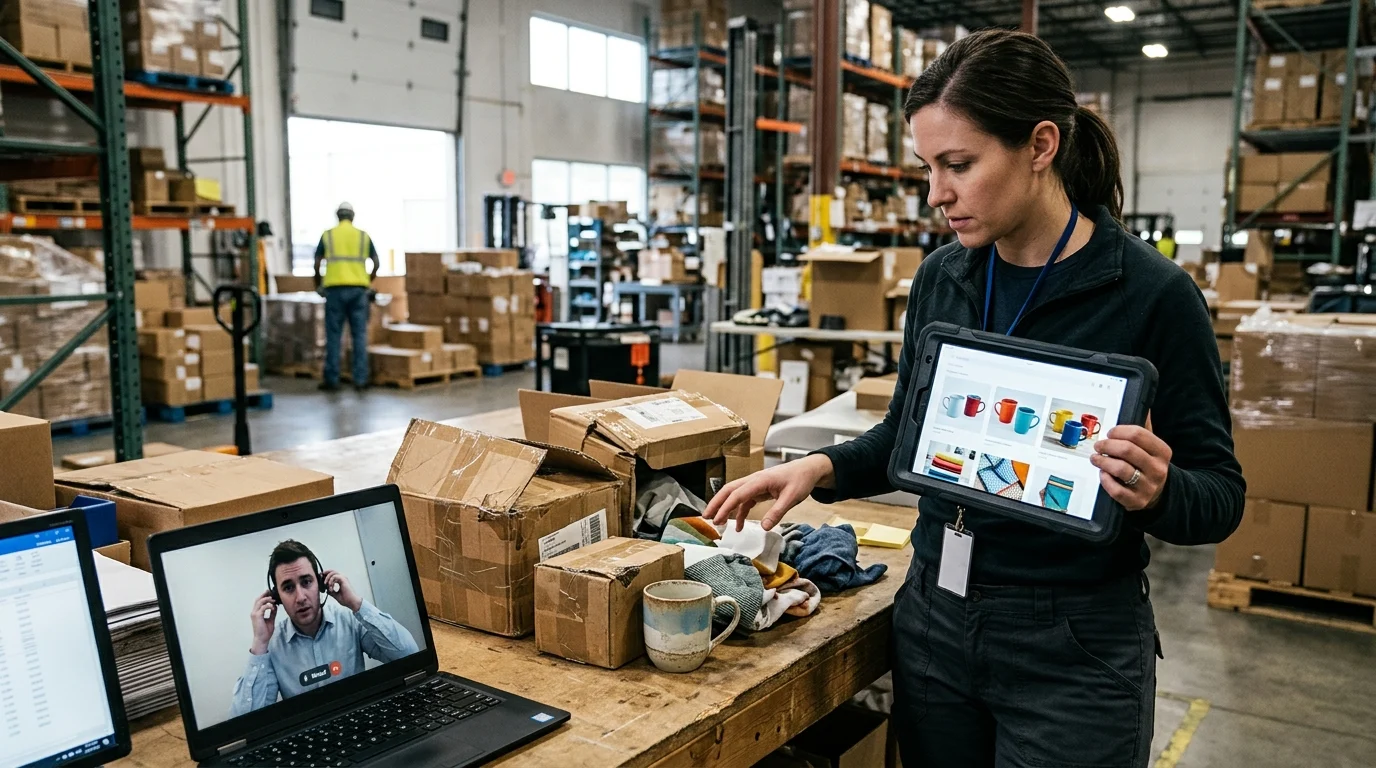
“Don’t worry, we have checked” is not proof. A factory license, inspection report, sample comparison photo, carton dimension sheet, and written defect agreement are proof. If the agent refuses to name the supplier after taking your fee, you should assume you won’t control your supply chain.
Watch for these red flags:
- They won’t explain whether they work for you, the supplier, or both.
- They push full payment before inspection.
- They avoid factory names and bank account checks.
- They quote only EXW prices without landed cost context.
- They treat compliance as your problem after the goods ship.
- They say every category is their specialty.
- They can’t explain how they handle failed inspections.
- They ignore carton labels, SKU rules, and destination warehouse needs.
A better agent asks annoying questions early. What is your acceptable defect rate? Which markets are you shipping to? Do you need REACH, CE, FCC, FDA food-contact, CPSIA, or Prop 65 review? Are you shipping to Amazon FBA, Shopify customers, retail stores, or a 3PL? How many days of inventory do you need before the next production run lands?
Score candidates before you start:
| Question | Pass answer |
|---|---|
| Can I see the supplier name? | Yes, with clear role disclosure |
| Who pays your fee? | Written answer with numbers |
| What happens if inspection fails? | Rework, reinspection, or discount terms |
| Can you support packaging rules? | Yes, with carton and label proof |
| Do you manage freight handoff? | Yes, with packing list and booking data |
Pick the agent who reduces unknowns. That’s the whole job.
FAQ
What does a China agent do?
A China sourcing agent finds suppliers, compares quotes, manages samples, checks production, and helps prepare shipment documents. The best agents also connect product decisions with packaging, freight, customs data, and warehouse receiving rules before inventory leaves China.
How much do agents charge?
Most China sourcing agents charge a flat project fee, a 3% to 10% commission, a built-in product margin, or a monthly retainer. For ongoing e-commerce buying, commission plus clear inspection fees is usually easier to audit.
Is Alibaba enough for sourcing?
Alibaba is useful for early supplier discovery, but it’s rarely enough for scaling brands. You still need factory verification, sample control, payment terms, inspection rules, packaging checks, and landed cost review before placing a real production order.
Should I use FOB or DDP?
FOB usually works better for ocean freight because you can control international shipping and import paperwork. DDP can be convenient for small tests, but ask who is importer of record and how duties are declared before using it for serious inventory.
Can agents handle fulfillment too?
Some sourcing agents can coordinate packing and freight, but fulfillment needs warehouse-level accuracy. If you sell across Shopify, Amazon, TikTok Shop, or retail channels, pair sourcing with a 3PL plan so SKU labels, carton data, and receiving rules match.
Before you hire a sourcing agent for China, send each candidate the same one-page RFQ: product spec, target landed cost, order quantity, destination country, inspection standard, packaging rules, and fulfillment requirements. FlexFulfills can help you turn that RFQ into a sourcing-to-delivery workflow that fits how fast-scaling e-commerce brands actually operate.