
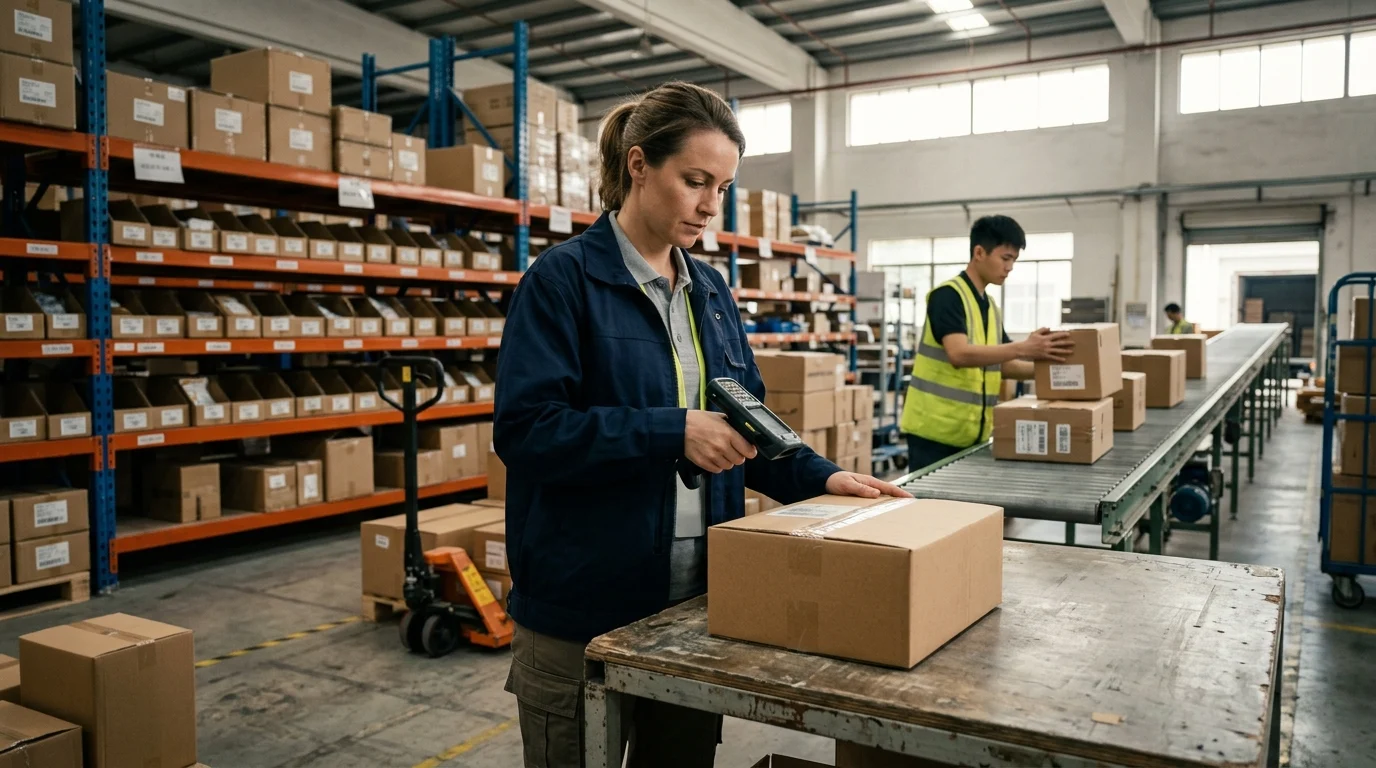
Overseas warehouse outbound is the process of taking a customer order from stored inventory to picked, packed, carrier-scanned, and tracking-synced delivery. For e-commerce brands, the main point is simple: inventory is already near the buyer, so the warehouse can ship locally instead of waiting for every parcel to move cross-border from China.
Outbound Warehouse Process
Overseas warehouse outbound is the workflow for shipping stock that already sits in a foreign warehouse. The normal steps are order import, inventory reservation, picking, QC check, packing, label creation, carrier handoff, tracking sync, and exception handling for address errors, stock gaps, damaged items, or late carrier scans.
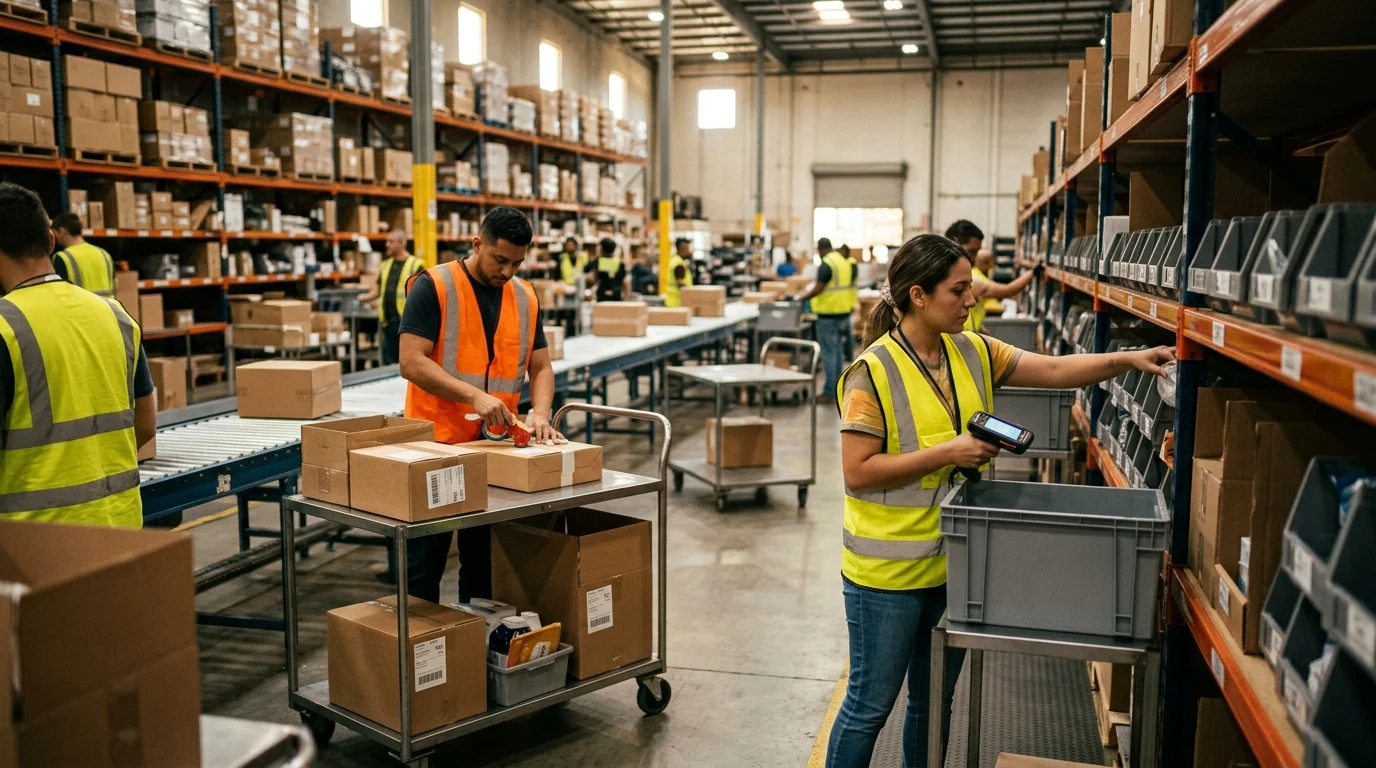
A standard order flow looks like this:
- The order enters the warehouse system from Shopify, TikTok Shop, Amazon, WooCommerce, or an ERP.
- The warehouse management system reserves the right SKU, batch, and quantity.
- A picker scans the bin location and pulls the item.
- QC checks the product, variant, quantity, and packaging rule.
- The packer adds the right box, mailer, insert, label, or branded packaging.
- The shipping label is generated from the selected carrier service.
- The parcel is staged for carrier pickup.
- The first scan and tracking number sync back to the seller platform.
That sounds clean on paper. Real warehouses live in the exceptions.
Apartment number missing. Barcode doesn’t match the SKU master. The black size M hoodie is in the size L bin. A TikTok Shop order needs same-day dispatch, but the carrier pickup closes at 3:00 p.m. One carton arrived with water damage, and nobody should ship from it until QC signs off.
Good outbound operations are less about moving boxes fast and more about catching these small failures before the buyer sees them.
| Outbound step | What can go wrong | What good control looks like |
|---|---|---|
| Order import | Duplicate order, bad address, unpaid order | Platform rules and address validation |
| Inventory reservation | Overselling, wrong batch | Real-time stock sync |
| Picking | Wrong size, color, or bundle | Barcode scan at bin and item level |
| QC | Damaged item ships | Manual inspection and exception photos |
| Packing | Wrong box or missing insert | SKU-level packing SOP |
| Carrier handoff | No first scan | Pickup manifest and scan monitoring |
Inventory Before The Pick
Most outbound problems start before the order arrives.
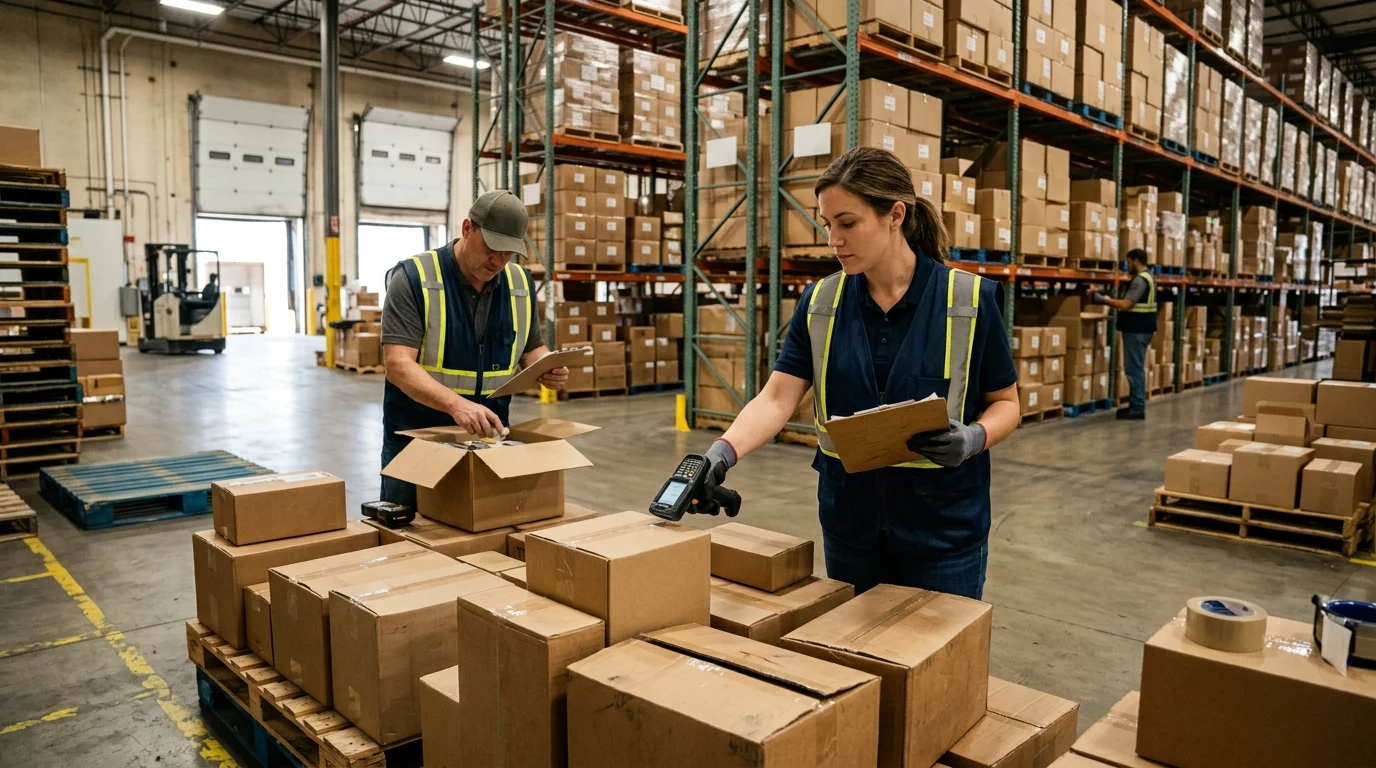
If the warehouse receives mixed cartons with weak labels, outbound speed drops immediately. A picker shouldn’t be opening five cartons to find one blue 12 oz insulated tumbler. The carton should already say SKU, variant, quantity, batch, and destination warehouse location. Boring? Yes. Expensive when skipped? Also yes.
Before stock reaches a U.S. or European warehouse, import details need to be clean too. The World Customs Organization says the Harmonized System is used by more than 200 countries and economies, and over 98% of merchandise in international trade is classified in HS terms. That matters because the wrong HS code, declared value, or product description can delay bulk inventory before the warehouse ever gets a chance to ship it.
For U.S. imports, U.S. Customs and Border Protection explains that imported goods need arrival, authorized release, and duty handling before entry is complete. In plain warehouse terms: don’t promise local outbound until the stock is actually cleared, received, counted, and available.
A clean inbound setup usually includes:
- SKU master with product name, barcode, variant, weight, and dimensions
- Advance shipping notice with carton counts and expected arrival date
- Carton labels that match the warehouse receiving plan
- Packing rules for mailers, boxes, inserts, and branded materials
- Return rules for resale, repair, discard, or supplier claim
- Safety stock target by SKU and destination market
This is where overseas warehousing beats pure dropshipping for stable SKUs. You pay earlier, and you hold inventory. In return, you get more control over dispatch speed, packaging, and customer experience.
Picking, QC, And Packing
Outbound has two clocks: the warehouse cut-off and the carrier pickup.
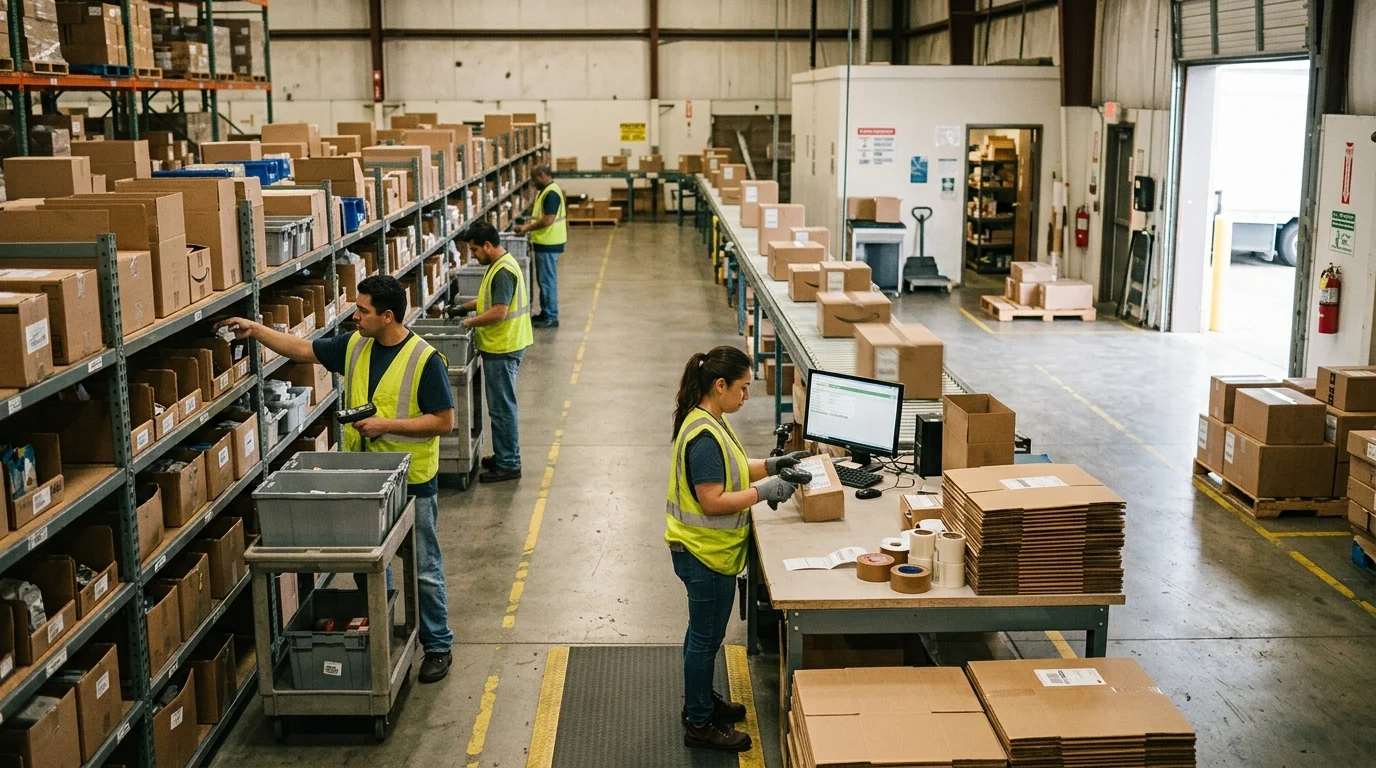
A buyer orders at 11:42 a.m. The warehouse cut-off is 2:00 p.m. UPS pickup is 4:30 p.m. That order can still leave the same day if inventory is available and the warehouse has no exception. A buyer orders at 2:10 p.m.? That parcel may sit until tomorrow. Ten minutes can change the delivery promise.
For fast-scaling DTC brands, picking accuracy matters more than raw speed. A wrong item shipped fast still becomes a refund, a replacement, a support ticket, and sometimes a public review. The fix is scan-based picking and a clear QC rule before packing.
FlexFulfills uses manual product inspection as a brand-protection step, especially for private-label goods, custom packaging, and orders where the buyer experience depends on presentation. A phone case in a plain poly mailer is one workflow. A skincare set with an outer box, insert card, batch check, and no crushed corners is another.
Packing rules should be specific. Not “use protective packaging.” Say this instead:
- Single T-shirt: recyclable poly mailer, size 10 x 13 in, branded sticker
- Glass bottle: corrugated box, pulp insert, leak check, orientation label
- Bundle order: scan all bundle components, add printed insert, seal after QC photo
- Gift order: remove supplier invoice, use brand tissue, add message card if provided
The warehouse team shouldn’t guess. Guessing is where margin goes to die.
Labels, Carriers, Tracking
The outbound label decides how the parcel enters the carrier network. For U.S. domestic delivery, a warehouse may use USPS Ground Advantage, UPS Ground, FedEx Ground Economy, DHL eCommerce, or a regional carrier. For Europe, the carrier mix may include Royal Mail, DPD, Evri, DHL Paket, Colissimo, or local postal handoff depending on the country.
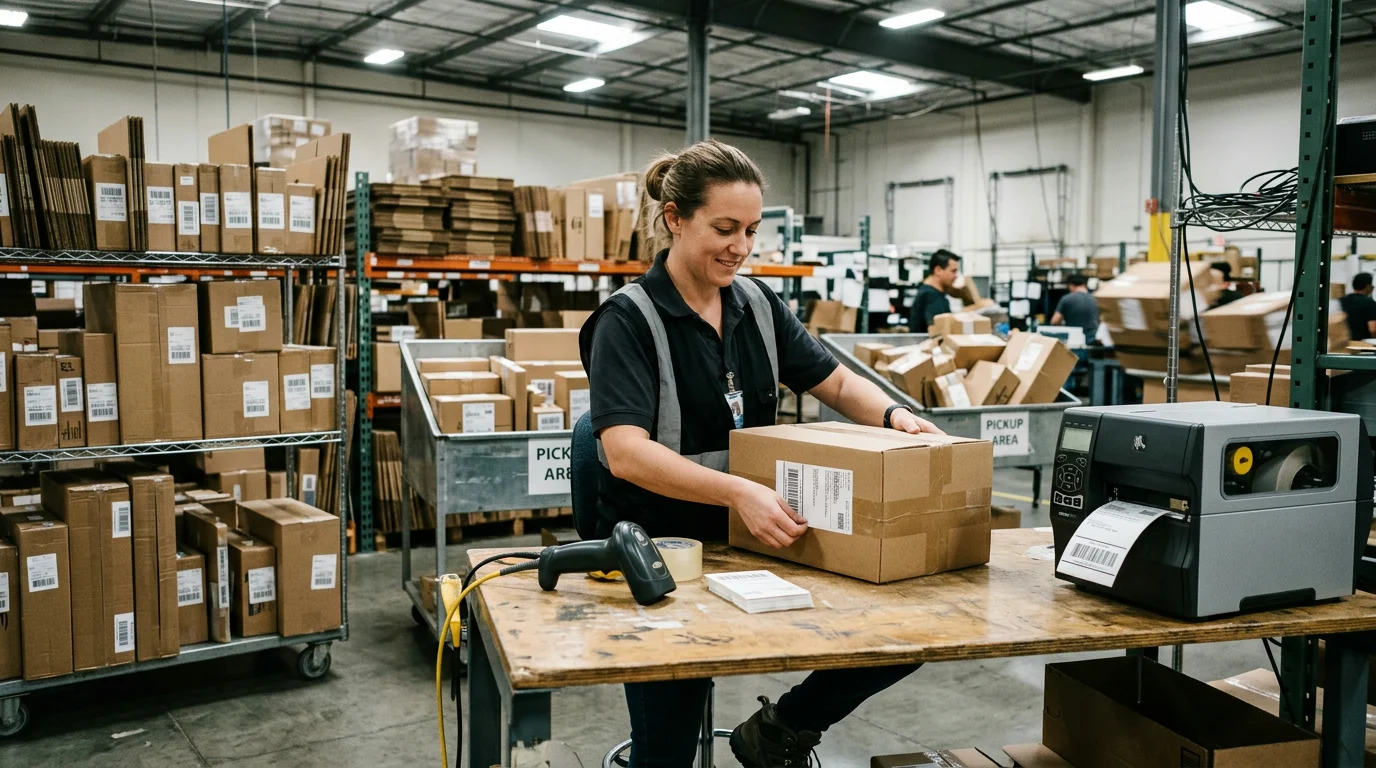
The right carrier depends on weight, destination zone, delivery promise, and claim risk. DHL Express works better for urgent replenishment or high-value direct shipments from China, but it usually isn’t the cheapest answer for routine domestic delivery from an overseas warehouse. If inventory isn’t already positioned near the buyer, compare the warehouse plan with DHL Express shipping from China to the USA so you don’t overpay for speed you could have planned earlier.
Tracking sync is the next failure point. A seller sees “fulfilled” in Shopify. The buyer sees “label created.” The carrier hasn’t scanned it yet. Support gets the message nobody wants: “Where is my order?”
That first carrier scan matters because buyers trust movement, not promises. When parcels use cross-border or hybrid carrier routes, status wording can be confusing, so support teams often need a buyer-facing reference for tracking package YunExpress updates, especially when the parcel moves through line-haul, customs, local handoff, and final delivery scans.
A useful tracking setup should send:
- Tracking number
- Carrier name
- Order number
- Ship date
- First scan status
- Delivery exception status
- Delivered status
Don’t hide exceptions inside the warehouse portal. Push them where the seller team works.
Costs And Outbound KPIs
Overseas warehouse outbound is faster because inventory is closer to the buyer. It also ties up cash earlier. That tradeoff is fine for a SKU selling 100 units per day. It’s painful for a seasonal SKU selling eight units per week with 14 color variants.
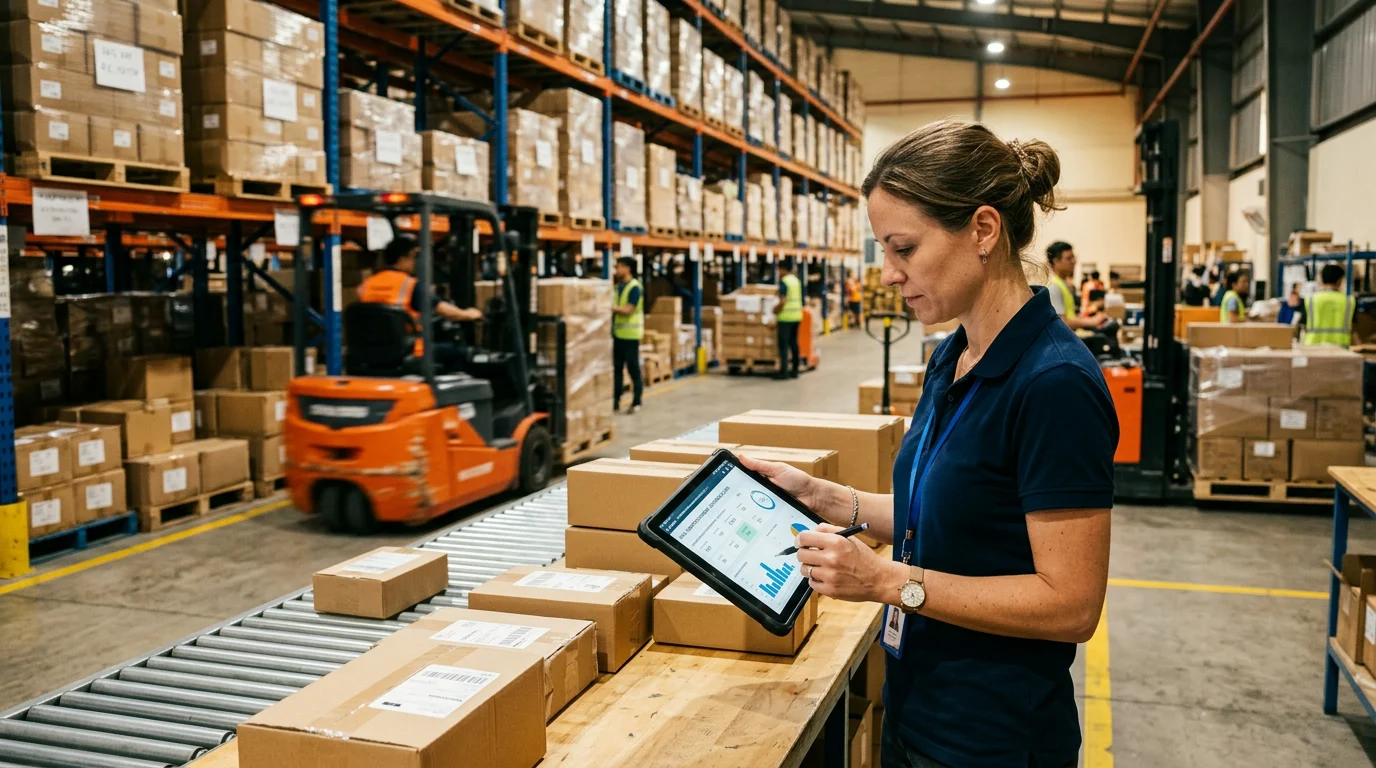
Outbound cost usually comes from several lines:
| Cost line | What it covers | Watch closely when |
|---|---|---|
| Receiving | Counting, scanning, putaway | Cartons arrive mixed or unlabeled |
| Storage | Bin, shelf, pallet, or cubic space | Inventory turns slowly |
| Pick and pack | Labor per order or per item | Bundles and multi-line orders rise |
| Packaging | Mailer, carton, insert, tape, label | Branded materials vary by SKU |
| Postage | Carrier label | Zones, weight, and DIM weight increase |
| Returns | Inspection, restock, disposal | Fashion, electronics, and beauty returns grow |
The KPI that matters first is same-day outbound rate. If the warehouse promises same-day by 2:00 p.m., measure the percentage of eligible orders that actually ship same day. Don’t average it with late orders, preorders, or bad-address orders. That hides the truth.
Other useful metrics:
- Pick accuracy rate
- First scan within 24 hours
- Cost per shipped order
- Orders shipped per labor hour
- Stockout rate by SKU
- Return-to-stock cycle time
- Delivery exception rate by carrier
Overseas warehouse outbound works best when the cost per order falls as volume rises. If your demand is still uneven, keep best sellers in the overseas warehouse and ship slower movers from China. Brands comparing both paths can use a fast shipping china to usa supplier for SKUs that don’t yet justify bulk stocking in a U.S. warehouse.
When Warehousing Makes Sense
Use an overseas warehouse when demand is repeatable.
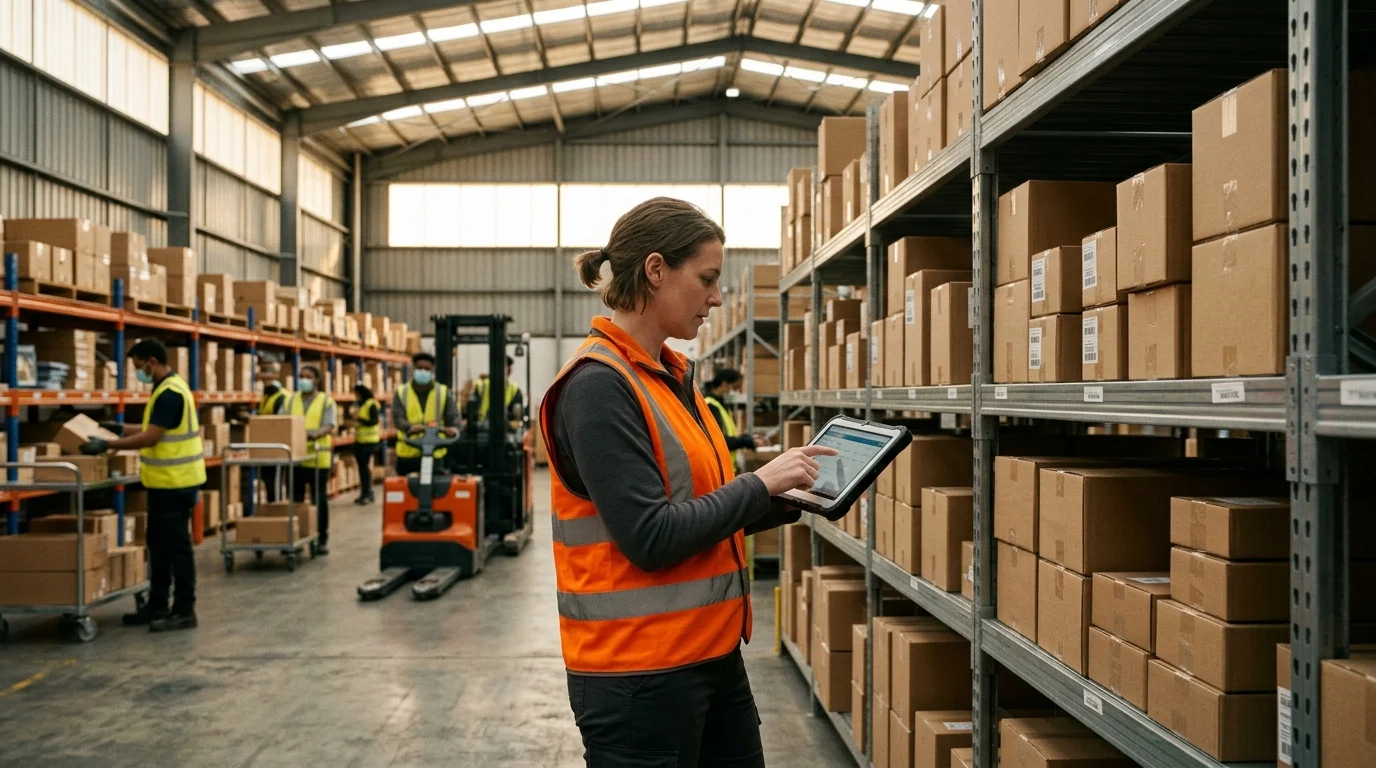
A practical rule: if one SKU sells at least 50 to 100 units per month in the same destination market, it may be worth modeling local stock. If the SKU is bulky, fragile, branded, or refund-sensitive, the case gets stronger. A $9 accessory with 30 variants may not deserve local inventory. A $79 pet grooming kit with steady U.S. demand probably does.
This model fits:
- Shopify brands with stable hero SKUs
- TikTok Shop sellers hitting daily order spikes
- Private-label brands that need custom packaging and QC
- Subscription or replenishment products
- Products where delivery speed affects ad performance and reviews
- Brands that want returns handled inside the buyer’s region
It doesn’t fit every case.
Avoid overseas warehousing if you’re still testing product-market fit, changing suppliers every month, or selling trend products that may die before the second bulk shipment lands. Also be careful with high-variant catalogs. Ten sizes times eight colors times four regions becomes inventory math fast (and bad math gets expensive).
The strongest setup is usually mixed: local warehouse stock for proven winners, China fulfillment for long-tail SKUs, and express shipping only when the margin or customer situation justifies it.
FAQ
What is warehouse outbound?
Warehouse outbound is the process of releasing an order from stored inventory, picking the item, packing it, creating the shipping label, and handing the parcel to a carrier.
How long does outbound take?
Most healthy warehouses ship eligible orders same day or next business day. The exact time depends on order cut-off, stock availability, QC rules, and carrier pickup schedule.
Is outbound the same as delivery?
No. Outbound ends when the warehouse hands the parcel to the carrier and tracking begins. Delivery is the carrier’s movement from pickup to the buyer’s address.
Who handles outbound mistakes?
The 3PL usually owns pick, pack, and warehouse handling mistakes. Sellers usually own bad product data, wrong addresses, unclear packing rules, and inventory planning gaps.
Before you move stock, build a one-page outbound spec: SKU list, barcode rules, packing photos, carrier choices, cut-off time, exception owner, and return disposition. FlexFulfills connects sourcing, QC, China/US/Europe warehousing, custom packaging, fulfillment, and tracking sync, so use that spec as your working checklist before choosing where each SKU should ship from.