
Most ecommerce warehousing problems don’t show up in the sales pitch. They show up three weeks later — as a refund request, a chargeback, or ad spend burned on orders that never shipped. FlexFulfills runs warehouses on three continents that hold your stock as physically counted units, not catalog listings. Orders dispatch within 24 hours and reach US and EU customers in 5–10 days, with tracking that scans from the first mile.

If you’ve been running a store for more than a season, at least one of these has happened to you:
You paid for express shipping, then watched orders sit for three weeks before the first real scan.
The dashboard showed 100 units. You ran ads, got orders — and then got cancellations marked “out of stock.”
A label was created, nothing was ever scanned, and you lost the payment dispute because you couldn’t prove shipment.
Factories closed for weeks, orders kept coming in, and there was no way to just “pause” a live store.
None of these are shipping problems. They’re warehousing problems — the goods were never where the dashboard said they were. That’s the part we fixed first.
One inventory pool, three continents. We store your goods where your customers are, so delivery starts local instead of crossing an ocean one parcel at a time. This page covers storage and inventory control; for the full pick-pack-ship picture, see our ecommerce order fulfillment service.
Where your supply chain gets checked before it gets shipped.
Stock positioned on both coasts, near your actual demand.
European orders clear locally instead of one customs event per parcel.
A lot of what gets sold as an “overseas warehouse” is actually a catalog: a stock number copied from someone else’s spreadsheet, for goods nobody you can audit has ever counted. It looks fine until you spend on ads — then the orders arrive and the stock doesn’t.
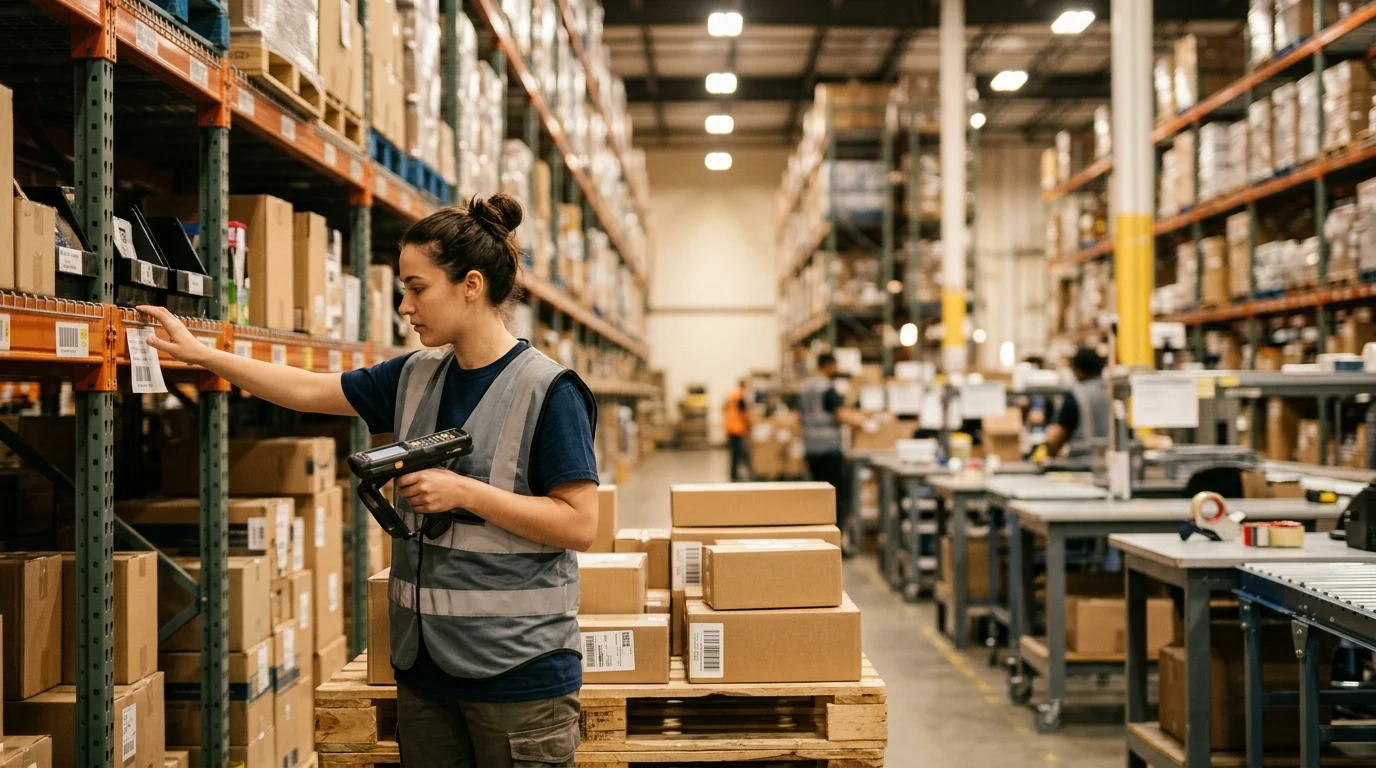
Our model is simpler and more boring: your goods physically sit in racks under your SKUs, counted and scanned at inbound. The number in your dashboard is the number on the shelf. When it says 100 units, 100 units ship.
| What you’re comparing | Catalog-style “stock” | FlexFulfills overseas warehouse |
|---|---|---|
| Where the number comes from | A supplier list someone else controls | A physical count of your units, scanned at inbound |
| When orders spike | Cancellations marked “out of stock” | Stock is already allocated to you — it ships |
| Who the goods belong to | Unclear; often nobody you can verify | You — stored under your own SKUs |
| When stock runs low | You find out from angry customers | Live counts feed reorder alerts before you sell out |
| Proof you can check | None | Inbound scan records + free SKU-level tracking |
Sellers have learned to distrust shipping promises, and honestly, they should. So here is exactly what ecommerce warehousing with FlexFulfills commits to — and how you can verify each line yourself.
| Commitment | Number | How you verify it |
|---|---|---|
| Order processing from local stock | Within 24 hours | Timestamp from order sync to label print, visible per order |
| Delivery to US & EU customers | 5–10 days | Carrier tracking on every parcel — check any order, any week |
| Countries served | 50+ | Local tracking in each destination market |
| Quality control before storage | 100% manual inspection | Inspected to your written spec before goods enter racks |
| Tracking sync to your store | Automatic | Numbers pushed to Shopify, TikTok Shop and other platforms at label print |
Why the first mile matters: the parcel and the label are in the same building, so a tracking number gets its first physical scan the same day it leaves the shelf. That is what makes your tracking credible in a payment dispute — a number that scans, not a number that stalls.

Holding overseas stock is only expensive when you hold the wrong amount. Our in-house system models demand per SKU — sales velocity, lead times, seasonality — and tells you what to place in which warehouse, how much, and when to reorder.
For larger brands, the same models plug into full supply-chain planning — see how we work with enterprise ecommerce brands.
Single-warehouse setups fail all at once: one policy change, one port delay, one holiday, and every order stops. A three-continent network fails gracefully — stock moves, another location picks up dispatch, and your customers mostly never notice.
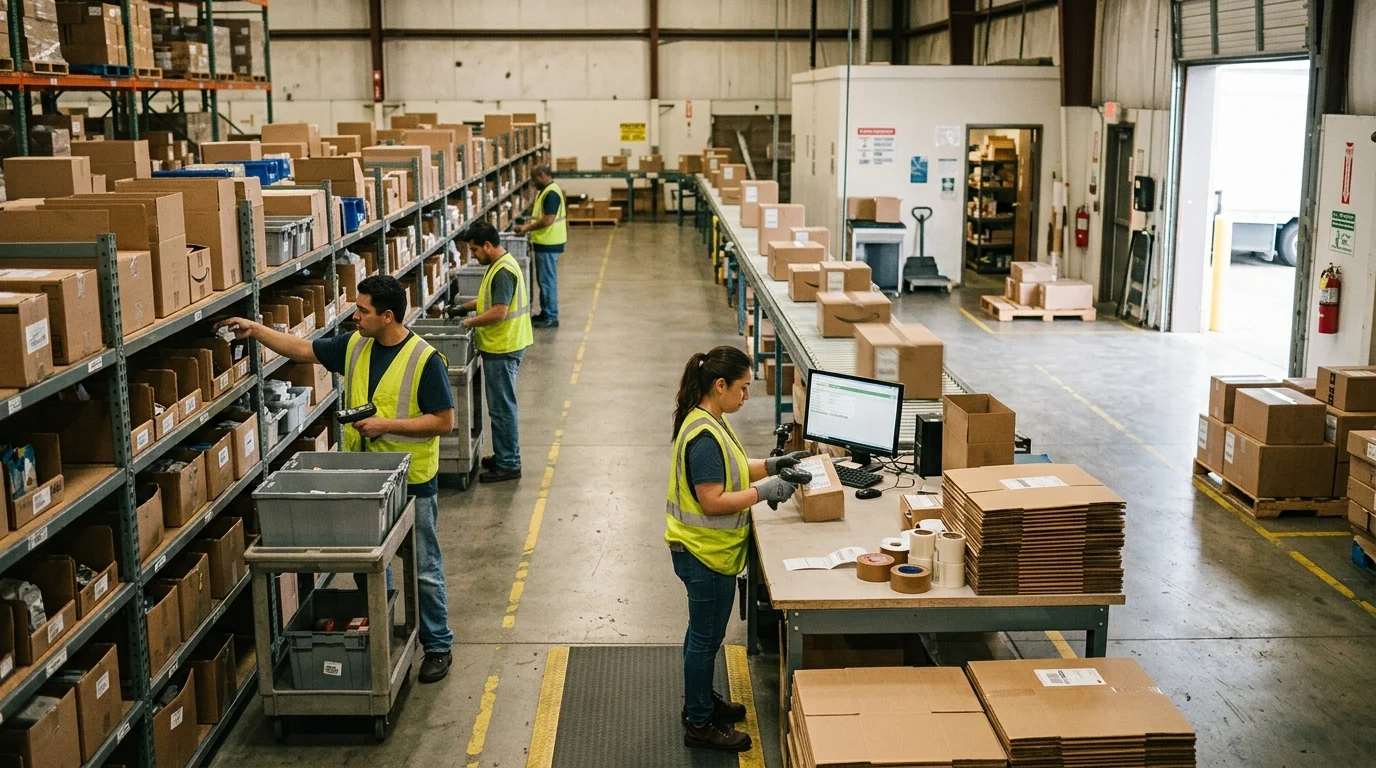
Inbound is everything that happens between your goods arriving at the warehouse and becoming sellable stock: unloading, counting, 100% manual quality inspection against your spec, and scanning each unit into your SKU records. From that point your dashboard reflects a physical count, and any discrepancy is flagged to you at receiving — not discovered by a customer later. Outbound works the same way in reverse: pick, pack, label, and a first-mile scan the same day the parcel leaves the shelf.
Orders from stock held in our local warehouses are processed within 24 hours, and US and EU customers typically receive parcels in 5–10 days. Tracking numbers sync automatically to Shopify, TikTok Shop and other platforms as soon as labels print.
Because they come from our own racks, not a third-party catalog. Every unit is scanned at inbound, stored under your SKUs with free SKU-level tracking, and counted out again at dispatch. You can reconcile inbound records, live counts and shipped orders at any time — the three numbers have to agree.
No. There are no MOQ requirements — sellers testing products store a few dozen units, established brands store containers. Qualified brands can also access net-60 / net-90 payment terms, so warehousing doesn’t tie up the cash you need for inventory and ads.
Stock positioned in your US and EU warehouses keeps shipping while China-side operations pause, and multi-warehouse coordination lets us move inventory when a location is disrupted — the fastest full transfer we’ve run was completed in 72 hours. Before peak seasons we allocate extra labor and carrier capacity in advance.
Tell us your SKUs, monthly volume and current delivery times, and we’ll map out which warehouses your inventory belongs in. A dedicated account manager replies in under an hour during business hours, and every quote or form submission gets a full reply within 24 hours.
Prefer the full picture first? Browse all FlexFulfills services.