
Most quality problems are discovered by the person you least want to find them: your customer. FlexFulfills flips that order. We run pre-shipment inspection in China at the factory, then put every single unit through 100% manual quality control before it leaves our warehouse — function, appearance, quantity, labels, and a barcode match against the order line, with photo evidence filed for every shipment.
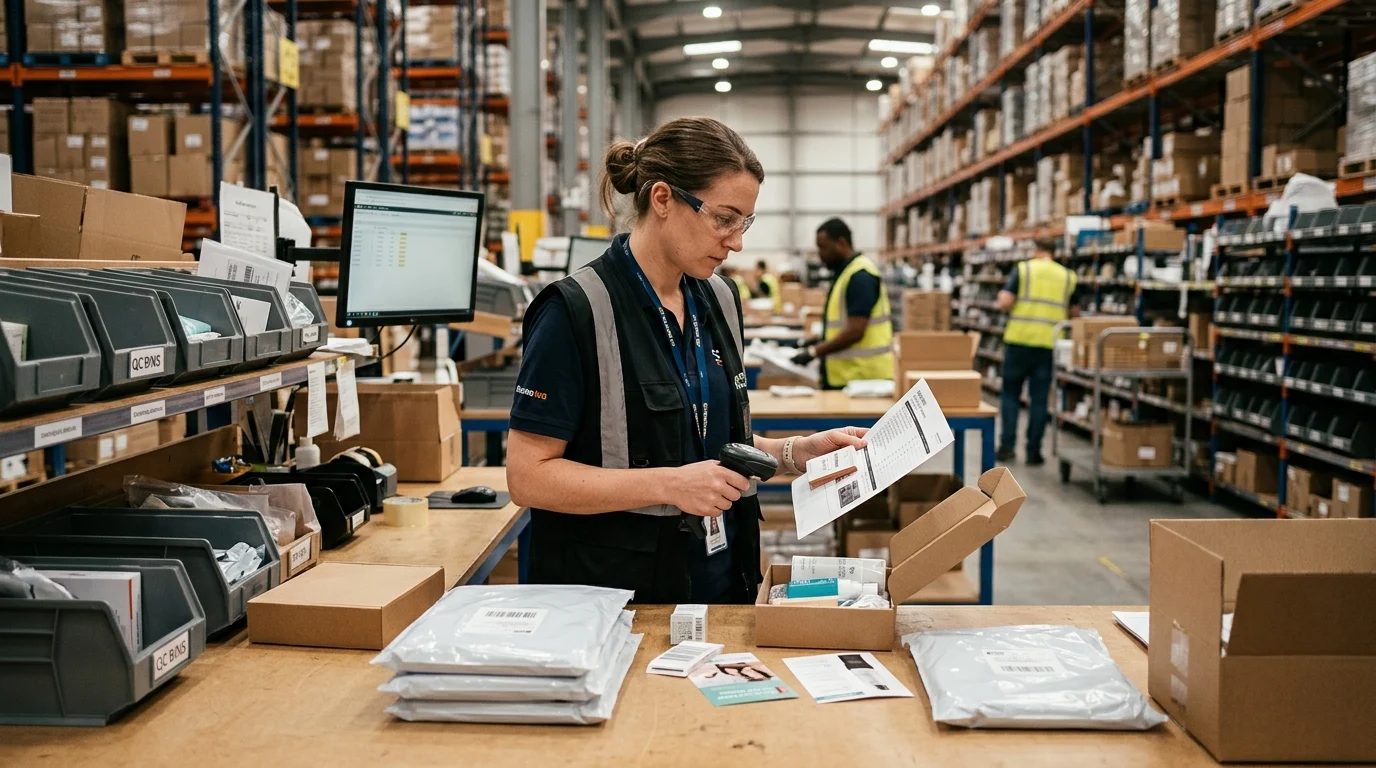
If you sell products made in China and nobody checks them before they ship, you already know these stories. We hear versions of them in almost every intake call.
You sold the black one. Your supplier shipped the blue one — and kept shipping it, because nobody between the shelf and the mailer ever compared the unit to the order. You found out from a one-star review.
Scratched casings, crushed retail boxes, items that had obviously been handled before. The ad spend that won that customer is gone, and so is the customer.
Your customer sent photos. You forwarded them. The claim went nowhere — because nobody could prove what condition the unit was in when it left the warehouse.
Every unchecked parcel is a small bet against your store. Lose enough of them and it stops being a product problem: dispute rates climb, and payment processors start watching your account. That is why quality control at FlexFulfills is a mechanism, not a slogan. Here is exactly how it works.
Materials, components and first-off units checked while the line is still running — when the factory can still correct course.
Finished goods verified against your approved sample before anything leaves the factory floor.
Every unit inspected by hand at our warehouse, on every order — the step almost nobody else does.
The cheapest place to fix a defect is inside the factory, before it gets packed into an export carton. That is where our QC team starts.
We do not wait for finished goods. During production inspection means checking materials, components and first-off units while the line is running. Issues get raised with the factory the same day, in the same language, by people who actually visit the floor — so problems are corrected on the line instead of discovered in your reviews.
Before goods leave the factory, finished units are verified against your approved reference sample: workmanship, dimensions, colors, retail packaging and carton labeling. Nothing gets booked for transport until it matches what you signed off.
Factory QC runs alongside our China sourcing agent service — the same team that negotiates your factory-direct pricing audits the production it negotiated. That pairing is how one client cut sourcing costs 18% in 90 days without trading down on quality.
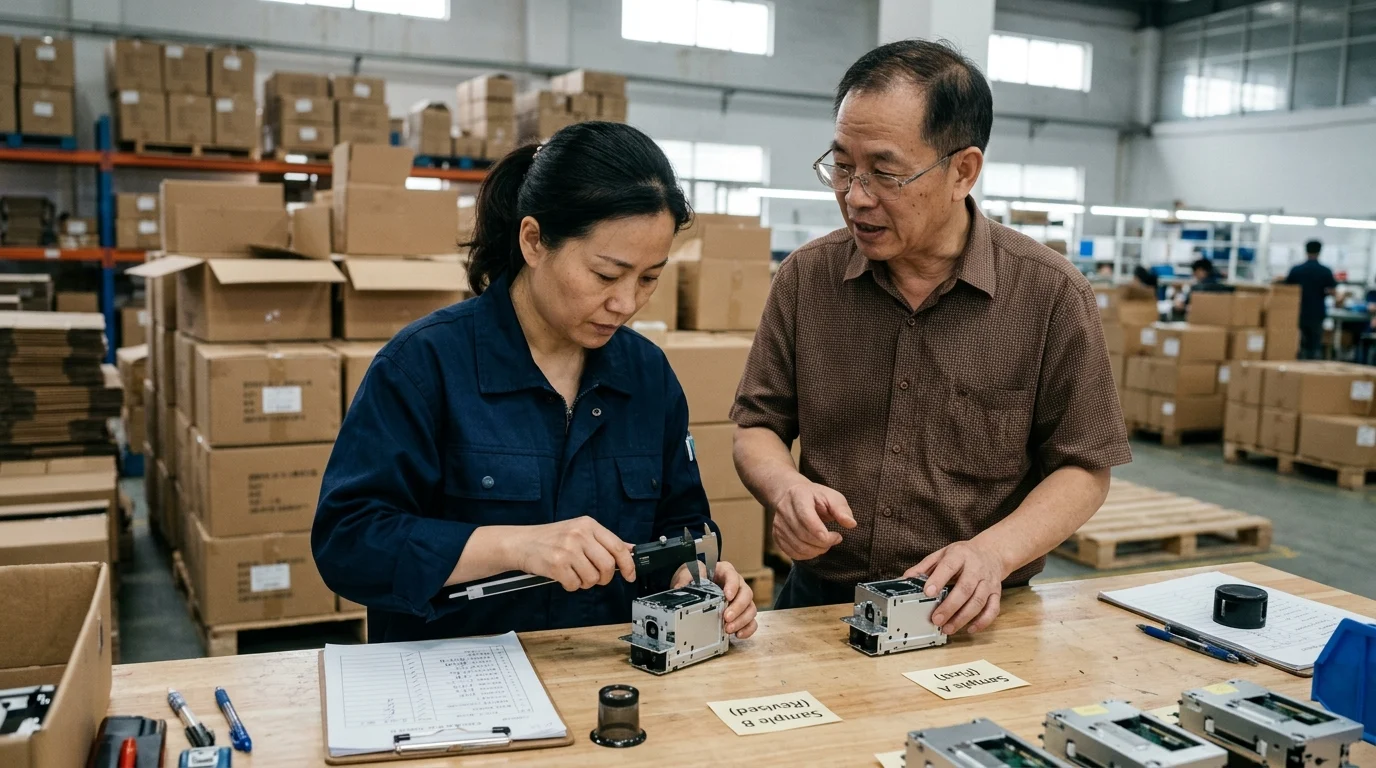
Factory QC catches production problems. It cannot catch what happens after: transit knocks, picking mistakes, a mislabeled poly bag. So every unit that leaves our warehouse crosses an inspection bench first — picked, checked by hand, photographed, then packed.
Not a sample. Not a spot check. Every unit, on every order, whether you ship three parcels a day or three thousand. It is the same 100% manual quality control standard that runs through every service we run — and it adds no extra lead time, because inspection is a station inside the pick-and-pack flow. Orders are synced, picked, inspected, packed and ready within 24 hours.
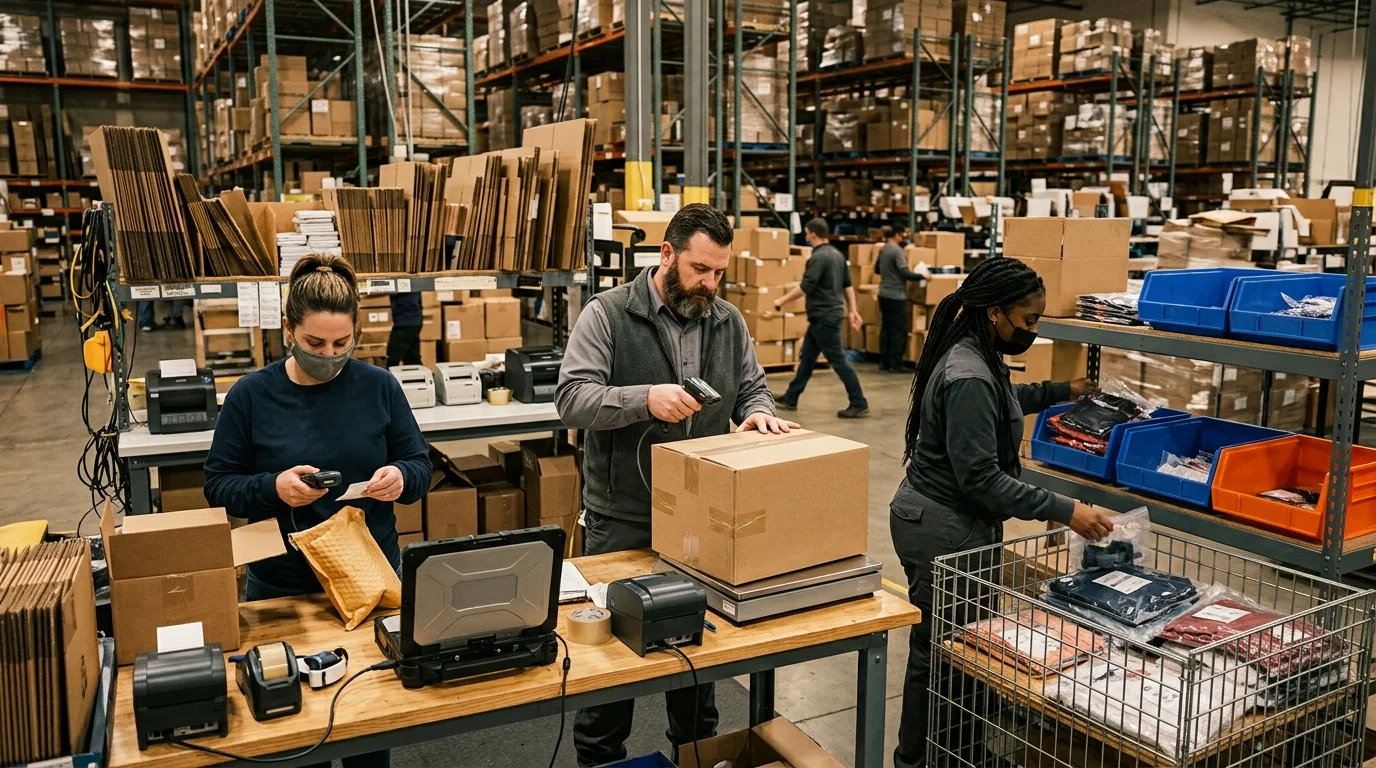
Every order runs the same pre-shipment inspection checklist. Six checks, in this order:
Scratches, stains, seams, print quality — compared against your approved reference sample, not against “looks fine.”
If it switches on, we switch it on. Moving parts get moved, zippers get zipped, seals get pressed.
Every cable, accessory, manual and insert accounted for. Partial kits do not ship.
SKU label, shipping label and barcode all scannable and matching — in the destination language where your listing requires it.
Retail box, protective liner, and branded inserts seated the way your spec says. Unboxing is part of the product.
The picked unit’s barcode is scanned against the order line before packing. A mismatch blocks the parcel from moving on — wrong-item shipments become a system failure, not a daily risk.
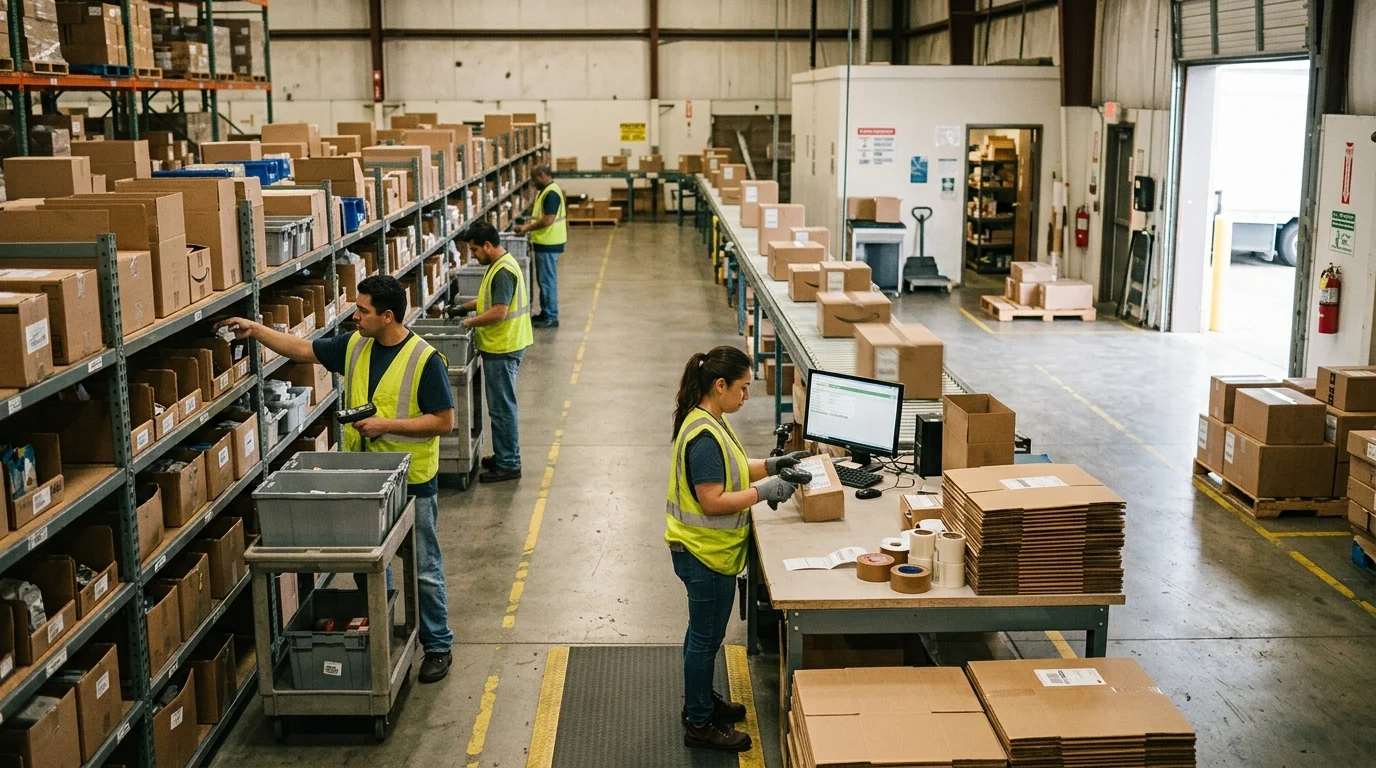
Every inspection produces a photo record tied to the order number. When a customer claims an item arrived damaged or wrong, you are not arguing from memory — the outbound condition was documented before the dispute existed.
Those records feed directly into our returns management and compensation process: claims get settled on evidence, disputes stay short, and your payment-gateway standing stays clean. Your dedicated account manager handles it with the file already open.
Most third-party QC in China is a final random inspection: a statistical sample (AQL) pulled from a finished lot. That is a legitimate standard — for bulk B2B lots headed to one buyer. It was never designed for dropshipping, where every parcel goes to a different end customer and any single bad unit becomes a one-star review.
| Final random inspection (AQL) | FlexFulfills 100% inspection | |
|---|---|---|
| Coverage | A statistical sample of the lot | Every unit, checked by hand |
| Defective units | Estimates the lot’s defect rate; individual bad units can still ship | Pulled at the bench — defective units never ship |
| Wrong-item errors | Out of scope — it inspects lots, not orders | Barcode match on every order line blocks mis-ships |
| Evidence | One report per lot | Photo record per order, on file for disputes |
| Built for | Bulk shipments to a single buyer | Dropshipping and DTC orders to end customers |
Missing CE marks, labels in the wrong language, an ingredient list that does not meet destination rules, a design that trips someone else’s trademark — these problems surface at customs or after a marketplace complaint, exactly when they are most expensive to fix. They belong in the same inspection workflow as everything above.
Compliance, labeling and IP pre-checks are scoped case by case, by product category and destination market. Tell your account manager what you sell and where you sell it, and we will map what your products need before your next production run.
Quality control and brand experience are the same discipline: the bench that catches defects is also the bench that executes your custom packaging to spec. See how a 45-day brand upgrade lifted average order value by 22%.
Per order, automatically. Your store — Shopify, TikTok Shop and other platforms — syncs orders to our system. Each unit is picked, barcode-matched against the order line, manually inspected on the checklist above, photographed and packed, and the tracking number syncs back to your platform as soon as the label prints. There is no minimum order quantity: the process is identical whether it is your first order or your ten-thousandth.
For a container going to one wholesale buyer, often yes — AQL sampling tells you the lot’s defect rate. For dropshipping it answers the wrong question. Sampling can tell you “2% of this lot is defective”; it cannot tell you which parcels those units are in — your customers find that out for you. 100% inspection removes the guesswork by checking each unit before it ships.
The unit is pulled and photographed, and the parcel is held. Your dedicated account manager contacts you with the evidence and the options: swap in a good unit from your stock, send the defective piece back to the factory, or hold it for your decision. What never happens: the defective unit quietly shipping anyway.
Both, when we source the product for you. During-production inspection catches material and workmanship issues while the line can still correct them; end-of-production checks verify finished goods against your approved sample; and 100% outbound inspection covers every unit at dispatch. If you only fulfill with us, your inventory still gets the full outbound inspection on every order.
No. Inspection is a station inside the pick-and-pack flow, not a separate queue. Orders are ready within 24 hours of syncing, and US and EU customers typically receive them in 5–10 days.
Your dedicated account manager replies in under an hour during business hours. Quote and form submissions get a full reply within 24 hours.
Tell us what you sell and where it ships. We will come back with a fulfillment plan that has quality control built in — not bolted on.