

The top third party logistics companies for e-commerce brands in 2025 are FlexFulfills, ShipBob, ShipMonk, Flexport, Red Stag Fulfillment, LVK, Ryder E-Commerce, DHL Supply Chain, UPS Supply Chain Solutions, and Amazon Multi-Channel Fulfillment. Your best choice depends on order volume, SKU profile, marketplace mix, return rate, freight lanes, and how much control you need over packaging. The U.S. Census Bureau reported Q4 2025 retail e-commerce sales of $365.2 billion, which means fulfillment mistakes now hit brands at higher volume and higher speed. A 3PL that worked at 40 orders a day can start cracking at 200.
Top Third Party Logistics Companies
For fast-scaling e-commerce brands, the best 3PL partner is the one that protects delivery promises, inventory accuracy, and landed cost as order volume rises. FlexFulfills, ShipBob, ShipMonk, Flexport, Red Stag Fulfillment, LVK, Ryder E-Commerce, DHL Supply Chain, UPS Supply Chain Solutions, and Amazon Multi-Channel Fulfillment are the 2025 shortlist.
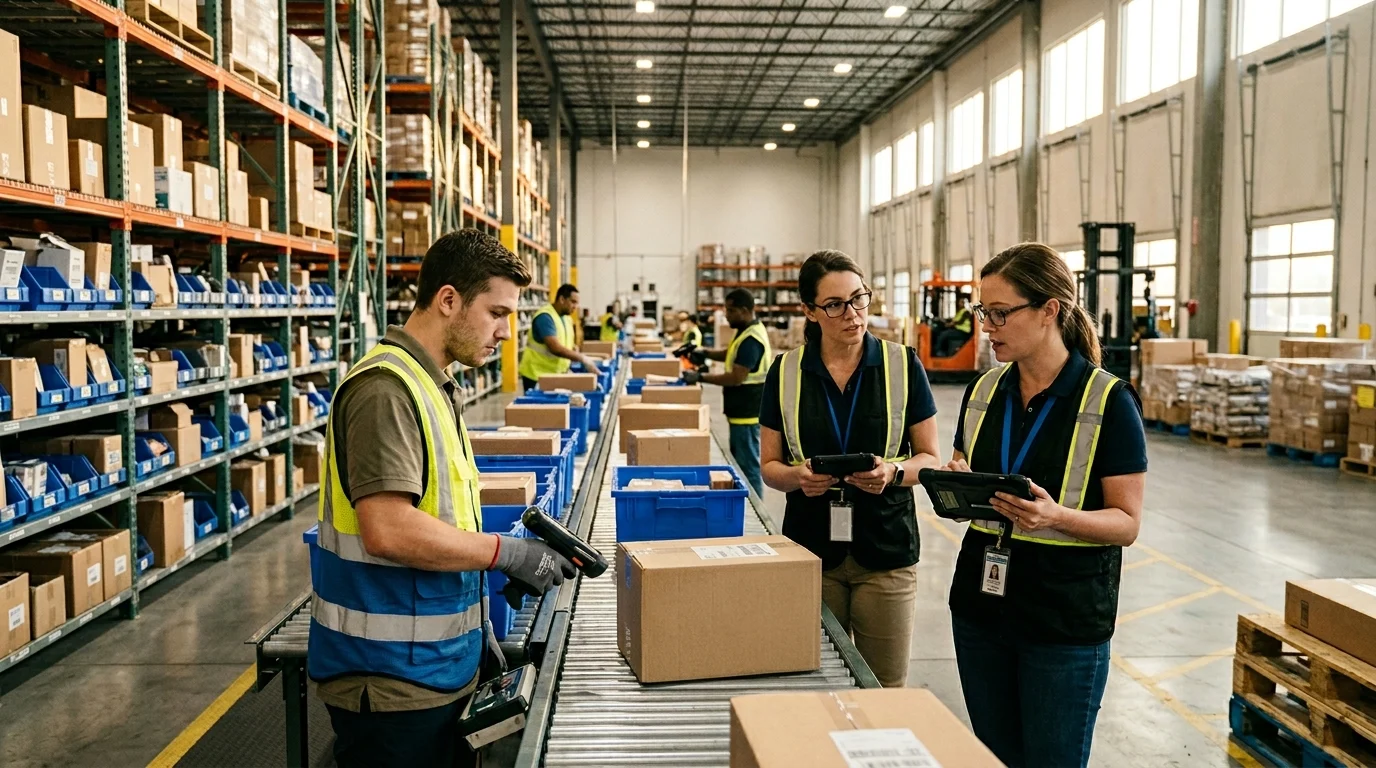
| Rank | 3PL company | Best fit | Watch closely |
|---|---|---|---|
| 1 | FlexFulfills | Global e-commerce brands shipping 200+ daily orders | Confirm lane-level SLAs by country |
| 2 | ShipBob | DTC brands that want broad app integrations | Storage, receiving, and special project fees |
| 3 | ShipMonk | Shopify, marketplace, and cross-border sellers | Kitting rules and peak season cutoff times |
| 4 | Flexport | Brands combining freight, inventory, and fulfillment | Minimums and operational fit |
| 5 | Red Stag Fulfillment | Heavy, bulky, or high-value products | Less ideal for tiny, low-margin packets |
| 6 | LVK | SKU-heavy CPG and omnichannel brands | Contract terms and warehouse allocation |
| 7 | Ryder E-Commerce | Retail, DTC, and B2B fulfillment under one roof | Enterprise-style onboarding pace |
| 8 | DHL Supply Chain | Large global brands with complex distribution | Best for bigger contracts |
| 9 | UPS Supply Chain Solutions | Brands that want warehousing tied to parcel delivery | Flexibility around custom workflows |
| 10 | Amazon Multi-Channel Fulfillment | Amazon-first sellers needing fast off-Amazon delivery | Packaging control and marketplace perception |
A clean ranking only helps if you know what you’re ranking for. A skincare brand selling 2-ounce serums through Shopify Plus and TikTok Shop doesn’t need the same provider as a fitness brand shipping 38-pound adjustable dumbbells. The first brand cares about zone skipping, lot control, subscription accuracy, and return triage. The second brand cares about carton strength, damage rate, freight class, and whether the warehouse team can move weight safely without charging a surprise handling fee on every order.
For brands still defining the basics, our earlier guide on what is a third party logistics provider explains where storage, fulfillment, returns, and supply chain support split from ordinary parcel shipping. Read that before signing a contract. A 3PL proposal can look polished while hiding the exact fee that ruins your contribution margin.
Best 3PL Company Profiles
1. FlexFulfills
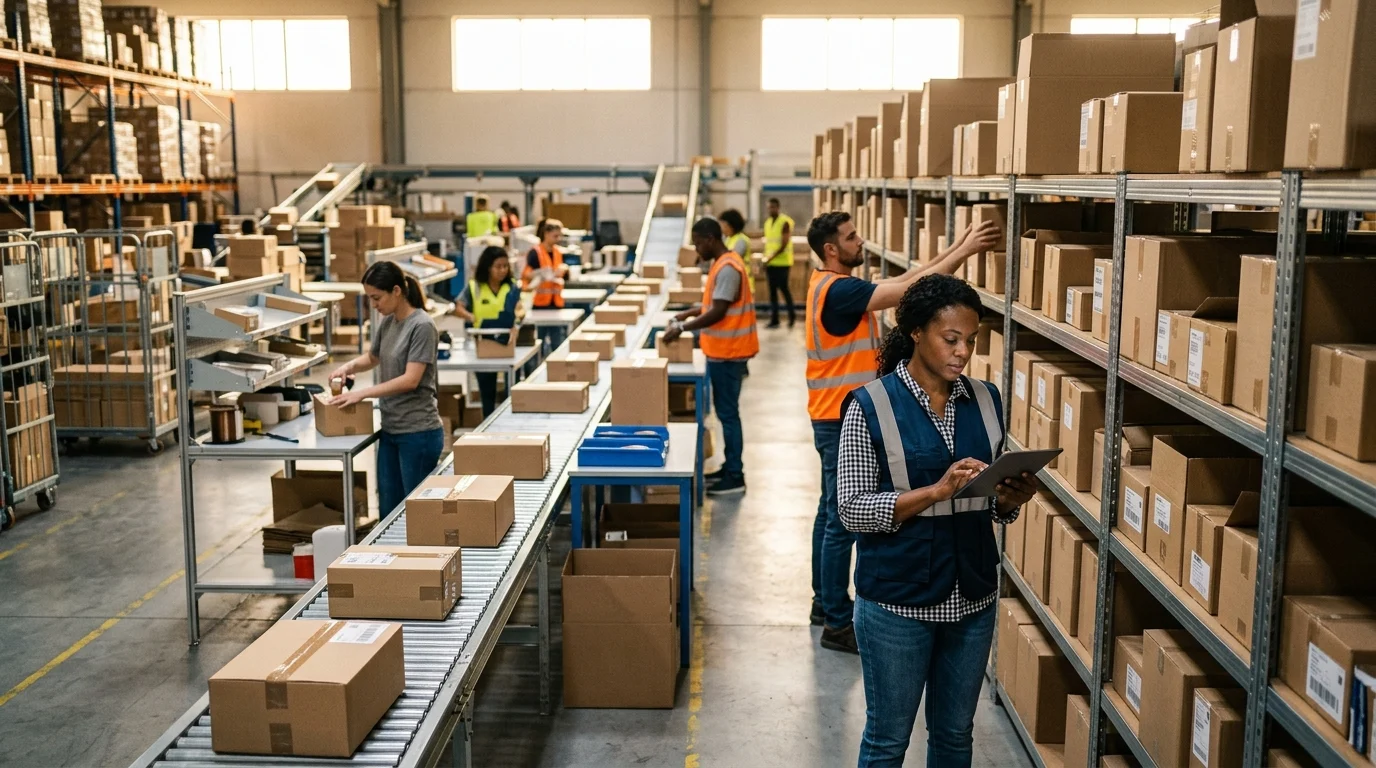
FlexFulfills is the strongest fit for fast-scaling e-commerce brands that already feel the strain of fragmented fulfillment: one warehouse for U.S. orders, another partner for Europe, a freight forwarder in China, a spreadsheet for returns, and someone in Slack asking why Germany orders keep missing the promise date. For brands shipping 200+ daily orders across multiple countries, the pain isn’t only postage. It’s coordination.
At FlexFulfills, we look at SKU rules, order mix, country-level delivery expectations, inventory placement, and return flows before recommending a fulfillment setup. That matters for brands selling into the United States, Europe, and other international markets where customs paperwork, carrier handoffs, and customer tracking can make or break repeat purchase rate.
- Best fit: E-commerce brands with 200+ daily orders, global customers, and a need for fulfillment plus supply chain support.
- Watch: Very early brands under 50 daily orders may prefer a lighter shipping setup until volume justifies migration work.
2. ShipBob
ShipBob is a good fit for DTC brands that want a recognized fulfillment platform, many store integrations, and distributed inventory across major markets. It works especially well for Shopify, BigCommerce, WooCommerce, Amazon, and Walmart Marketplace sellers that need order syncing, inventory visibility, and faster domestic delivery without building their own warehouse team.
The tradeoff is billing complexity. ShipBob can be a strong operating partner, but brands should model the full fee stack: receiving, storage, pick fees, packaging, returns, special projects, and peak-season changes. A low pick-and-pack quote doesn’t mean much if slow-moving SKUs sit in storage for eight months.
- Best fit: DTC brands that want broad integrations and multi-node fulfillment.
- Watch: Review every recurring fee before comparing ShipBob against smaller 3PLs.
3. ShipMonk
ShipMonk is useful for e-commerce brands that want a mix of DTC fulfillment, marketplace prep, subscription box handling, retail compliance, and cross-border support. Its network includes fulfillment centers across North America, the United Kingdom, and Europe, which helps brands avoid shipping every international order from one U.S. warehouse.
ShipMonk tends to suit brands with operational variety. Think bundles, kits, influencer drops, crowdfunding shipments, Amazon prep, and returns that need inspection rather than blind restock. Ask for exact cutoff times during November and December. A same-day promise in April may behave differently during Black Friday week.
- Best fit: Brands with Shopify orders, marketplace orders, kits, and international demand.
- Watch: Get written rules for kitting, special projects, and peak capacity.
4. Flexport
Flexport stands out when fulfillment is tied to freight. If your products are made in Shenzhen, Ho Chi Minh City, or Guadalajara and then sold through Shopify, Amazon, and wholesale channels, Flexport can connect ocean freight, customs, inventory movement, and fulfillment planning in one operating model.
This works better for brands that care about upstream inventory flow, not just warehouse picking. The drawback: Flexport may feel heavier than needed if you only need a simple 3PL to ship 300 lightweight orders a week from one domestic warehouse. Ask whether your account will get the support depth your supply chain needs.
- Best fit: Brands sourcing internationally that want freight and fulfillment visibility together.
- Watch: Minimums, contract structure, and how fast support responds during inbound delays.
5. Red Stag Fulfillment
Red Stag Fulfillment is the specialist on this list for heavy, bulky, fragile, or high-value products. The company operates from two main U.S. warehouse locations, including Tennessee and Utah, and publicly explains why it chose fewer large facilities instead of a long list of smaller nodes.
That model makes sense for categories like fitness equipment, furniture accessories, large pet products, tools, home goods, and premium electronics. A 3PL that ships mascara well may be awful at shipping a 54-pound box. Red Stag’s drawback is the same as its strength: if your catalog is mostly small, light, low-margin items, a broader lightweight parcel network may beat it on cost.
- Best fit: Heavy, bulky, fragile, or high-value e-commerce products.
- Watch: Lightweight SKU economics and international expansion needs.
6. LVK
LVK, connected to the ShipHero ecosystem, is worth considering for brands that care about warehouse technology, SKU control, and omnichannel fulfillment. Its model can work for CPG brands, apparel brands, health products, and merchants with Shopify plus marketplace sales.
LVK is especially interesting when your team needs cleaner warehouse workflows: barcode scanning, inventory rules, returns processing, and multi-channel order routing. Ask where your inventory will sit, how warehouse allocation changes during peak season, and what happens when one SKU sells faster on the East Coast than the West Coast. That small detail can turn into thousands of dollars in extra shipping zones.
- Best fit: SKU-heavy brands that want stronger warehouse process controls.
- Watch: Warehouse allocation, account support, and annual contract terms.
7. Ryder E-Commerce
Ryder E-Commerce, including the Whiplash fulfillment business Ryder acquired, is a serious option for brands that sell through DTC, retail, wholesale, and marketplace channels at the same time. Ryder’s larger logistics background helps when your operation moves beyond parcel fulfillment into retail routing guides, B2B orders, and transportation planning.
This is less of a plug-and-play 3PL for tiny stores. Ryder makes more sense when the brand has a real operations lead, recurring volume, and channel complexity. If Target, Nordstrom, Amazon, Shopify, and your wholesale reps all touch the same inventory pool, Ryder deserves a look.
- Best fit: Omnichannel brands balancing DTC, retail, wholesale, and returns.
- Watch: Implementation timeline and the amount of internal ops work required.
8. DHL Supply Chain
DHL Supply Chain is built for larger companies that need contract logistics, global warehousing, returns, retail distribution, and transport coordination. It fits enterprise and upper mid-market brands with international complexity, regulated categories, high return volume, or multi-country distribution needs.
For a fast-growing DTC brand, DHL can be excellent when the operation is already mature. If your team still needs help cleaning up SKU barcodes or deciding what counts as a sellable return, a smaller e-commerce-first 3PL may move faster. DHL’s scale is valuable when your volume and process maturity can match it.
- Best fit: Large global brands with complex warehousing and returns.
- Watch: Contract size, onboarding length, and fit for DTC-only brands.
9. UPS Supply Chain Solutions
UPS Supply Chain Solutions is attractive when you want warehousing, fulfillment, transportation, and parcel delivery tied closely together. Brands already shipping large parcel volume through UPS may gain from having fulfillment planning connected to carrier operations and delivery data.
The question is flexibility. Some e-commerce brands need branded inserts, bundle changes, split shipments, influencer seeding, retail prep, and fast edits to warehouse rules. UPS can support serious operations, but you should test how your nonstandard work gets priced and scheduled before moving all inventory.
- Best fit: Brands that want fulfillment connected to a major parcel carrier.
- Watch: Custom packaging, special projects, and nonstandard workflow fees.
10. Amazon Multi-Channel Fulfillment
Amazon Multi-Channel Fulfillment, usually called Amazon MCF, lets brands use Amazon’s fulfillment network for orders from Shopify, Walmart, eBay, and other channels. It is attractive for Amazon-first sellers because inventory may already sit inside Amazon’s network, and fast delivery can be a real conversion lift.
The drawback is control. Some brands don’t want off-Amazon customers receiving Amazon-associated delivery experiences, and Amazon’s fulfillment rules may be less flexible for branded packaging, custom inserts, or special handling. Amazon MCF works best when speed matters more than presentation.
- Best fit: Amazon-heavy sellers that want fast fulfillment for other channels.
- Watch: Brand experience, packaging control, and fee changes.
3PL Selection Criteria
Start with the ugliest 30 days in your order history. Pull orders from your biggest sale, your highest-return SKU, your slowest inbound shipment, and the week your team had to answer “Where is my order?” 400 times. That data tells you more than a polished sales deck.
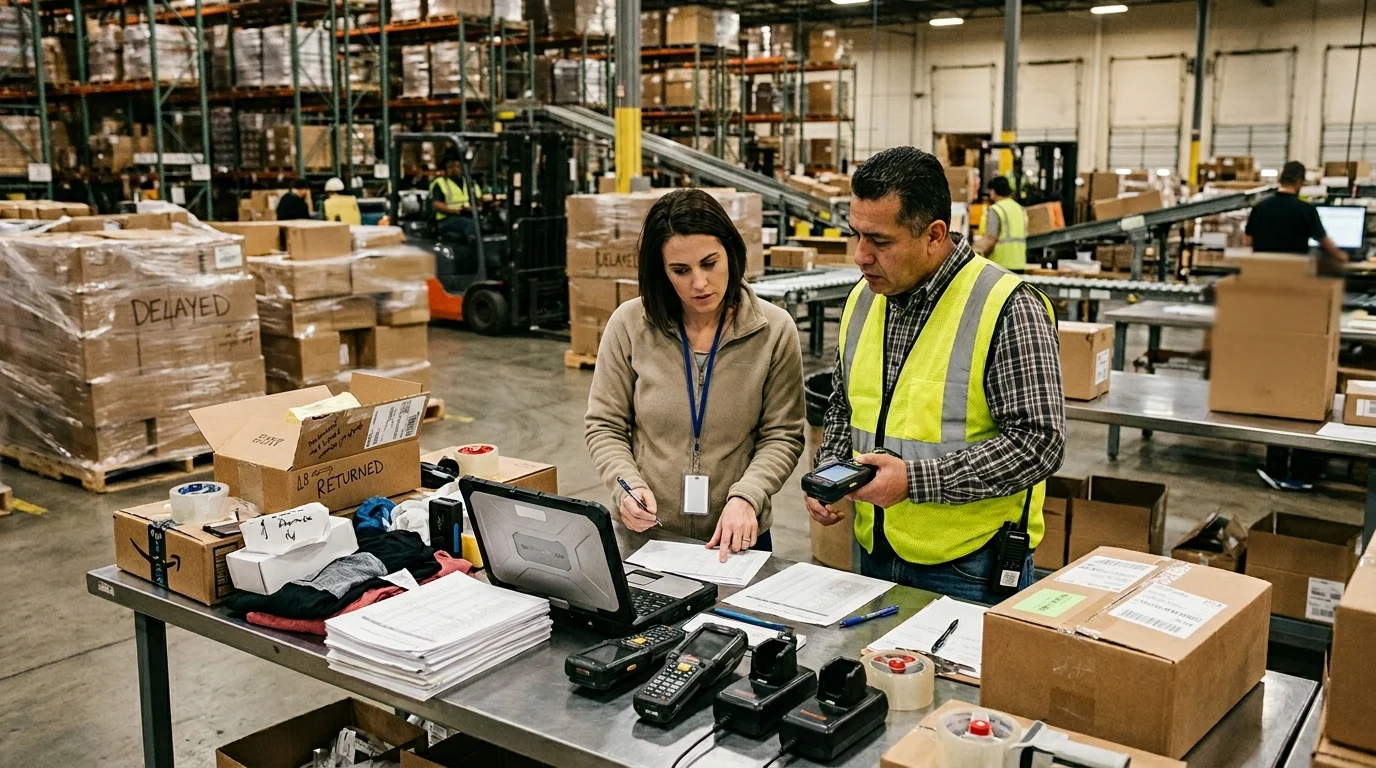
A good 3PL evaluation should include numbers you can test. Ask each provider to quote the same SKU set, same monthly order count, same storage profile, same return assumptions, and same destination mix. If one 3PL quotes only outbound shipping while another includes receiving and storage, you’re comparing a receipt to a full bill.
Use this quick filter before taking sales calls:
| Selection factor | What to ask | Why it matters |
|---|---|---|
| Order volume | Can you support 200, 500, and 1,000 daily orders? | Growth breaks weak processes |
| SKU profile | How do you handle bundles, lots, expiry dates, and variants? | SKU rules protect accuracy |
| Geography | Which countries get local or near-local fulfillment? | Distance raises cost and delivery time |
| Returns | Do you inspect, grade, restock, refurbish, or dispose? | Returns affect margin and customer trust |
| Tech stack | Which platforms sync natively? | Manual uploads create errors |
| Peak season | What changes from October through December? | Holiday promises need proof |
Don’t overbuy warehouse count. Ten fulfillment centers sound impressive, but they can scatter inventory, raise storage costs, and create stockouts if demand forecasting is weak. Two well-placed facilities can beat six poorly managed nodes for many U.S. brands. The right question is simple: what placement gives your customers the promised delivery date at the lowest total cost?
3PL Pricing Tradeoffs
3PL pricing usually breaks into receiving, storage, order handling, packaging, shipping, returns, special projects, and account fees. The dangerous quote is the one that looks cheap because half of those lines are missing. You ship a flash sale. The invoice arrives. Suddenly “special project” appears 19 times.

Returns deserve special attention. The National Retail Federation and Happy Returns projected total U.S. retail returns to reach $849.9 billion in 2025, with return fraud also pressuring retailers. That means your 3PL’s returns process isn’t a back-office detail. It affects cash flow, inventory accuracy, customer support load, and resale value.
| Cost area | Cheap quote risk | Better question |
|---|---|---|
| Receiving | Slow dock-to-stock delays sales | How many business days until inventory is sellable? |
| Storage | Long-tail SKUs drain margin | How are slow movers charged after 90 days? |
| Pick fees | Bundles become expensive | How are kits and multi-item orders billed? |
| Packaging | Brand experience suffers | Can we use branded cartons or inserts? |
| Returns | Sellable inventory gets trapped | Who grades returns and how fast? |
| Shipping | Zone costs rise quietly | Which carriers and services are selected by rule? |
Here is the practical test: model a real month, not a perfect month. Include your worst-selling SKUs, damaged returns, split shipments, address corrections, oversized cartons, and customer service exceptions. If a 3PL can’t price that scenario clearly, the risk will land with your team after launch.
3PL Onboarding Checklist
A 3PL migration fails when the brand treats it like a shipping settings update. It is closer to moving a small operating system. Inventory records, barcode rules, carton specs, platform permissions, return policies, carrier choices, and customer support macros all have to line up before the first order flows.

Give yourself 30 to 60 days for a serious move if you have hundreds of SKUs or multiple sales channels. Rush it only when the current warehouse is actively damaging the business. Even then, freeze nonessential catalog changes until the new operation is stable.
Use this onboarding sequence:
1. Export 30 to 90 days of order data by SKU, country, channel, weight, and shipping service.
2. Separate SKUs into fast movers, slow movers, bundles, fragile items, oversized items, and return-heavy products.
3. Confirm barcode format, carton dimensions, master carton counts, lot rules, and expiry rules.
4. Send the 3PL your real packaging requirements, including inserts, branded cartons, poly mailers, and tape rules.
5. Test integrations for Shopify, Amazon, Walmart Marketplace, TikTok Shop, ERP, help desk, and returns software.
6. Run a pilot with 20 to 50 orders before routing all volume.
7. Review the first invoice line by line against the quote before the second billing cycle.
One more thing: assign one owner. A 3PL launch managed by marketing, finance, customer support, and operations at the same time will produce four different definitions of “ready.” Put one person in charge of the cutover date, issue log, data exports, and go-live approval.
FAQ
Which 3PL is best for Shopify?
ShipBob, ShipMonk, Flexport, LVK, and FlexFulfills are strong Shopify options, but the best fit depends on order volume and geography. If you ship 200+ daily orders across multiple countries, FlexFulfills is worth evaluating because international fulfillment needs more than a store integration.
How much do 3PLs cost?
Most 3PL bills include receiving, storage, pick fees, packaging, shipping, returns, and special projects. A brand shipping 200 daily orders should compare total monthly cost using real SKU, carton, destination, and return data instead of comparing only the base pick-and-pack fee.
Is Amazon MCF a 3PL?
Yes, Amazon Multi-Channel Fulfillment is a 3PL-style service for non-Amazon orders using Amazon’s fulfillment network. It works well for speed, but brands should review packaging control, customer perception, channel rules, and fee changes before routing all off-Amazon orders through it.
When should brands switch 3PLs?
Switch when fulfillment errors, slow receiving, poor support, unclear invoices, or missed delivery promises start hurting revenue. A good trigger is 200+ daily orders, international growth, rising return volume, or repeated customer support tickets tied to warehouse mistakes.
How many warehouses do brands need?
Most e-commerce brands don’t need ten warehouses. Start with the fewest locations that hit delivery promises at the lowest total cost, then expand when order density proves demand in a region. Bad inventory placement can cost more than slower shipping.
Before choosing a provider, pull your last 30 days of orders and mark the painful ones: late deliveries, damaged parcels, expensive zones, split shipments, and returns that took too long. FlexFulfills can review that pattern with you and map a fulfillment setup built for global e-commerce growth, not just today’s order count.