
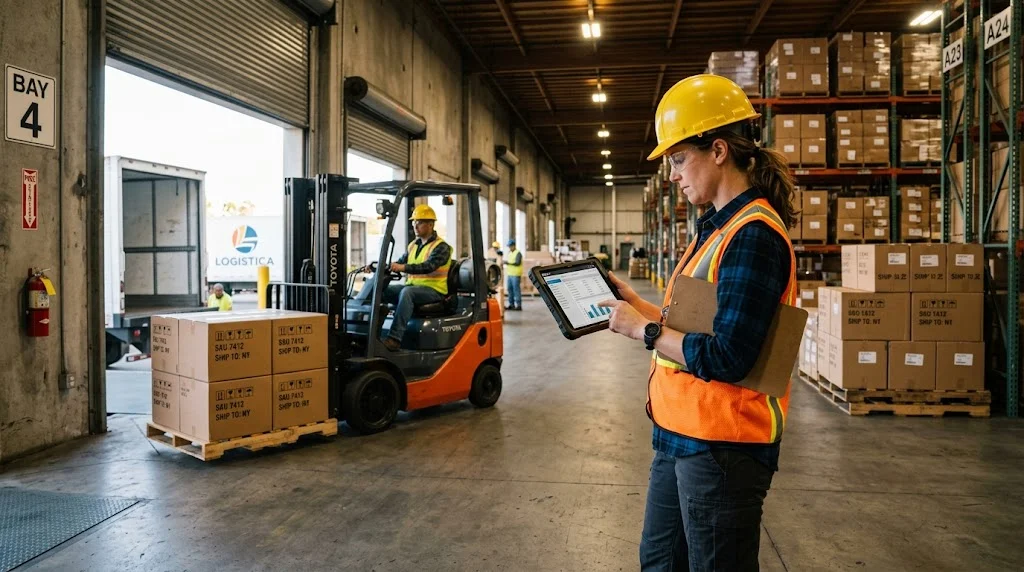
A third-party logistics provider (3PL) is an outside company that handles warehousing, picking, packing, and shipping for e-commerce brands so they don’t have to do it themselves. You sell the product. They move the product. That’s the short version.
But here’s the longer version, because the short one doesn’t help you decide whether to actually hand over your fulfillment operations to someone else. If you’re shipping 200+ orders a day from your garage, a rented warehouse, or a space you’ve outgrown twice already, third-party logistics isn’t just a concept you should understand — it’s probably the next operational decision you need to make.
We put together a complete 3PL guide that covers the broader industry and how 3PL works from end to end. This article gets more specific: what these providers actually do day-to-day, how they differ from each other, and what matters when you’re choosing one.
How 3PL Providers Operate
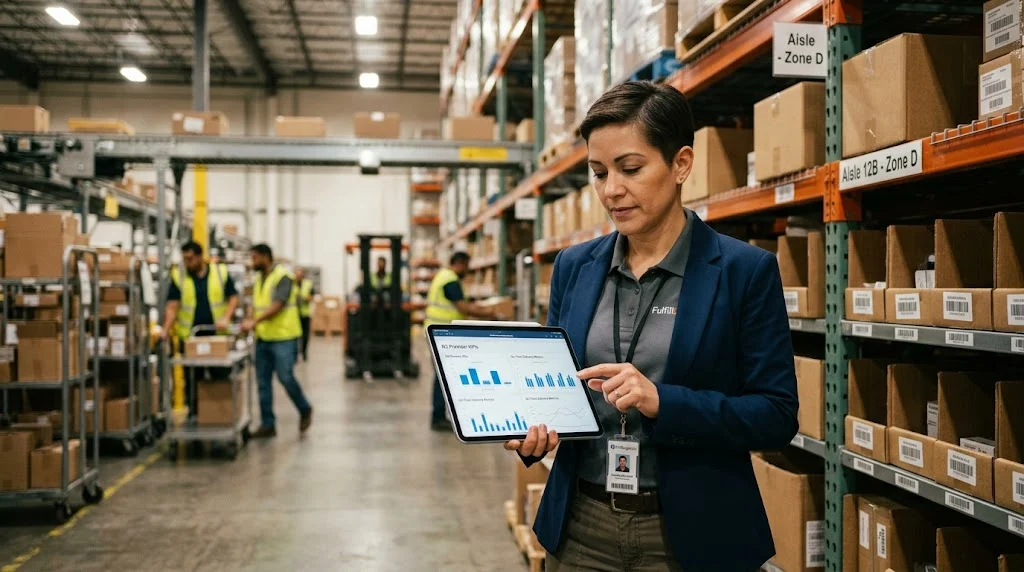
A third-party logistics provider receives your inventory at their warehouse, stores it, and then picks, packs, and ships individual orders as your customers place them. Most 3PLs connect directly to your Shopify, WooCommerce, or Amazon store through software integrations so orders flow automatically — no copy-pasting tracking numbers at 2 a.m.
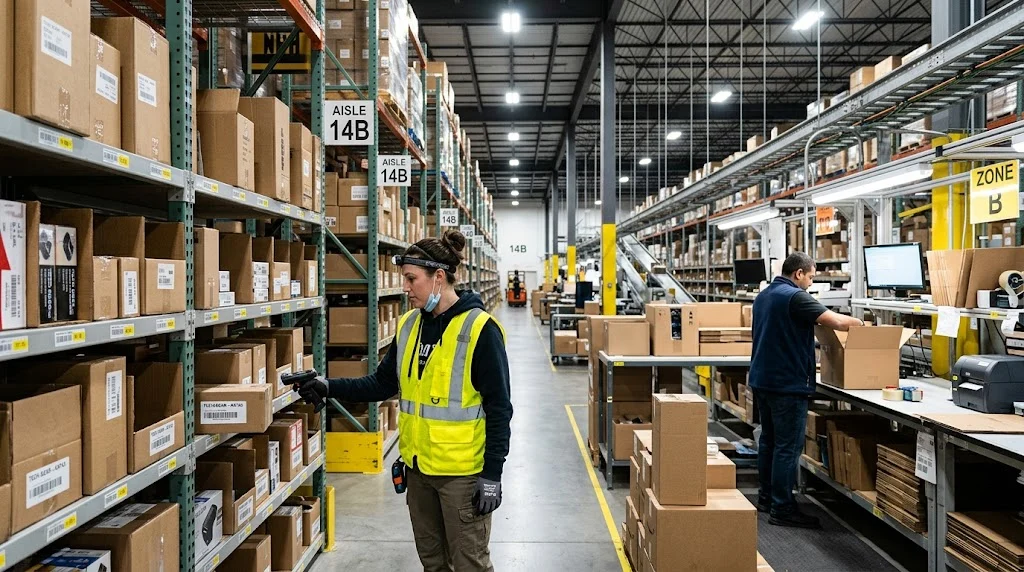
Here’s what that looks like in practice. Say you sell skincare products. You manufacture 10,000 units in Q3 and ship them to your 3PL’s fulfillment center in, say, New Jersey. They receive the shipment, count everything, shelve it according to SKU, and wait. On Black Friday, 1,400 orders hit your store between midnight and 6 a.m. By the time you wake up, your 3PL has already printed labels, pulled products from shelves, boxed them with your branded inserts, and handed pallets off to FedEx and USPS.
You didn’t touch a single package.
That’s the core promise. But the execution varies wildly between providers, which is why the decision isn’t as simple as Googling “3PL near me” and signing a contract.
Some 3PLs specialize. Red Stag Fulfillment, for example, focuses on heavy and oversized items — think furniture and fitness equipment. ShipBob targets direct-to-consumer brands doing a few hundred to a few thousand orders per day. Deliverr (now part of Shopify Logistics, though that arrangement keeps shifting) built its model around 2-day delivery badges for marketplace sellers. Each one made specific infrastructure choices that make them better for certain business profiles and worse for others.
Services Beyond Shipping
Most brands think of 3PLs as “they ship my stuff.” That’s accurate but incomplete.
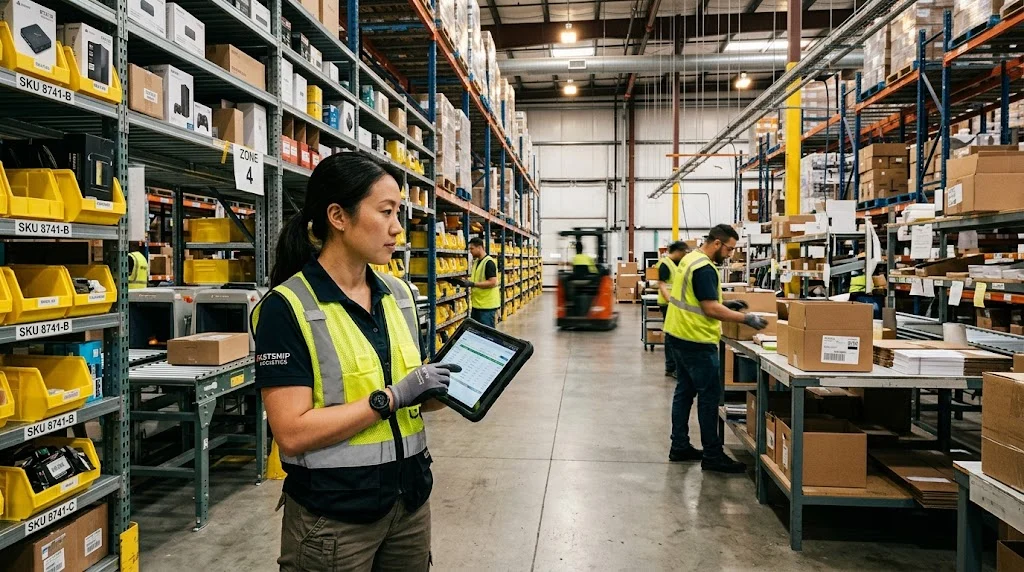
A full-service third-party logistics provider typically offers:
- Inventory management — real-time stock levels synced to your sales channels, with alerts before you run out
- Kitting and assembly — bundling products together, like a holiday gift set with three items shrink-wrapped as one SKU
- Returns processing — inspecting returned items, restocking what’s sellable, and flagging what’s damaged
- Freight and inbound logistics — arranging container shipments from your manufacturer in Shenzhen or Guangzhou to the fulfillment center
That last one matters more than people realize. Getting products to the warehouse is often harder and more expensive than shipping them out. A 3PL with freight forwarding capability (or strong freight partnerships) can save you 15–25% on inbound shipping costs compared to booking your own LCL container through a freight marketplace like Freightos or Flexport.
Not every provider offers every service. Smaller regional 3PLs might just store and ship. Larger operations — the ones handling fulfillment across 50+ countries — tend to bundle freight, customs brokerage, warehousing, and last-mile delivery into one relationship. The tradeoff: bigger providers sometimes have higher minimums and longer onboarding timelines. A 4-person 3PL in Austin might have your first shipment out the door in 72 hours. A global provider might need 3–4 weeks to map your SKUs, test integrations, and run a pilot batch.
3PL vs. In-House Fulfillment
Should you outsource or keep doing it yourself? The honest answer: it depends on where you are operationally and how fast you’re growing.
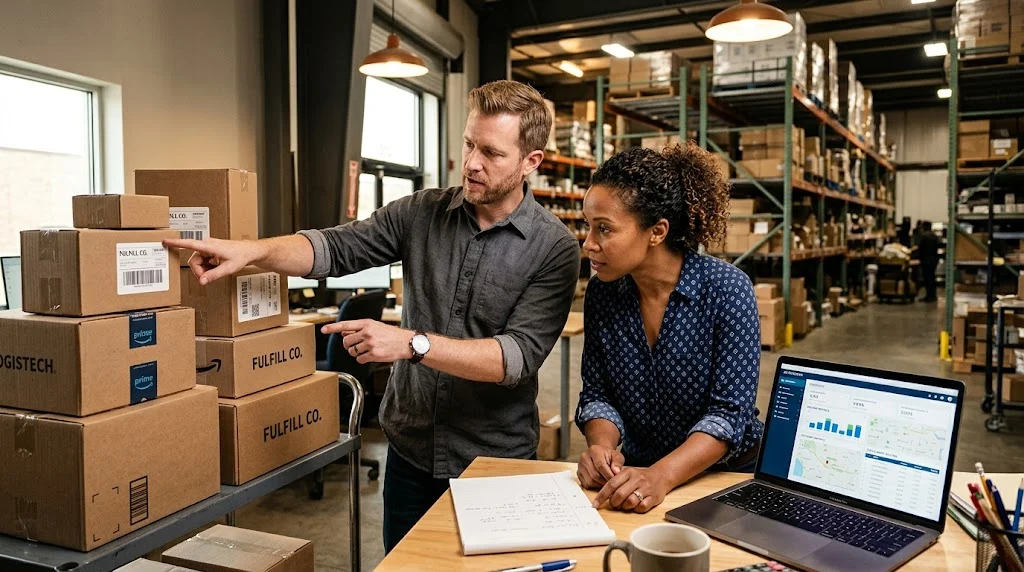
If you’re shipping 50 orders a day and your team has capacity, in-house fulfillment gives you total control. You can inspect every package. You can customize inserts on the fly. You know exactly what’s happening because it’s happening 30 feet away.
But at 200+ orders per day, the math changes. You need warehouse space (commercial leases in the US average $7.91 per square foot annually, according to CBRE’s 2023 U.S. Real Estate Market Outlook). You need staff — pickers, packers, a warehouse manager. You need WMS software. You need carrier negotiations. You need backup plans for when someone calls in sick during your busiest week.
A 3PL absorbs all of that into a per-order fee. Typical pricing runs $3–$7 per order for standard pick-and-pack, plus storage fees (usually $15–$45 per pallet per month, depending on location and warehouse class). So for a brand shipping 300 orders daily, you’re looking at roughly $27,000–$63,000 per month in fulfillment costs.
That sounds like a lot until you add up what in-house actually costs:
| Cost Category | In-House (Monthly Est.) | 3PL (Monthly Est.) |
|---|---|---|
| Warehouse lease (5,000 sq ft) | $3,300 | Included |
| Staff (4 FTEs at $18/hr) | $12,480 | Included |
| WMS software | $500–$2,000 | Included |
| Packaging supplies | $2,500 | Often included |
| Carrier rates (no volume discount) | $15,000+ | $11,000–$13,000 |
| Total | $33,780–$35,280 | $27,000–$40,000 |
The numbers are close for a 300-order-per-day brand. But the 3PL number stays relatively flat as you scale to 500 or 800 orders — you’re not hiring more people or leasing more space. Your in-house number jumps with every growth milestone.
One thing in-house does better: product quality control. If you sell fragile ceramics or high-end electronics, having your own team inspect every item before it ships can reduce damage rates below 0.5%. Most 3PLs aim for 1–2% error rates on a good day (the Warehousing Education and Research Council pegs the industry average at about 1.4%). For some brands, that gap is acceptable. For luxury brands where a single bad unboxing experience gets posted on TikTok? Maybe not.
Choosing the Right Provider
Pick the wrong 3PL and you’ll spend 6 months migrating, then another 3 months cleaning up inventory discrepancies. Pick the right one and you barely think about fulfillment for years.
Start with geography. Where do most of your customers live? If 60% of your orders ship to the US East Coast, a fulfillment center in Pennsylvania or New Jersey cuts transit times to 1–2 days for that majority. If you’re selling across Europe, you need a provider with EU-based warehousing — shipping from the US to Berlin takes 7–14 days and triggers customs fees that kill conversion rates.
Then look at technology. Can the 3PL integrate with your specific platform? Shopify and WooCommerce integrations are table stakes. But if you’re selling on Faire, TikTok Shop, or running a Magento 2 backend, you need to verify compatibility before signing anything. Ask for a sandbox demo, not just a screenshot.
Ask about their client profile. A 3PL that mostly serves brands shipping 5,000+ orders per day might treat your 250-order account as an afterthought. Conversely, a provider built for small brands might buckle operationally when you hit a viral moment and orders spike 400% overnight.
Here are five questions worth asking during your evaluation:
1. What’s your average ship time from order receipt to carrier handoff?
2. What happens if my order volume triples in a week — do you have surge capacity?
3. How do you handle inventory discrepancies, and what’s your shrinkage rate?
4. Can I visit your warehouse before signing?
5. What does offboarding look like if I leave?
That last question tells you a lot about a provider’s confidence and transparency. Good 3PLs will walk you through exit terms clearly because they’re not worried about you leaving.
When 3PL Doesn’t Work
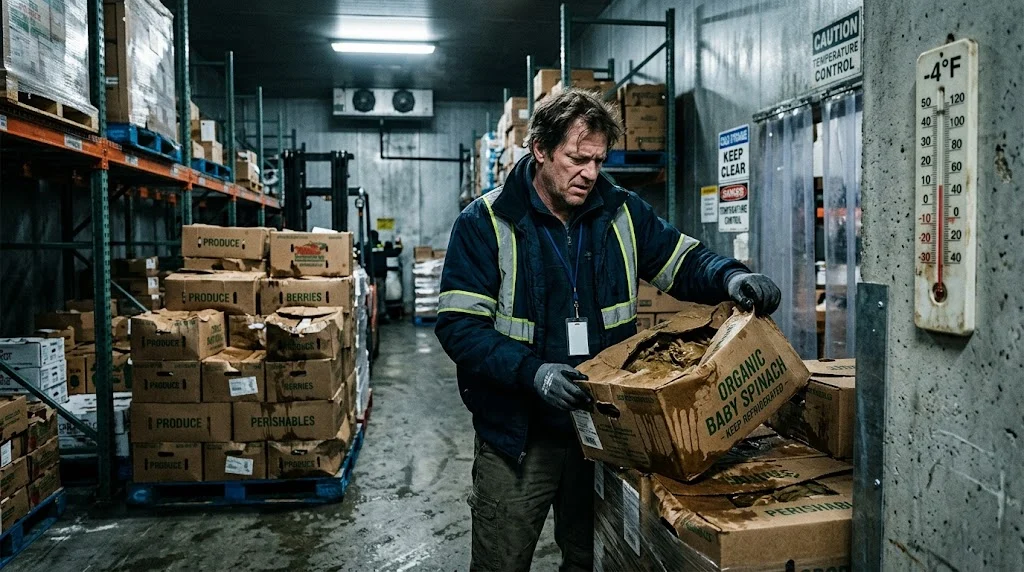
Third-party logistics providers aren’t right for every business. If you sell perishable food with strict cold-chain requirements, most general 3PLs won’t touch your products (specialized cold-chain providers like Americold exist, but pricing is 2–3× higher). If you require same-day fulfillment — not same-day shipping labels, but actual same-day delivery to the end customer — that’s a different operational model closer to what DoorDash or Gopuff offers.
Brands with extremely low margins (under 15%) sometimes find that 3PL fees eat into profitability enough to make the model unsustainable. A $12 product with a $4 pick-and-pack fee and $5 shipping cost leaves you $3 before you’ve paid for the product itself, marketing, or returns. In those cases, building your own micro-fulfillment operation or using Amazon FBA (which takes a 30–45% cut but handles everything including customer service) might make more financial sense.
Subscription box brands are a mixed case. Some 3PLs handle subscription kitting well — Quiet Logistics and ShipMonk both have dedicated subscription workflows. Others treat each box as a custom project and charge accordingly, which can double your per-unit costs versus a standard single-SKU shipment.
FAQ
What does a 3PL provider cost?
Most 3PLs charge $3–$7 per order for pick-and-pack, plus $15–$45 per pallet per month for storage. Setup fees range from $0 to $500 depending on the provider.
How is a 3PL different from a freight forwarder?
A freight forwarder moves goods between locations (factory to warehouse, port to port). A 3PL stores your products and ships individual customer orders — they handle the last mile, not just the first.
Can small brands use third-party logistics?
Yes, though many 3PLs require minimums of 100–300 orders per month. Brands below that threshold often start with Amazon FBA or self-fulfillment until volume justifies outsourcing.
How long does 3PL onboarding take?
Expect 1–4 weeks depending on SKU count and integration complexity. Brands with under 50 SKUs and a Shopify store can often go live in 5–7 business days.
Do 3PL providers handle international shipping?
Many do, but capabilities vary significantly. Some 3PLs ship to 50+ countries with customs brokerage included; others only offer domestic US or single-country fulfillment.
At FlexFulfills, we handle warehousing, fulfillment, and shipping across 50+ countries for e-commerce brands that have outgrown DIY logistics. If you’re processing 200+ orders daily and spending more time on shipping than selling, reach out to our team for a fulfillment audit — we’ll break down exactly what your current setup is costing you and where the gaps are.