
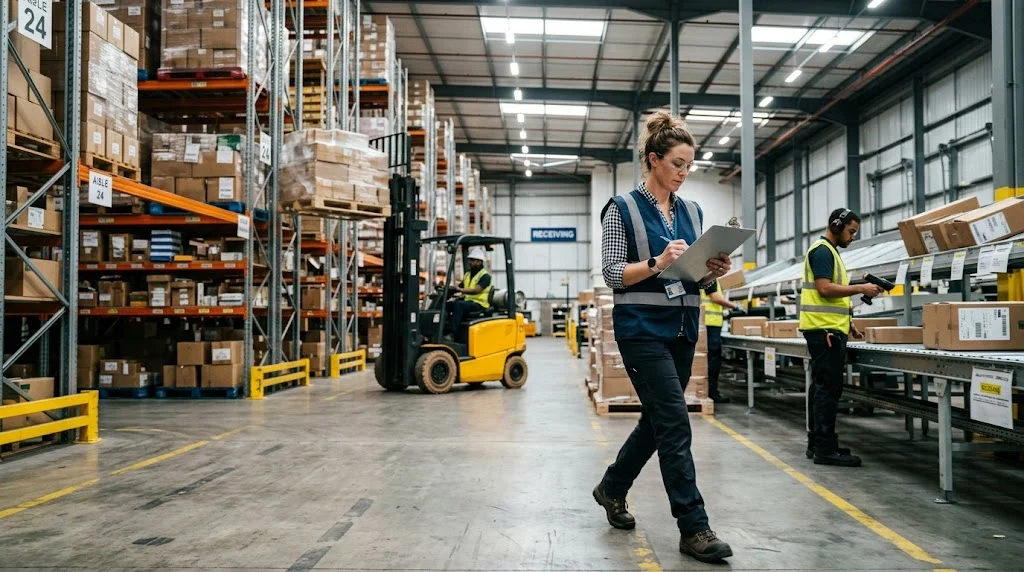
Third-party logistics (3PL) is the outsourcing of ecommerce order fulfillment — including warehousing, picking, packing, and shipping — to a specialized provider. If you’re shipping 200+ orders daily and your garage (or even your warehouse) can’t keep up, a 3PL partner handles the physical logistics so you can focus on selling.
That’s the short version. But choosing the right 3PL — and knowing when you actually need one — requires understanding how the model works from the inside, not just reading a vendor’s homepage. This guide covers the operational reality, the economics, the tradeoffs, and the specific scenarios where third-party logistics makes or breaks a brand’s growth.
How 3PL Actually Works
A third-party logistics provider receives your inventory at their warehouse, stores it, and ships individual orders to your customers as those orders come in. That’s the elevator pitch. The real operation has more moving parts.
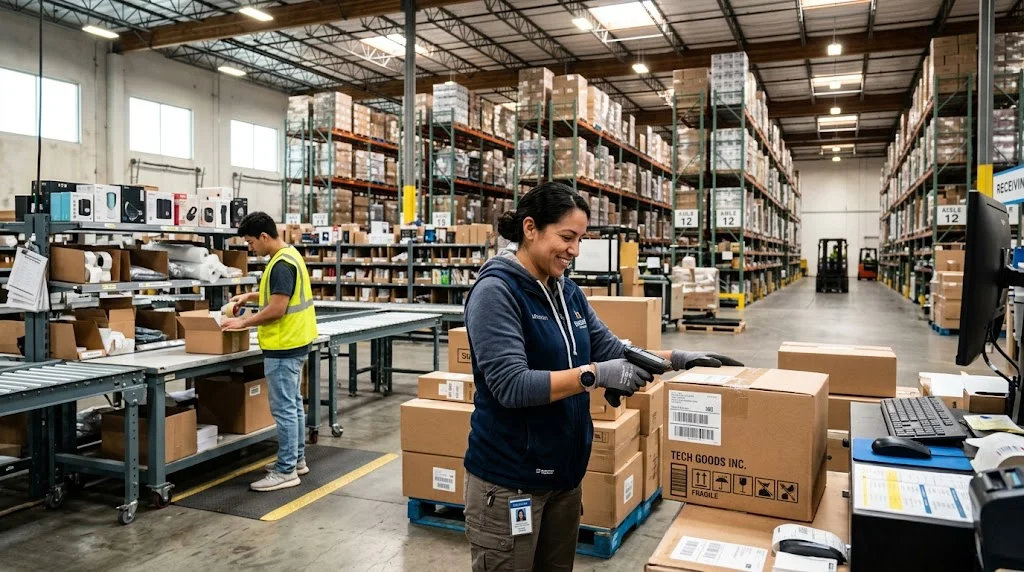
Here’s the typical flow for an ecommerce brand using a 3PL:
1. You ship bulk inventory (from your manufacturer, usually) to the 3PL’s fulfillment center
2. The 3PL receives, inspects, counts, and shelves your products (this step is called “inbound receiving”)
3. Your online store connects to the 3PL’s warehouse management system (WMS) via API or integration — Shopify, WooCommerce, Amazon, whatever you sell on
4. A customer places an order on your site
5. That order automatically appears in the 3PL’s system
6. A warehouse worker picks the items, packs them (with your branded packaging, if you’ve arranged that), and hands the parcel to a carrier like UPS, USPS, FedEx, or DHL
7. Tracking info flows back to your store and your customer gets notified
The entire cycle from order placement to carrier handoff typically takes 1-2 business days with a competent provider. Some 3PLs offer same-day fulfillment for orders placed before a cutoff time — usually noon local time at the warehouse.
What most brands don’t realize until they’re knee-deep in onboarding: the integration quality matters more than the warehouse size. If your 3PL’s WMS doesn’t sync inventory counts in real time with your Shopify store, you’ll oversell products that are actually out of stock. That creates customer service nightmares at exactly the moment you’re supposed to be scaling.
When Brands Need a 3PL
Not every ecommerce business needs a third-party logistics partner. If you’re shipping 15 orders a day from your spare bedroom, you probably don’t. The math doesn’t work yet.
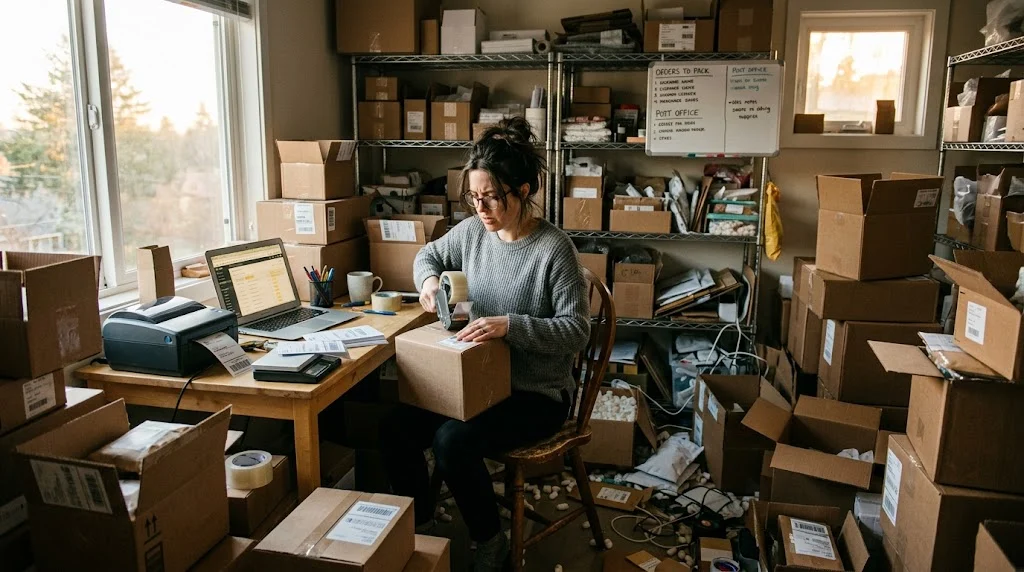
The inflection point hits most brands somewhere between 100 and 300 daily orders. At that volume, self-fulfillment starts eating your time in ways that actively hurt growth. You’re spending 4-6 hours a day on packing and shipping instead of on marketing, product development, or customer acquisition. You’re hiring warehouse staff but struggling with turnover. You’re renting space that sits half-empty in February and overflows in November.
A few specific signals that it’s time:
- Your shipping error rate exceeds 2% (wrong items, wrong addresses, late shipments)
- You’re turning down retail or wholesale opportunities because you can’t handle the volume spikes
- International expansion is on your roadmap but you have zero infrastructure outside your home country
- Peak season (Black Friday, holiday) causes fulfillment breakdowns every single year
One scenario where a 3PL might NOT be the right move: if your product requires heavy customization or assembly before shipping. Think made-to-order jewelry with engraving, or subscription boxes with 47 possible SKU combinations. Some 3PLs handle kitting and light assembly, but the per-order cost climbs fast — and the error rate on complex custom orders tends to be higher when someone unfamiliar with your product is doing the work.
3PL Cost Breakdown
The pricing feels opaque when you first look at it. Most 3PLs charge across four or five fee categories, and the total cost per order varies dramatically based on your product dimensions, order volume, and how much storage you need.

| Fee Type | Typical Range | What It Covers |
|---|---|---|
| Receiving | $25–$45 per pallet or $0.20–$0.35 per unit | Unloading, inspecting, shelving inbound inventory |
| Storage | $8–$40 per pallet/month or $0.50–$0.75 per bin/month | Warehouse space for your products |
| Pick & Pack | $1.50–$3.50 per order + $0.50–$0.75 per additional item | Pulling items, packing, labeling |
| Shipping | Carrier rate (usually discounted 15-30% vs. retail rates) | Actual postage/freight cost |
| Account Management | $0–$500/month | Tech support, reporting, dedicated account rep |
For a typical brand shipping 500 orders per day with an average of 1.8 items per order, total 3PL cost (excluding the carrier shipping rate) usually lands between $3.00 and $5.50 per order. That sounds like a lot until you calculate what self-fulfillment actually costs when you add up rent, labor, packaging materials, insurance, WMS software, and the opportunity cost of your own time.
The hidden cost most brands miss? Minimum volume commitments. Some 3PLs require you to maintain a minimum number of monthly orders or pay a shortfall fee. If your brand is seasonal — say, you sell outdoor gear and volume drops 60% in winter — that minimum can sting. Ask about this before you sign anything.
We built FlexFulfills’ pricing structure specifically to avoid punishing brands for natural volume fluctuations, because we’ve watched too many fast-growing businesses get locked into contracts designed for steady-state enterprises.
Choosing the Right 3PL
Here’s where most guides give you a vague checklist. “Look for experience. Check references. Consider technology.” That’s useless.

Instead, here are the five questions that actually separate a good 3PL from a bad one for scaling ecommerce brands:
Where are their warehouses relative to your customers? A 3PL with a single warehouse in Los Angeles works great if 70% of your customers are on the West Coast. It’s terrible if your biggest market is Germany. According to the Council of Supply Chain Management Professionals (CSCMP), the single largest factor in delivery speed and shipping cost is the distance between the fulfillment center and the end customer. Brands selling globally need either a 3PL with a multi-node network or a provider with warehouses in multiple countries.
What’s their actual error rate — not the one on their website? Ask for SLA documentation. An order accuracy rate below 99.5% should be a dealbreaker for any brand shipping over 200 orders daily. At 500 orders per day, a 99% accuracy rate means 5 wrong orders every single day — that’s 150 customer complaints per month.
Can they handle your specific product category? A 3PL that specializes in apparel has different infrastructure than one built for supplements or electronics. Temperature-sensitive products need climate-controlled storage. Heavy items (over 50 lbs) require different picking workflows and carrier pricing. Fragile goods need specific packing protocols. The generalist 3PL that claims to handle “everything” usually handles nothing particularly well.
How do returns work? Returns processing (reverse logistics) is where cheap 3PLs completely fall apart. Ask whether they inspect returned items, restock sellable products, and provide disposition reporting. Shopify’s 2023 data shows that ecommerce return rates average 20-30%, so if your 3PL charges $5 per return with no quality inspection, your margins erode fast.
What happens when things break? Not “if.” When. Servers crash. Warehouses flood. Carriers lose trailers. The question is whether your 3PL has redundancy — backup warehouse locations, multiple carrier relationships, and a disaster recovery plan that isn’t just “we’ll figure it out.”
3PL vs. In-House Fulfillment
Some brands that could benefit from a 3PL still resist the switch because they’re afraid of losing control. That fear is legitimate. When someone else packs your product, you can’t personally check every box. You can’t walk through the warehouse at 11 PM and reorganize shelves.
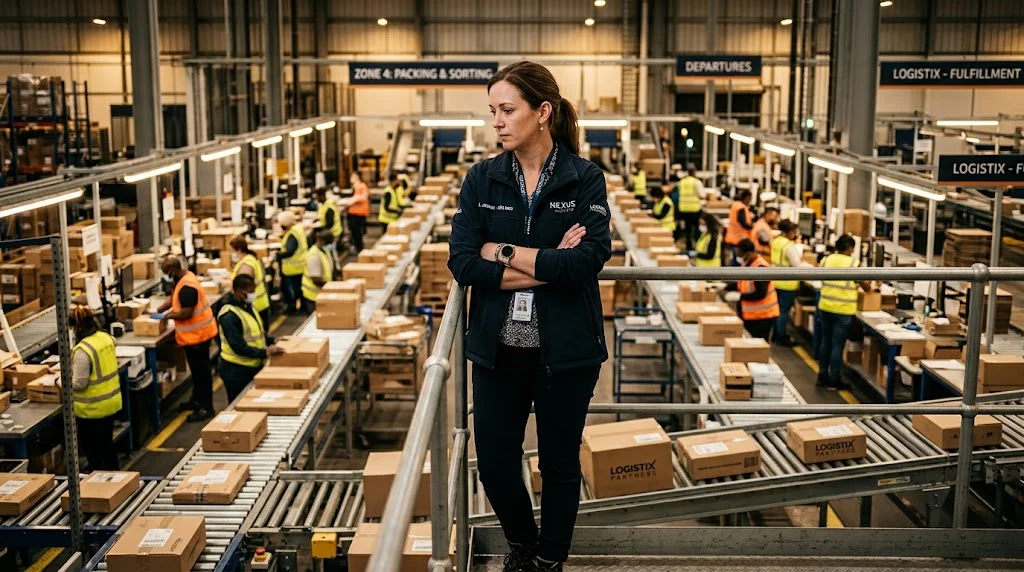
But control is a spectrum, and the tradeoff looks different depending on your stage.
At 200-500 daily orders, in-house fulfillment gives you tighter quality control and full visibility. You can customize packaging on the fly, add handwritten thank-you notes, and handle unusual customer requests without submitting a ticket. The cost is higher per unit, your team is stretched thin, and scaling beyond your current capacity requires a capital investment (new lease, new hires, new equipment) with a 6-12 month lead time.
At 500-2,000 daily orders, the math shifts hard toward 3PL. A study by Armstrong & Associates (2023) found that brands using third-party logistics saved an average of 11% on total logistics costs compared to self-fulfillment, primarily through carrier rate discounts and labor efficiency. The savings compound as volume grows because 3PLs spread their fixed costs across dozens of clients.
At 2,000+ daily orders, some brands bring fulfillment back in-house — but only if logistics is a genuine competitive advantage for them (think Amazon, Chewy). For 95% of ecommerce brands, it never will be. Your competitive advantage is your product, your brand, your marketing. Fulfillment is infrastructure. Let specialists handle infrastructure.
One real caveat: if your brand experience depends heavily on unboxing — think luxury goods, high-end cosmetics, collector items — you need a 3PL that takes custom packaging seriously. Not all do. Some will stuff your $200 candle into a poly mailer and call it done.
Global 3PL Fulfillment
Selling internationally without local fulfillment is painful for your customers. A buyer in Berlin ordering from a US-based warehouse waits 8-14 days for delivery and might get hit with unexpected customs duties at their door. That customer isn’t coming back.

The fix: distributed fulfillment. You place inventory in warehouses across multiple regions — North America, Europe, Asia-Pacific — and orders route automatically to the nearest fulfillment center. A properly configured multi-node 3PL can deliver to 50+ countries within 2-5 business days.
The complexity, though, is real. Each country has different import regulations, labeling requirements, and tax obligations. The EU’s Import One-Stop Shop (IOSS) scheme, implemented in July 2021, simplified VAT collection for goods under €150 shipped to EU consumers — but your 3PL needs to actually support IOSS registration and compliance. Many don’t.
Duties Delivered Paid (DDP) shipping, where the seller covers import duties upfront so customers don’t face surprise charges at delivery, has become essentially mandatory for premium brands selling cross-border. According to a 2023 survey by the International Post Corporation, 52% of cross-border online shoppers abandoned a purchase or returned an item due to unexpected fees. DDP eliminates that friction, but it requires your 3PL to have customs brokerage capabilities or partnerships.
At FlexFulfills, we operate fulfillment services across 50+ countries with DDP options built into our standard workflows — because we’ve seen firsthand how many brands lose international customers over a $12 customs charge.
FAQ
What does a 3PL do?
A 3PL stores your products in their warehouse, picks and packs individual customer orders, and ships them via carriers like UPS or DHL. They handle the physical fulfillment so you focus on running your business.
How much does a 3PL cost?
Most 3PLs charge $3–$6 per order (excluding shipping postage) for standard ecommerce fulfillment. Costs vary based on product size, order complexity, and monthly volume.
When should I switch to a 3PL?
Consider a 3PL when you consistently ship 100+ orders daily and fulfillment tasks consume more than 4 hours of your team’s day. Persistent shipping errors above 2% are another clear signal.
Can a 3PL ship internationally?
Yes, but not all 3PLs have global capabilities. Look for providers with warehouses in multiple countries and built-in customs brokerage for DDP shipping to avoid surprise duties for your customers.
What’s the difference between 3PL and 4PL?
A 3PL handles physical fulfillment operations directly. A 4PL acts as a logistics consultant managing multiple 3PLs and supply chain partners on your behalf — essentially a logistics layer above the 3PL.
If your brand is scaling past the point where self-fulfillment makes sense — or you’re expanding internationally and need warehouses closer to your customers — FlexFulfills can help. We work with fast-growing ecommerce brands shipping 200+ orders daily across 50+ countries, with transparent pricing and real-time inventory visibility. Reach out to our team to see whether your fulfillment setup is helping or hurting your growth.