
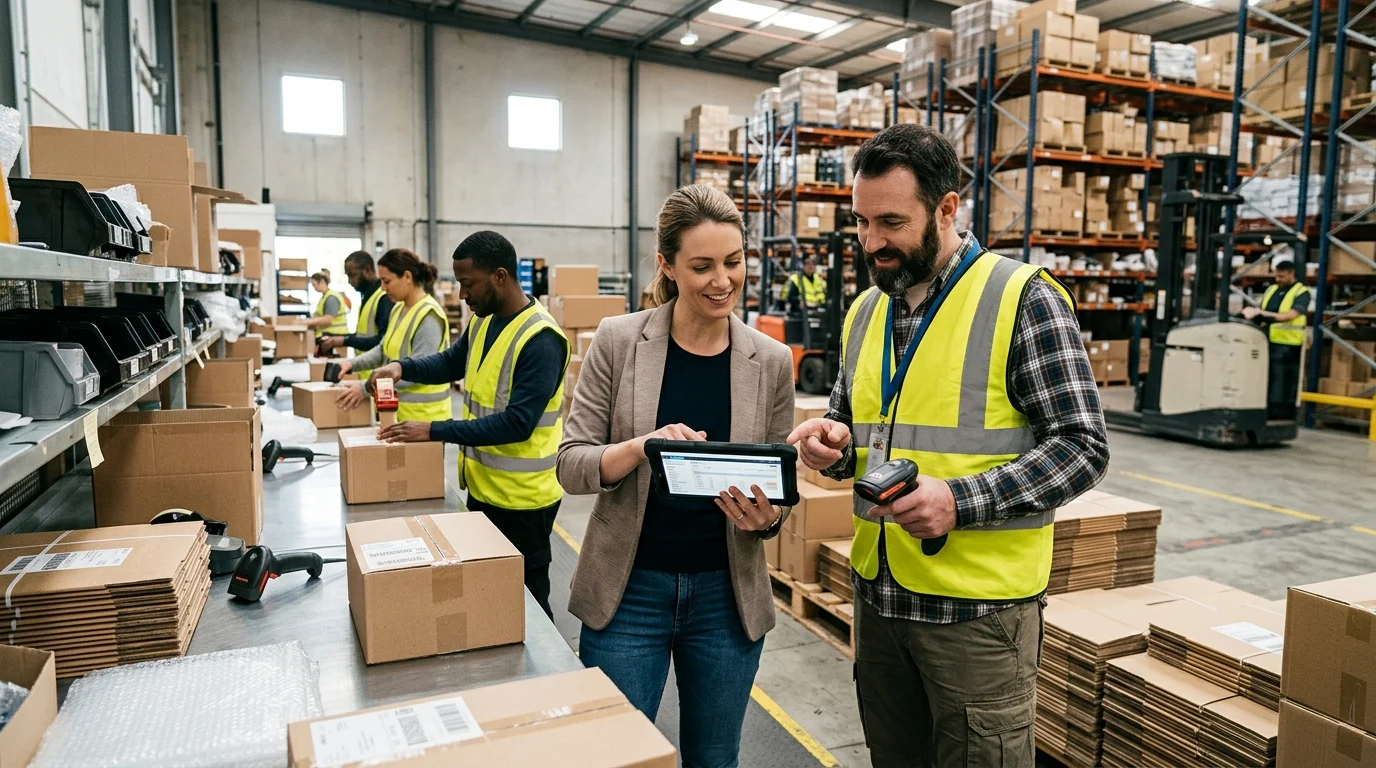
A third party logistics provider definition is simple: it’s an outside company that handles logistics work a brand would otherwise run in-house, such as warehousing, fulfillment, shipping, inventory control, and returns. For a fast-scaling e-commerce brand shipping 200+ orders a day, a 3PL provider turns operations from a daily scramble into a managed system with people, space, software, carrier accounts, and repeatable checks.
Third Party Logistics Provider Definition
A third party logistics provider is an outside company that runs logistics work for your brand: receiving inventory, storing products, picking and packing orders, booking transportation, managing returns, and reporting stock movement. A practical third party logistics provider definition focuses on delegated operations, not software alone or one-off shipping advice.

Picture a DTC skincare brand selling through Shopify, Amazon, and TikTok Shop. On Monday, the brand receives 1,100 orders after a weekend promo. If those orders sit in a garage or small back room, the team loses time printing labels, hunting for toner, answering “where’s my order?” tickets, and fixing inventory mismatches. A 3PL receives the inbound cartons, stores each SKU by bin, syncs order data from sales channels, packs orders against rules, ships through carriers like UPS, FedEx, DHL, or USPS, then pushes tracking back to the store.
The Council of Supply Chain Management Professionals’ supply chain terms glossary frames logistics around the planning and control of product flow, storage, fulfillment, transportation, inventory, and related information. That industry framing matters because a 3PL is not only a warehouse with shelves. A provider takes over a defined slice of logistics operations and is measured on speed, accuracy, cost, and visibility, which is why our broader guide on what is third party logistics is useful if you’re still separating 3PL from general supply chain work.
| Term | Plain meaning | E-commerce example |
|---|---|---|
| First party logistics | You handle logistics yourself | Your team stores stock and ships orders from your own space |
| Second party logistics | A carrier moves freight or parcels | UPS picks up parcels from your warehouse |
| Third party logistics | A provider manages operations for you | A 3PL stores inventory, packs orders, and books shipping |
| Fourth party logistics | A coordinator manages other logistics providers | A 4PL oversees 3PLs, freight forwarders, and carriers |
The key word is “provider.” A shipping label tool can help you buy postage. A warehouse landlord can rent you 5,000 square feet. A freight broker can find a truck for a pallet move from Los Angeles to Dallas. None of those alone fits the real-world third party logistics provider definition for e-commerce fulfillment because they don’t own the daily operating outcome from inbound inventory to delivered order.
Third Party Logistics Provider Functions
A good 3PL does the work customers never see, until something breaks. Inventory arrives late. One color sells faster than forecast. A carton is missing 24 units. A VIP order needs same-day shipping. The provider’s job is to absorb those events with process, not panic.
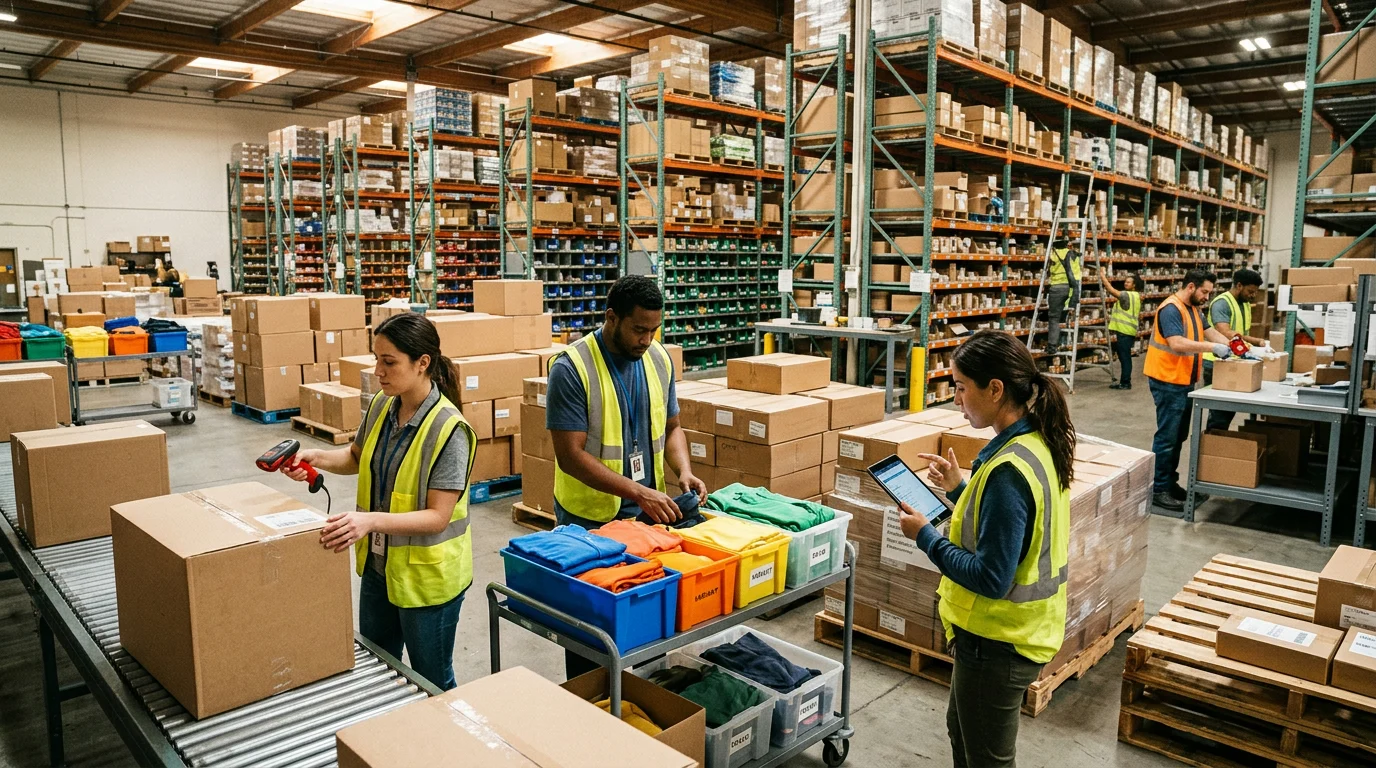
For e-commerce brands, fulfillment-centered 3PLs usually beat freight-only providers once daily parcel volume passes 200 orders. Freight providers are useful for pallets, containers, and truckloads. Fulfillment 3PLs are better at eaches: one black medium hoodie, one refill pouch, two samples, one gift note, shipped to a shopper in Denver by 4 p.m.
Core 3PL functions usually include:
- Inbound receiving: counting cartons, checking purchase orders, logging damage, and making SKUs sellable in the warehouse management system.
- Warehousing: storing inventory by SKU, lot, expiration date, bin, pallet, or temperature requirement.
- Pick and pack: pulling items, scanning barcodes, choosing mailers or cartons, adding inserts, and sealing packages.
- Carrier management: rating services across USPS, UPS, FedEx, DHL, regional carriers, or postal injection partners.
- Returns handling: receiving returns, grading items, restocking sellable units, quarantining damaged goods, and reporting patterns.
- Inventory reporting: syncing sellable stock, reserved stock, backorders, aging inventory, and replenishment alerts.
- Kitting and light assembly: building bundles, subscription boxes, gift sets, multipacks, or influencer mailers.
- International shipping support: preparing customs data, HS codes, duties workflows, and cross-border service options.
The last two functions often separate a basic warehouse from a growth-ready 3PL. If you sell a supplement bundle, a “buy 2 get 1” promo, and a subscription starter kit, kitting rules need to work before the promo goes live. If you ship to the United States, Canada, the United Kingdom, Germany, and Australia, customs descriptions and declared values can’t be guessed at the packing table.
The U.S. Census Bureau’s retail e-commerce sales reports show how large online retail has become in the U.S. market. That scale changes the bar. Shoppers compare your shipping speed to Amazon Prime and Apple, even if your brand has 12 employees and one operations manager wearing four hats.
3PL Provider Models
Not every 3PL is built for the same brand. A furniture seller shipping 70-pound coffee tables needs a different setup than a cosmetics brand shipping 3-ounce tubes. This is where provider selection gets expensive if you ask only, “What’s your pick and pack fee?”
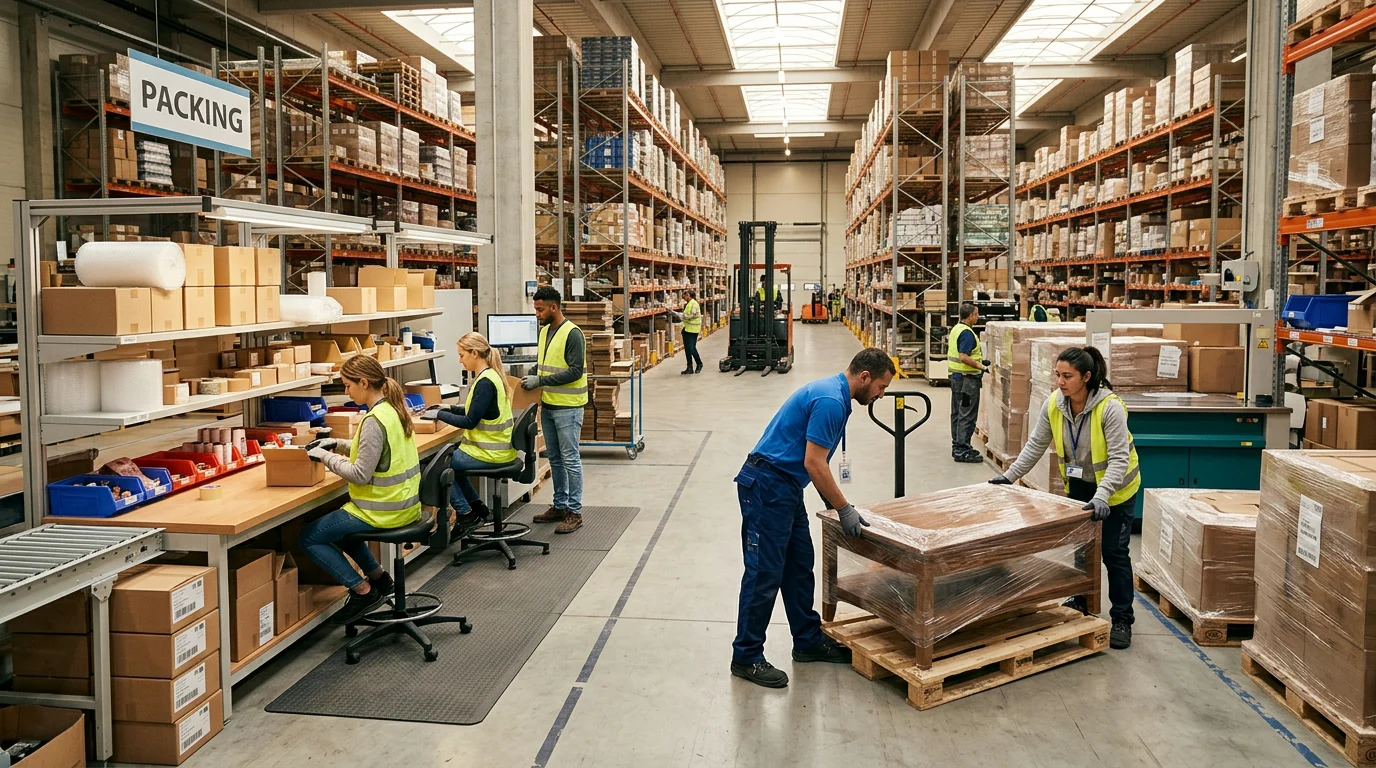
Asset-based 3PLs own or lease warehouses, hire warehouse teams, and run the physical work themselves. Non-asset 3PLs coordinate partner warehouses, freight providers, or carrier relationships. Neither model is automatically better. For a brand that needs tight packing rules, low error rates, and branded inserts, direct warehouse control usually works better. For a brand entering 8 countries at once, a network model may give faster geographic coverage but can add quality variance.
| 3PL model | Best fit | Watchout |
|---|---|---|
| Fulfillment warehouse | DTC brands shipping parcels daily | May be weak on freight or retail routing guides |
| Freight-focused 3PL | Pallets, containers, B2B shipments | Usually not built for single-item parcel fulfillment |
| Network 3PL | Multi-country inventory placement | Processes can vary by site |
| Specialty 3PL | Apparel, cosmetics, supplements, cold chain, hazmat | Higher fees, tighter onboarding requirements |
| 4PL-style coordinator | Brands managing several providers | Less direct control over warehouse labor |
For brands asking what are third party logistics providers, the more useful question is: which provider model fits your order profile right now? A Shopify brand shipping 300 lightweight orders per day should not choose a provider built around LTL freight. A B2B parts brand shipping 30 heavy orders per week should not pay for a DTC parcel network it won’t use.
This advice doesn’t apply to every company. If you ship 15 orders a day, have stable storage space, and sell only in one country, in-house fulfillment may still be cheaper. If you sell medical devices, alcohol, lithium batteries, frozen food, or regulated supplements, you need a provider with the right licenses, storage conditions, carrier rules, and documentation habits. A cheap 3PL without those controls is not cheap for long.
Third Party Logistics Provider Workflow
The workflow starts before the first order ships. A 3PL needs SKU data, carton counts, dimensions, weights, lot rules, store integrations, packing instructions, shipping service rules, return rules, and billing terms. Skip that setup and the warehouse has to guess. Guessing creates tickets.
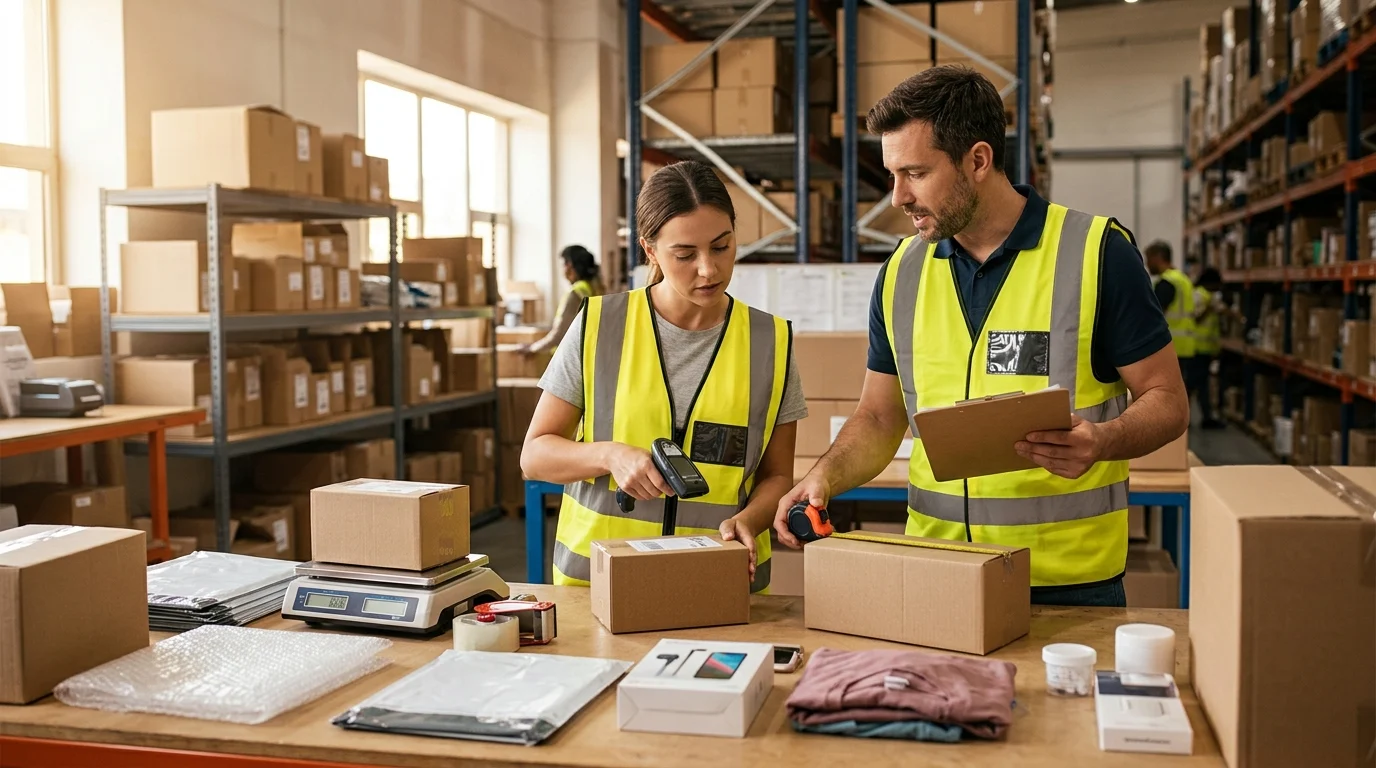
Here is a typical e-commerce 3PL workflow:
1. Onboarding: connect Shopify, Amazon, WooCommerce, Walmart Marketplace, TikTok Shop, or your order management system.
2. SKU setup: add names, barcodes, weights, dimensions, images, customs data, and storage rules.
3. Inbound plan: create an advance shipping notice with carton count, expected arrival date, and purchase order reference.
4. Receiving: count inventory, scan SKUs, flag exceptions, and move sellable units into storage.
5. Order import: pull paid orders from your channels based on cutoff times and fraud rules.
6. Picking: scan items by bin location and order number to reduce mis-picks.
7. Packing: apply carton logic, inserts, branded packaging, gift notes, or bundle rules.
8. Shipping: buy labels, hand parcels to carriers, and push tracking back to the store.
9. Returns: receive, inspect, restock, dispose, or escalate returned items based on your policy.
One small detail can change the whole flow. Say a fashion brand sells the same linen shirt in XS through XXL, in black, white, navy, and sage. That is 20 SKUs before bundles. If the brand uses the same barcode for black medium and navy medium, no 3PL can consistently fix that with training. The system needs clean data first.
A provider also needs cutoffs that match reality. “Same-day shipping for all orders before 4 p.m.” sounds great, but it depends on carrier pickup time, warehouse staffing, order batch size, and how long fraud review takes. For a brand shipping 500 daily orders, a 2 p.m. cutoff with 98% same-day SLA may beat a 4 p.m. promise that fails every Friday.
3PL Costs
3PL pricing is not one fee. You usually pay for onboarding, receiving, storage, pick and pack, packaging materials, shipping labels, returns, kitting, special projects, and sometimes account management or software. The dangerous mistake is comparing only pick fees.
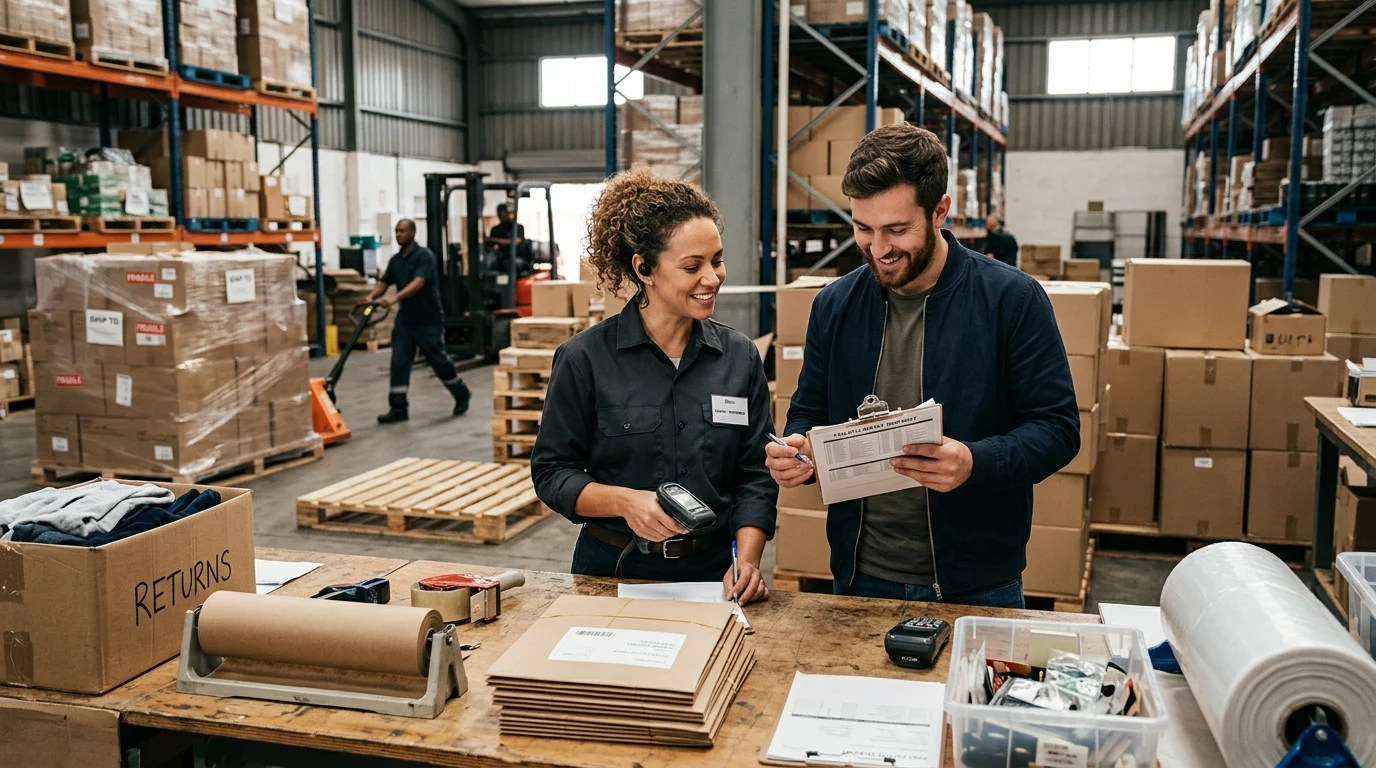
A provider quoting $1.85 for the first pick may cost more than a provider quoting $2.25 if the first provider adds high carton fees, long-term storage penalties, or support charges for every custom task. Ask for a modeled invoice based on your real order file: 30 days of orders, SKU count, units per order, package sizes, destinations, returns, and promo patterns.
| Cost item | What it covers | Better question to ask |
|---|---|---|
| Receiving | Unloading, counting, checking, putaway | Is it per carton, pallet, unit, or hour? |
| Storage | Bins, shelves, pallets, cubic footage | What triggers long-term storage charges? |
| Pick and pack | Labor to pull and pack orders | What is the fee for 2-unit and 5-unit orders? |
| Packaging | Mailers, boxes, dunnage, tape, inserts | Can we use branded packaging, and at what handling cost? |
| Shipping | Carrier label cost and service selection | Do you pass through rates, mark them up, or use blended rates? |
| Returns | Receiving, inspection, restocking, disposal | Can you separate sellable from unsellable units? |
There are tradeoffs. A low-cost warehouse may work for a single-SKU product with low returns, like a phone case brand selling one hero item in 5 colors. It may struggle with subscription boxes, lot-controlled supplements, or apparel returns where size exchanges and condition checks matter. A higher-cost provider with stronger receiving accuracy can save money if your team currently burns 20 hours a week fixing stock errors.
For brands above 200 daily orders, the best cost view is total logistics cost per shipped order. Include warehousing fees, fulfillment fees, postage, packaging, returns, inventory shrinkage, support tickets, stockout risk, and the salary cost of internal firefighting. If a 3PL cuts 60 weekly support tickets tied to late shipments and wrong items, that impact belongs in the calculation.
Third Party Logistics Provider Checklist
The right 3PL should fit your current volume and your next 12 months, not a fantasy version of the business. If you’re shipping 250 orders a day now and expect 700 during Q4, ask how the provider handles labor planning, temporary staff, carrier pickups, and order cutoffs during peak. Vague answers are a warning sign.
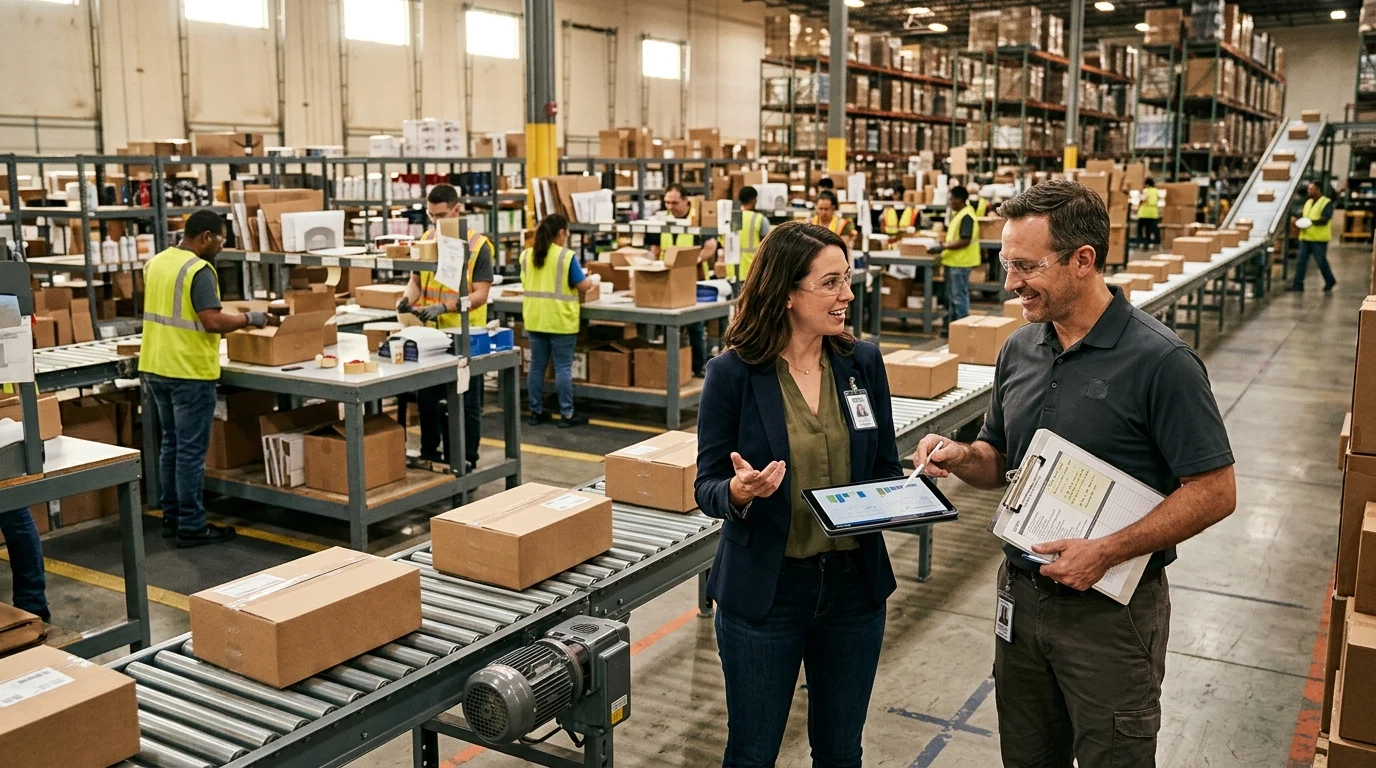
Use this checklist before signing:
- Do they support your main channels: Shopify, Amazon, WooCommerce, Walmart, TikTok Shop, or your ERP?
- Can they handle your product rules: lot tracking, expiration dates, apparel variants, serial numbers, hazmat, fragile items, or temperature control?
- What is their same-day fulfillment cutoff, and how is SLA performance measured?
- How do they report receiving errors, inventory shrinkage, carrier delays, and return reasons?
- Can they ship to your target countries with clear customs data and duties workflows?
- What happens when order volume doubles for 10 days?
- Can you see real-time inventory by SKU, bin, warehouse, reserved quantity, and damaged quantity?
- How are support tickets handled, and what response times are promised?
- Are there minimum monthly fees, long-term storage charges, or project fees?
- What does the exit process look like if you move inventory out?
Ask for proof, not adjectives. A serious provider should be able to show sample dashboards, SLA definitions, warehouse scan flows, receiving exception reports, and a sample invoice. You don’t need a 70-slide pitch deck. You need to know what happens at 3:40 p.m. when 480 orders arrive and the carrier truck leaves at 5:15 p.m.
Here is the practical line: for a fast-scaling e-commerce brand, choose a fulfillment 3PL with strong SKU discipline, clean software integrations, transparent billing, and cross-border experience. Choose a freight-led provider only if pallets, containers, and retail distribution matter more than individual parcel orders.
FAQ
What is a 3PL provider?
A 3PL provider is an outside logistics company that manages warehousing, fulfillment, shipping, inventory, returns, or related supply chain work for a brand. For e-commerce, the core job is getting paid orders picked, packed, shipped, and tracked accurately.
Is Amazon FBA a 3PL?
Amazon FBA works like a 3PL for Amazon marketplace orders because it stores inventory and fulfills orders. It is less flexible for branded packaging, multi-channel fulfillment rules, and non-Amazon customer experience control.
When should brands use 3PL?
Brands should consider a 3PL when order volume, storage needs, returns, or international shipping are pulling too much time from product, marketing, and customer support. Around 200+ daily orders, in-house fulfillment often becomes a management burden.
What does a 3PL cost?
3PL costs usually include receiving, storage, pick and pack, packaging, shipping, returns, and special projects. The best comparison is total logistics cost per order, not the cheapest pick fee.
How is 3PL different from 4PL?
A 3PL performs logistics work such as warehousing and fulfillment. A 4PL manages multiple logistics partners and often acts as a supply chain coordinator rather than the warehouse doing the daily order work.
If your brand is scaling across the United States, Europe, and other international markets, FlexFulfills can help you turn the third party logistics provider definition into a practical fulfillment plan: inventory received cleanly, orders shipped on time, returns handled with rules, and customers kept out of your support queue.