

A 3PL fulfillment warehouse should do more than store boxes: look for inventory accuracy, fast pick windows, carrier options, returns handling, system sync, and proof that the warehouse can protect your brand when order volume jumps. If you’re scaling on Shopify, TikTok Shop, or Amazon, the best fit is usually the operator that connects sourcing, QC, packaging, fulfillment, and tracking instead of passing each step to a different vendor.
3PL Warehouse Fit
A 3PL fulfillment warehouse is the right choice when your order volume has outgrown spreadsheets, late-night label printing, and supplier-to-customer guesswork. Look for clean receiving rules, SKU-level inventory visibility, packing standards, delivery options, returns workflows, and a team that can explain what happens when 800 orders land on Monday morning.

Start with your operating reality. A beauty brand shipping 40,000 lightweight parcels a month doesn’t need the same warehouse as a furniture brand sending LTL freight to retailers. A TikTok Shop seller moving from generic dropshipping into branded bundles needs tighter QC, packaging control, and tracking sync. A private-label brand sourcing from China needs factory checks before inventory ever reaches a shelf.
| What You’re Scaling | Warehouse Must Prove |
|---|---|
| DTC parcels | Fast pick-pack, carrier choice, clean tracking uploads |
| TikTok Shop volume spikes | Same-day handling rules, surge staffing, SKU accuracy |
| Private label products | Supplier checks, samples, QC photos, packaging checks |
| Global customers | China, US, and Europe warehouse options |
| Returns-heavy categories | Inspection, restock rules, photo evidence, disposal rules |
This advice doesn’t apply cleanly to every business. If you ship hazmat, cold-chain food, oversized furniture, or regulated medical inventory, you need a specialist before you need a general ecommerce warehouse. Same for B2B wholesale if most orders leave by pallet and require retailer routing guides from Walmart, Target, or Costco.
For fast-moving ecommerce brands, though, the better question is simple: can this warehouse keep promises when the sales channel gets noisy?
Fulfillment Accuracy Signals
Accuracy is boring until it fails.
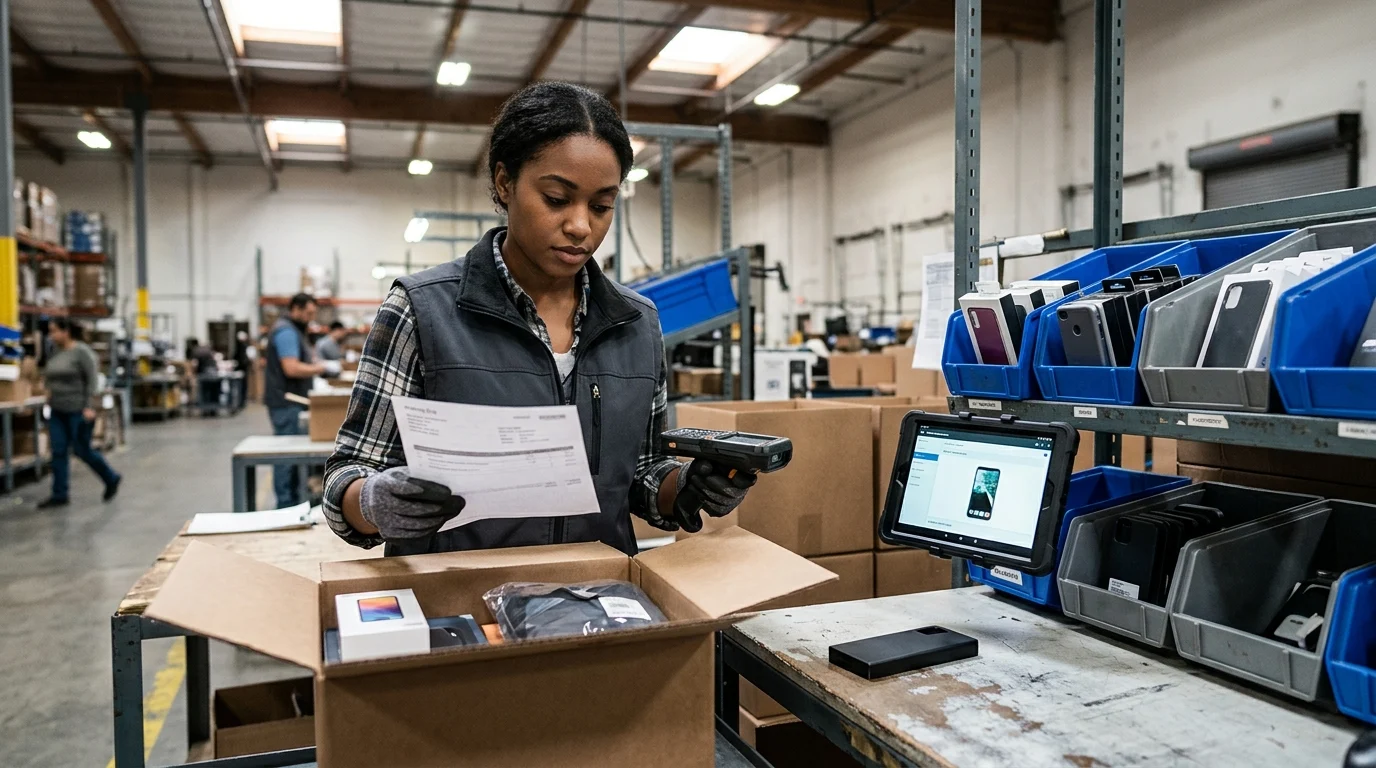
One wrong variant ships. The customer sends a photo. Support refunds the order. The replacement goes out. Now a $19 margin problem has become two shipments, one return, one bad review, and a support ticket your team didn’t need.
Ask every warehouse for the numbers behind its operation, not just the software it uses. You want to see pick accuracy, dock-to-stock time, inventory shrink, same-day order cutoffs, backorder handling, and how often carrier tracking posts late. If the warehouse says “we’re very accurate” but can’t define the metric, keep going.
A practical screen:
- Pick accuracy target: 99%+ for single-item orders, with separate reporting for bundles and kits
- Receiving SLA: inventory counted and available within 24-48 hours after arrival
- Order cutoff: written by timezone and carrier, not buried in a call
- Exception handling: photo proof for damaged goods, short shipments, wrong cartons, or supplier defects
- Cycle counts: scheduled by SKU velocity, not only when inventory looks wrong
This is where sourcing and fulfillment should talk to each other. If 2% of a phone case batch arrives with scuffed corners, the warehouse shouldn’t quietly ship it and let customer support find out later. FlexFulfills uses 100% manual product inspection before shipment, with QC photos and packaging checks when brands need that extra layer. That’s less glamorous than a dashboard. It matters more.
If you’re still deciding what type of partner you need, our guide to choosing an ecommerce fulfillment company covers the higher-level vendor screen before you compare warehouse workflows.
Shipping Coverage And Speed
Fast shipping starts before the parcel moves. It starts with where the SKU sits.
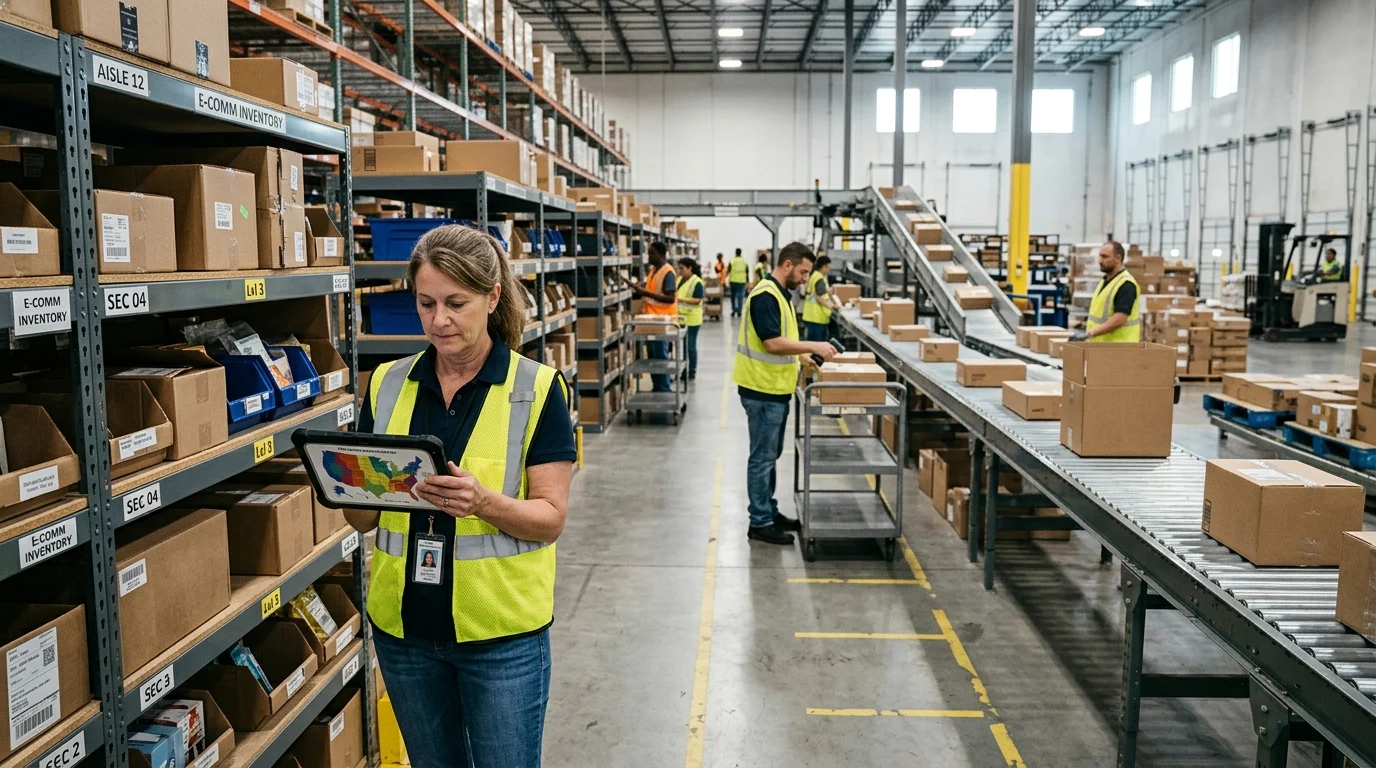
The U.S. Census Bureau reported that U.S. retail ecommerce sales reached $326.7 billion in Q1 2026, up 9.8% from Q1 2025, and accounted for 16.9% of total retail sales. More online volume means more brands competing on delivery promises, even when the product is sourced overseas.
For cross-border ecommerce, the warehouse location question has 2 decent answers. Keep inventory close to the factory when product variety is high and demand is still uneven. Move inventory into US or Europe nodes when repeat SKUs are predictable and faster local delivery will pay for itself.
Neither model is magic.
China fulfillment can work better for brands testing 40 SKUs, changing packaging often, or consolidating samples from several suppliers. US or Europe fulfillment can work better once your hero products have stable monthly demand and you want tighter domestic delivery windows. The wrong choice is splitting inventory across nodes before you know which SKUs deserve it.
FlexFulfills supports fulfillment across China, US, and Europe warehouse nodes, with site-stated delivery of 5-10 days to the US and EU and shipping to 50+ countries. For brands that want one operator across sourcing, QC, warehousing, packing, shipping, and returns, our custom 3pl fulfillment model keeps fewer handoffs in the system.
Ask these shipping questions before you sign:
- Which carriers are used for the US, UK, Germany, Canada, and Australia?
- Are tracking numbers synced automatically to Shopify, TikTok Shop, WooCommerce, or Amazon?
- What happens when a carrier scan doesn’t update for 72 hours?
- Can the warehouse separate standard shipping, express shipping, and VIP orders?
- Are duties, taxes, and delivery failure rules written down by market?
A warehouse that can’t explain failed delivery handling will eventually turn your support inbox into a tracking desk.
Systems And Inventory Visibility
A warehouse can be physically clean and still operationally messy. The giveaway is inventory visibility.
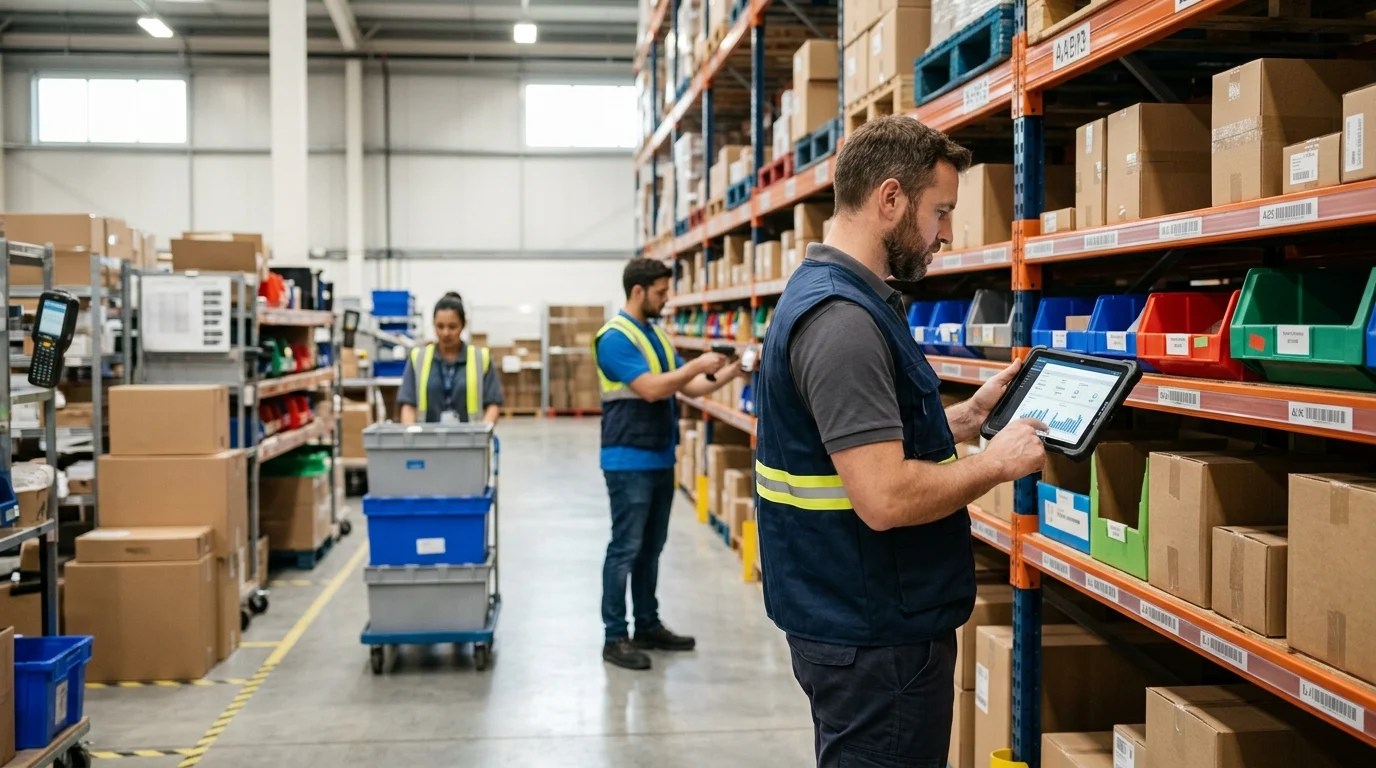
You should be able to answer these questions without sending three Slack messages: how many units are available, how many are reserved, what arrived today, what’s damaged, what’s waiting for QC, and which SKUs are about to stock out. If the portal only shows a single “in stock” number, you’re missing the details that prevent bad sales promises.
For Shopify and TikTok Shop sellers, sync matters because sales channels punish late fulfillment in their own ways. TikTok Shop cares about dispatch timing. Amazon cares about valid tracking and account health. Shopify customers care when the tracking page sits still for four days.
The warehouse tech stack doesn’t need to be fancy. It needs to be exact.
| System Need | Why It Matters |
|---|---|
| Real-time inventory sync | Prevents selling SKUs that aren’t pickable |
| Lot or batch tracking | Helps isolate supplier defects fast |
| Bundle logic | Stops kits from overselling one component |
| Returns status | Shows what can be restocked, repaired, or discarded |
| Carrier event tracking | Gives support a clean answer before the customer asks twice |
One caution: don’t buy software theater. A polished portal doesn’t fix weak receiving, loose bin control, or staff who scan after packing instead of during picking. Ask for a walkthrough of one real order: receiving, putaway, pick, pack, label, tracking upload, delivery issue, and return.
If you need the mechanics before the warehouse screen, read our explainer on order fulfillment for ecommerce. It breaks down where errors usually enter the process.
Packaging, QC, Returns
The warehouse is where your brand becomes physical.
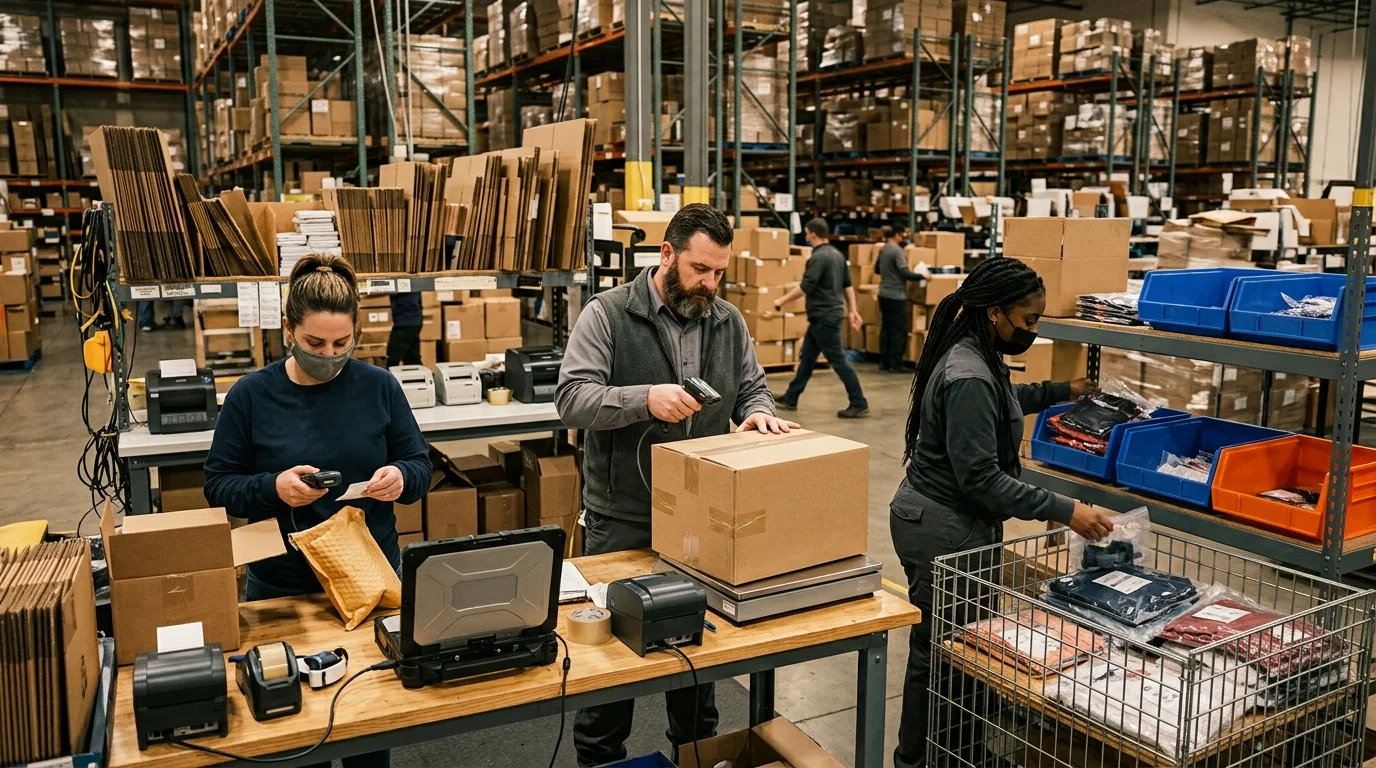
A customer doesn’t know your supplier passed a sample in Yiwu. They know the mailer arrived crushed, the insert was missing, the hoodie smelled like plastic, or the shade name on the sticker didn’t match the product page. Small stuff. Expensive stuff.
For dropshipping sellers moving into a branded model, packaging control is often the first real upgrade. Custom mailers, box inserts, barcode labels, thank-you cards, bundled accessories, and SKU-specific packing rules all need warehouse discipline. If your 3PL says “we can do custom packaging” ask what that means at 3,000 orders a day, not 30.
Returns deserve the same pressure test. The National Retail Federation projected $849.9 billion in retail returns for 2025, with 19.3% of online sales expected to be returned. That number is a reminder: returns aren’t an afterthought. They’re part of margin.
Set rules before the first return arrives:
- Can opened products be resold?
- Which defects require photos?
- Who approves disposal?
- When does a return become available inventory again?
- Can returns data feed product page changes, size guidance, or supplier feedback?
This is where a sourcing-to-fulfillment model earns its keep. If five returns mention cracked caps on the same skincare bottle, the fix may be upstream: change the cap supplier, add carton padding, or tighten the inspection step before export. A warehouse that only scans returns will process the pain. A supply chain partner should help remove the cause.
3PL Warehouse Checklist
Use this final screen before you compare quotes. Cheap storage and low pick fees don’t help if the warehouse creates support load, late shipments, or preventable returns.
- Ask for sample SLAs in writing: receiving, pick-pack, cutoff times, tracking upload, returns inspection.
- Review reporting: inventory by SKU, damaged stock, order status, carrier delays, stockout risk.
- Test one order flow: sample inbound shipment, sample pick, branded packaging, tracking sync, and return.
- Confirm channel support: Shopify, TikTok Shop, Amazon, WooCommerce, or your ERP.
- Check global fit: China, US, Europe, and the countries where your customers actually buy.
- Push on exceptions: wrong supplier carton, missing barcode, damaged batch, address failure, chargeback claim.
- Compare total cost: storage, pick-pack, packaging labor, returns, shipping, account fees, and special projects.
- Meet the operations contact, not only the salesperson.
The best 3PL fulfillment warehouse for a scaling ecommerce brand is the one that reduces handoffs. If your products are sourced in China, packed with brand-specific rules, sold through multiple channels, and shipped globally, splitting sourcing, QC, warehouse, and logistics across four vendors usually creates more work than it saves.
FAQ
What is a 3PL warehouse?
A 3PL warehouse stores inventory, picks and packs customer orders, ships parcels, updates tracking, and handles returns for brands that outsource fulfillment. Ecommerce brands use 3PL warehouses when internal operations can’t keep pace with order volume.
How do 3PL warehouses charge?
Most 3PL warehouses charge for receiving, storage, pick-pack labor, packaging materials, shipping, returns, and special projects. Compare the full monthly cost, not only the pick fee.
When should brands switch to 3PL?
Switch when fulfillment work slows growth: late shipments, stock errors, supplier issues, support tickets, or packaging mistakes. For many DTC brands, that point arrives before the team feels “ready.”
Is China fulfillment still reliable?
China fulfillment can be reliable when sourcing, QC, warehousing, and carrier tracking are managed together. It works best for cross-border brands that need supplier access, packaging control, and 5-10 day delivery promises without holding every SKU domestically.
FlexFulfills is built for ecommerce brands that need more than storage: sourcing, supplier checks, samples, QC, custom packaging, China/US/Europe fulfillment, tracking sync, and returns support in one operating model. Bring your last 30 days of orders, top SKUs, return reasons, and target countries, and we can help map the warehouse setup that fits your next stage.