
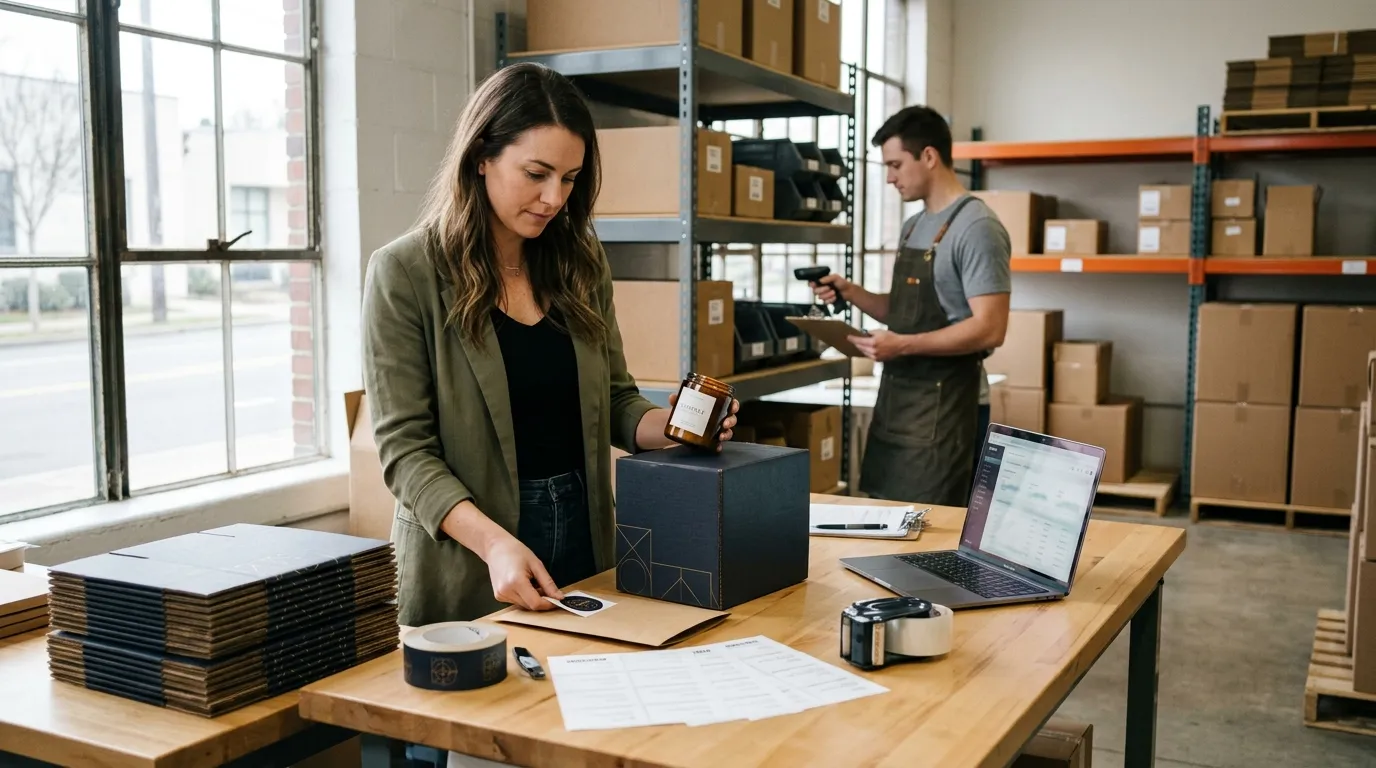
If you’re asking what is branded dropshipping, the short answer is this: you sell products under your own brand while a supplier, manufacturer, or fulfillment partner handles storage, packing, and shipping. It works best when you want the speed of dropshipping but need stronger customer trust, branded packaging, cleaner delivery promises, and a path toward repeat orders.
Branded Dropshipping Explained
Branded dropshipping is an e-commerce model where your store sells products under your brand name, while another company produces, stores, or ships the order. The customer sees your brand on the website, order emails, packing slip, product insert, or packaging, even though your team doesn’t pack each parcel.
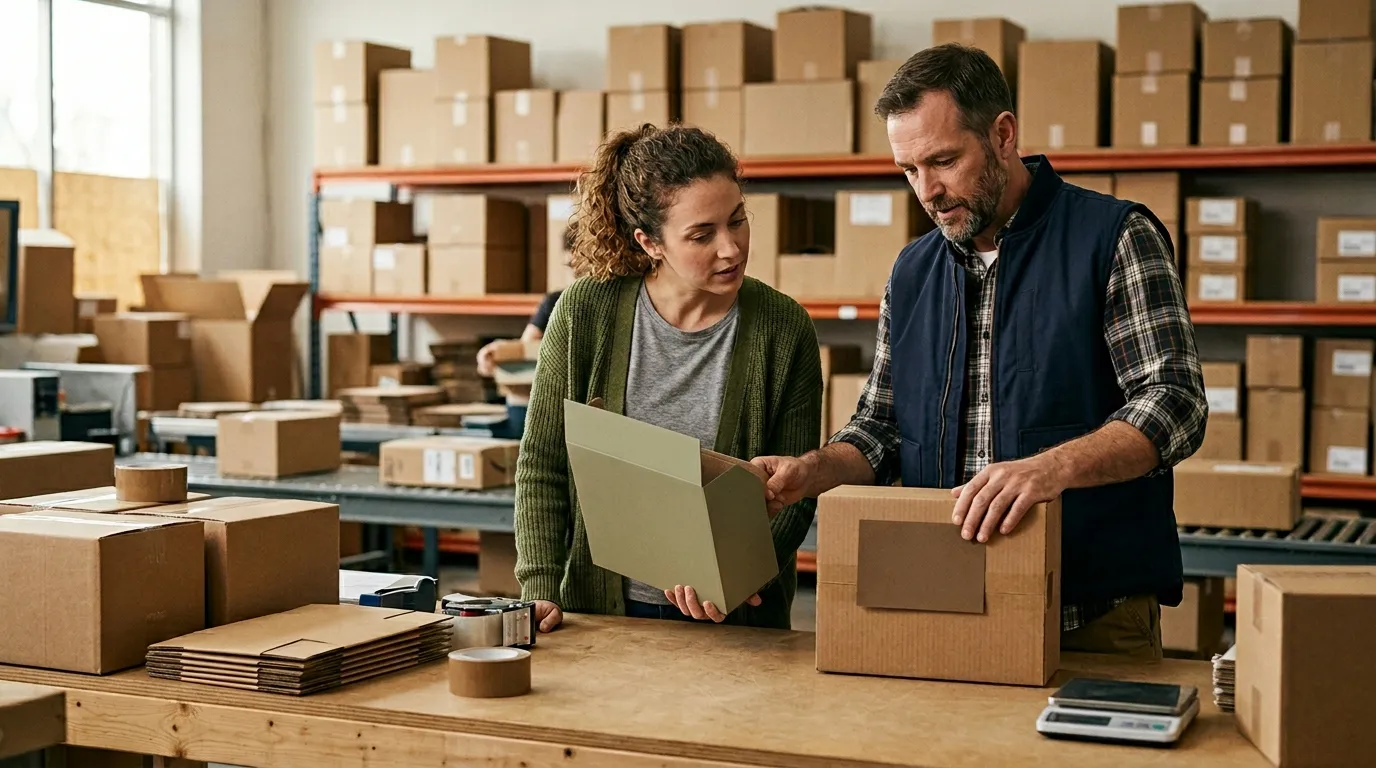
Picture a Shopify skincare brand selling a vitamin C serum. The bottle has the store’s label, the box uses the store’s colors, and the post-purchase email comes from the store. The actual inventory may sit with a supplier in Shenzhen, a warehouse in Los Angeles, or a third-party logistics partner. The customer doesn’t care who taped the box shut. The customer cares that the product arrives on time, looks legitimate, and matches the promise on the product page.
That last part matters. U.S. retail e-commerce sales reached $326.7 billion in Q1 2026, and e-commerce accounted for 16.9% of total U.S. retail sales, according to the U.S. Census Bureau, 2026. More online spending means more choice. A plain gray parcel with a random supplier name on the label feels cheap when the product cost is $49, $89, or $140.
| Element | Regular Dropshipping | Branded Dropshipping |
|---|---|---|
| Packaging | Supplier default | Your logo, insert, box, or label |
| Customer trust | Lower | Higher |
| Setup speed | Fastest | Slower by 2-8 weeks |
| Margin control | Often thin | Better when repeat orders grow |
| Best fit | Product testing | Brand building |
For a store doing 200+ daily orders, branded dropshipping usually beats anonymous dropshipping. At that volume, you have enough order data to justify better packaging, stricter quality checks, and a returns process that doesn’t send customers into a support maze.
Branded vs Regular Dropshipping
Regular dropshipping is built for testing demand. You list products, send orders to a supplier, and keep inventory risk low. That can work for a new store trying 20 phone accessories, pet brushes, or LED desk lamps in 30 days.
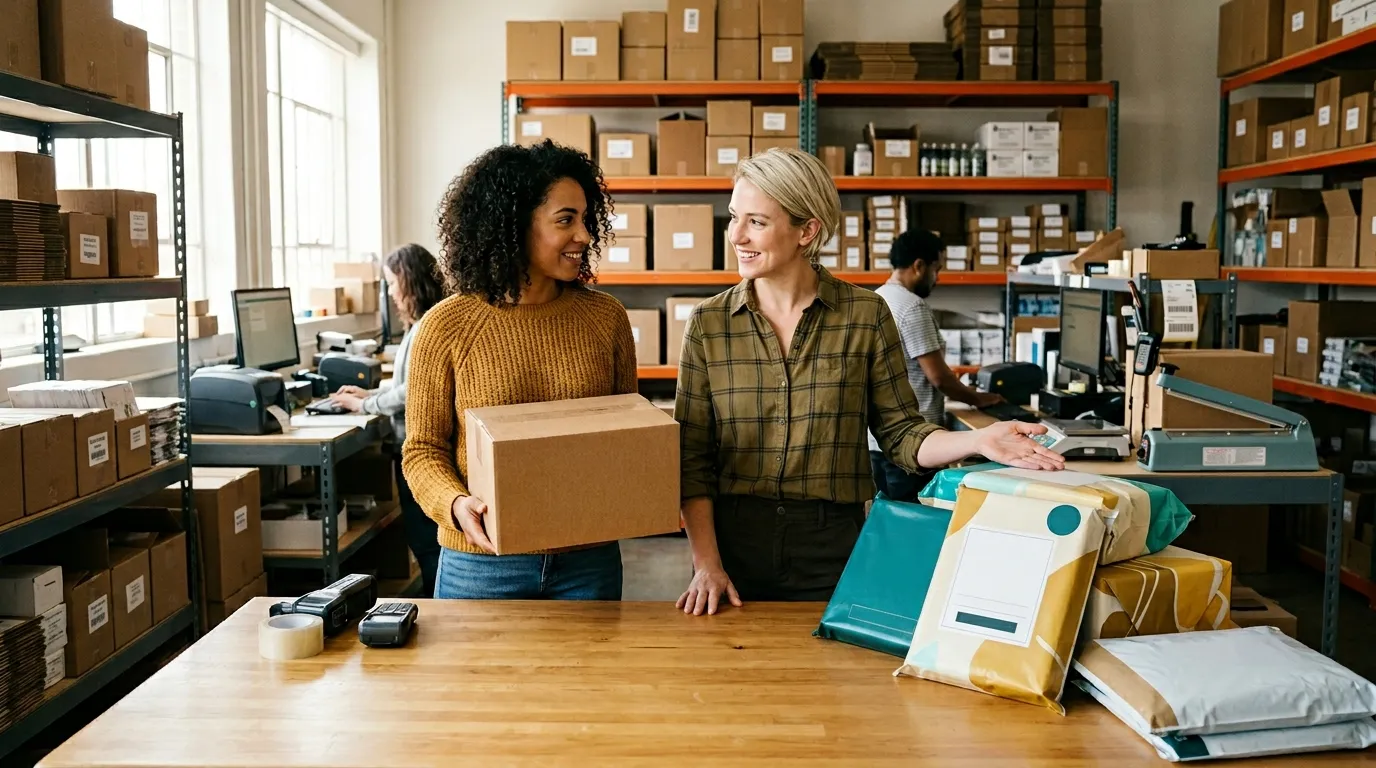
Branded dropshipping is built for retention. You narrow the offer, control the customer experience, and make the product feel like it belongs to your company. The tradeoff is speed. A generic supplier can ship tomorrow. A branded packaging run might need a minimum order of 500 boxes, 1,000 labels, or 2,000 insert cards.
Here’s the practical difference: regular dropshipping asks, “Can this product sell?” Branded dropshipping asks, “Can this product become ours?”
| Model | Best Use Case | Main Drawback |
|---|---|---|
| Regular dropshipping | Testing products under $40 | Weak brand memory |
| Branded dropshipping | Scaling proven SKUs | More setup work |
| Private label | Owning product specs | Higher cash tied up |
| 3PL fulfillment | Faster delivery control | Requires inventory planning |
Branded dropshipping also sits between classic dropshipping and private label. With private label, you usually change the product formula, materials, bundle, or spec. With branded dropshipping, you may start with supplier-standard goods but improve the outer experience: label, box, insert, tracking flow, returns address, and customer support.
A fitness brand selling resistance bands might start with supplier-standard bands, then add a printed pouch, a 14-day workout card, and QR code onboarding. Later, once reorder rates justify it, the brand can request different band tensions, custom colors, and a higher-grade latex blend.
Brand Assets That Matter
A logo on a box isn’t enough. Customers judge branded dropshipping through tiny signals: the sender name on the tracking page, the return address, the label alignment, the smell of the packaging, the first line of the insert, and whether customer support knows what was shipped.
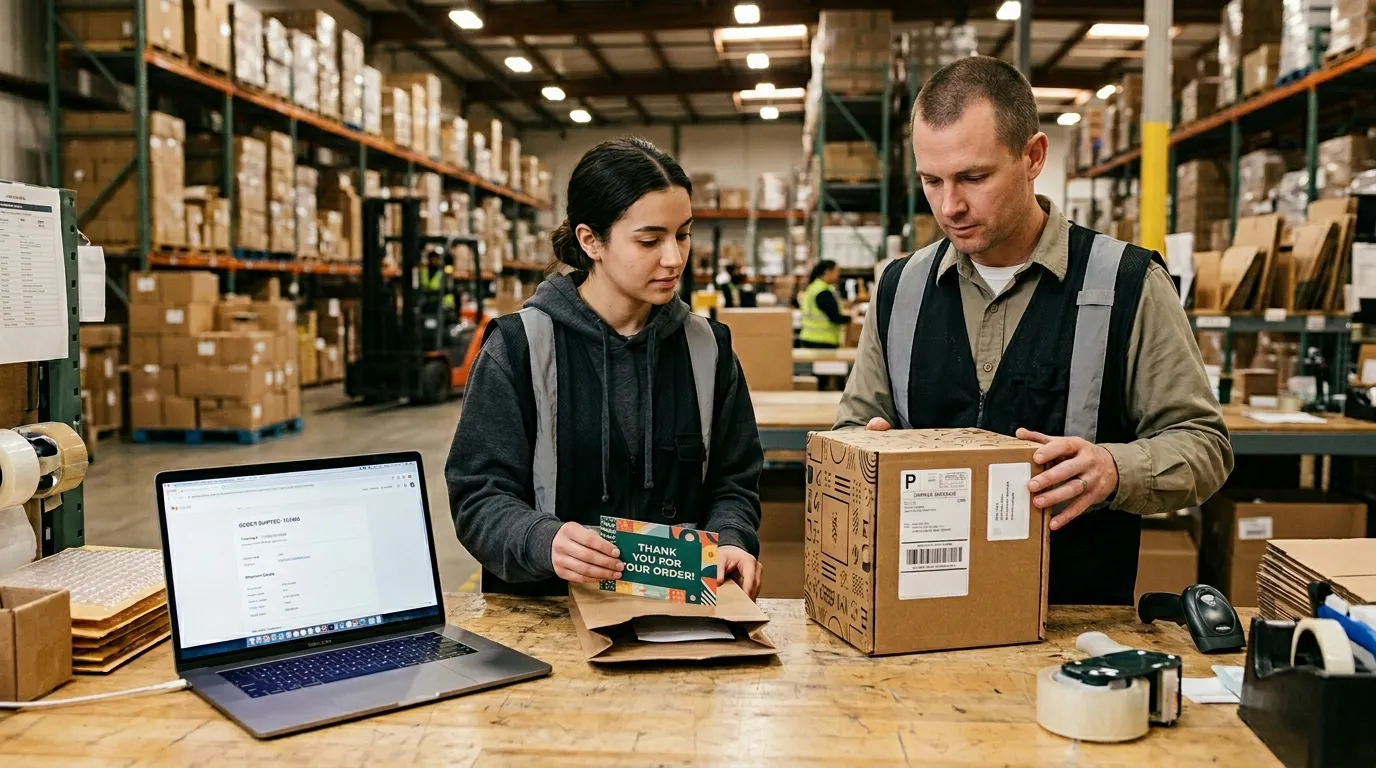
Start with the assets customers actually touch.
- Product label or hangtag
- Branded packing slip
- Insert card with care, sizing, or setup details
- Outer mailer, box, or pouch
- Tracking page and delivery emails
- Return instructions
- Customer support macros
The insert card is underrated. A $0.06 card can reduce “how do I use this?” tickets for products like lash serum, posture correctors, pet grooming tools, shapewear, or supplements. Keep it useful. A QR code to a sizing page beats a vague thank-you message every time.
Compliance still applies, even when the product has your brand name. For U.S. imports, 19 CFR Part 134 covers country-of-origin marking rules, and U.S. Customs and Border Protection explains that foreign-origin articles generally need clear country-of-origin marking for the ultimate purchaser. See CBP country-of-origin marking guidance before approving labels, cartons, or retail packaging.
Don’t fake origin claims. “Designed in California” can be fine if true. “Made in USA” has a much higher bar. If your stainless steel bottle is manufactured in China, packed in a U.S. warehouse, and sold by a Delaware LLC, the product still needs accurate origin handling.
Supplier and 3PL Setup
The supplier makes or sources the product. The 3PL stores, packs, ships, and handles order flow. In early branded dropshipping, one company may do both. That sounds convenient, but it can limit your control once order volume climbs.
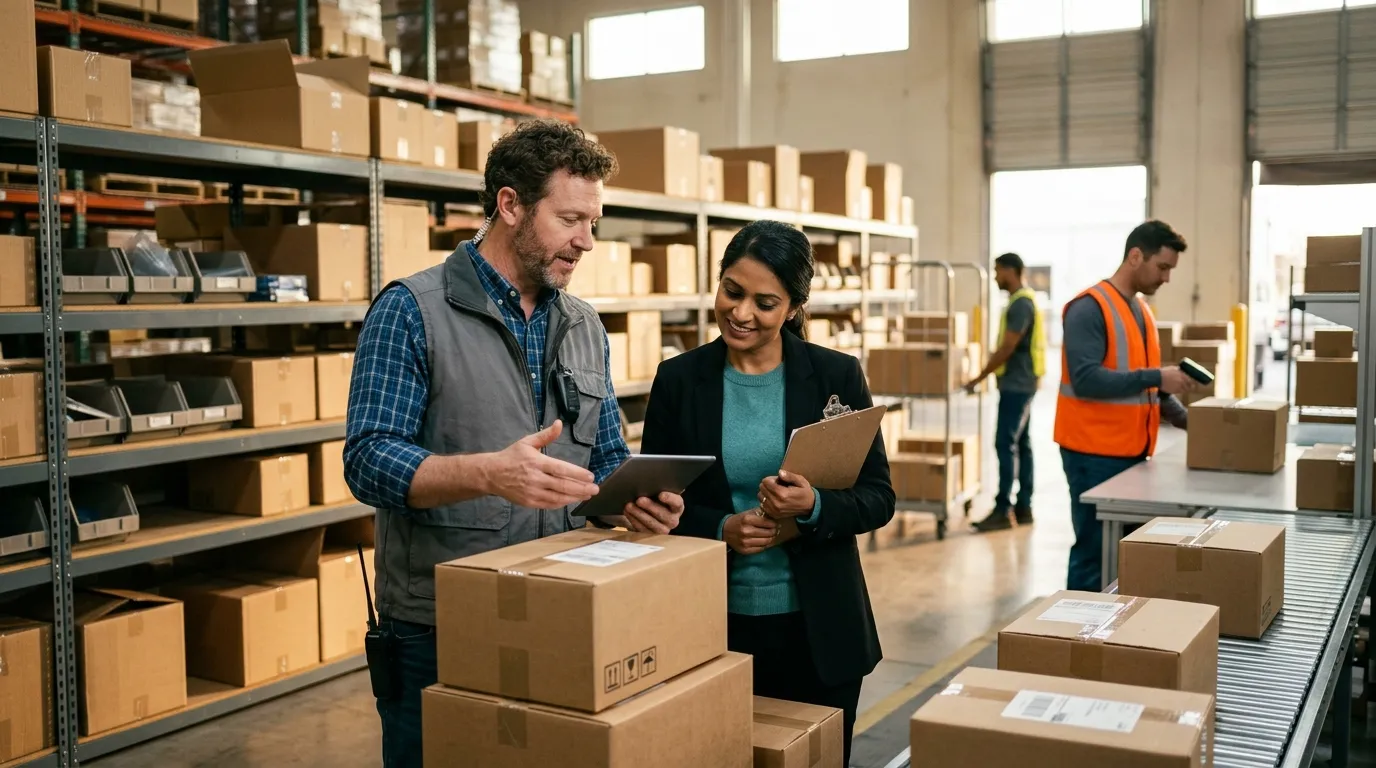
For 200+ daily orders, split the work when the product has steady demand. Keep supplier relationships focused on product cost, lead time, quality checks, and packaging production. Use a fulfillment partner for inventory accuracy, shipping speed, carrier choice, returns, and customer-facing delivery standards. This is where FlexFulfills e-commerce fulfillment services can support brands that are ready to move beyond supplier-controlled shipping.
Ask every supplier these questions before you send money:
- What is the minimum order quantity for branded packaging?
- Can you send pre-production photos and a physical sample?
- What defect rate do you track by SKU?
- Who owns the printing files and packaging dies?
- Can cartons be labeled by SKU, batch, and destination?
- What happens if 8% of units fail inspection?
- Can you ship inventory to the United States, Europe, or both?
Now ask the 3PL different questions. A warehouse that answers supplier questions well may still struggle with consumer fulfillment. You need cutoff times, carrier options, return grading rules, Shopify or WooCommerce integration, lot tracking if relevant, and a clear process for branded inserts.
A simple example: your store promises “ships in 24 hours” on a $72 hair tool. The Federal Trade Commission says online sellers need a reasonable basis for shipping promises, and if no shipping time is stated, the seller should have a basis to ship within 30 days. The Federal Trade Commission prompt delivery rules also cover delay notices and refunds. Translation: don’t let marketing write delivery promises that operations can’t hit.
Startup Steps and Costs
Start with one proven product. Two at most. A catalog of 35 branded products sounds mature, but it’s a cash trap when you haven’t tested repeat purchase, returns, reviews, and delivery timing.

Use this sequence:
- Pick a product with repeatable demand. Look for at least 100-300 paid orders, a refund rate under 8%, and customer support issues you can actually fix.
- Order supplier samples from 2-4 sources. Compare packaging condition after shipping, product feel, instructions, and defect patterns.
- Build a unit economics sheet. Include product cost, branded packaging, freight, 3PL receiving, pick and pack, postage, returns, payment fees, and ad cost.
- Create basic brand assets. Start with a label, insert, packing slip, and tracking page before paying for custom molded packaging.
- Run a small branded batch. For many categories, 500-1,000 units is enough to test packaging quality and customer response.
- Set shipping promises by region. A U.S. warehouse can support 2-5 business day delivery in many states; cross-border direct shipping may take 7-15 business days.
- Review support tickets after 30 days. Customers will tell you what the product page, insert, and packaging failed to explain.
Costs vary by category, but the first branded batch often lands between $2,000 and $10,000 before ad spend. A lightweight product like a posture strap may need less. A boxed electronic device with safety documentation, inserts, and protective foam can need much more.
The mistake is spending $6,000 on packaging before the product earns it. Put money into the parts customers notice and operations can repeat. A clean label, accurate tracking, and fast response to returns will beat a fancy box with 12-day delivery.
Risks Before You Scale
Branded dropshipping doesn’t fit every store. If you’re still testing random products each week, stay with regular dropshipping until the data points to winners. Branding a weak product makes the failure look more polished, which doesn’t help.

The model also struggles with products that have high defect risk, strict regulatory duties, or heavy sizing complexity. Supplements, baby products, cosmetics, electronics, medical-adjacent devices, and children’s apparel need extra care. You may need lab reports, ingredient files, safety marks, warning labels, batch tracking, or market-specific documentation. A supplier saying “no problem” in a WhatsApp message isn’t enough.
Watch these risk signals:
- Refund rate above 10% after 100 orders
- Shipping time longer than your product page promise
- Supplier can’t define defect standards
- Packaging files are controlled by the supplier
- No clear return address by region
- Tracking numbers activate late
- Customer support gets the same complaint every day
Margins can look better than they are. A product bought for $9 and sold for $39 looks healthy until you add $4 packaging, $7 postage, $2.10 payment and platform fees, $12 customer acquisition cost, and a 6% replacement rate. Now the margin is thin. One carrier surcharge or ad CPM spike can wipe it out.
The better move is boring: prove the product, brand the experience, then improve the product itself. Once your reorder rate, review quality, and support tickets look stable, private label becomes a logical next step.
FAQ
Is branded dropshipping legal?
Yes, branded dropshipping is legal when product claims, origin labels, shipping promises, and consumer policies are accurate. Regulated categories such as cosmetics, supplements, electronics, and children’s products may need extra documentation.
Is branded dropshipping profitable?
Branded dropshipping can be profitable when repeat orders, higher average order value, or stronger reviews offset packaging and setup costs. If you rely only on first-order paid ads, margins can get tight fast.
Do I need inventory?
You may not need inventory at the start, but branded packaging often requires a small batch. Fast-scaling stores usually move inventory into a 3PL once daily orders become predictable.
How long does branding take?
Basic branding can take 2-4 weeks for labels, inserts, and packing slips. Custom boxes, product molds, or formula changes can take 6-12 weeks before the first sellable batch.
Can branded dropshipping work globally?
Yes, but global branded dropshipping needs region-specific shipping plans, return addresses, taxes, and labeling checks. A U.S.-only setup won’t automatically work for Germany, France, Australia, or Canada.
If you’re ready to move from supplier-default parcels to a branded fulfillment flow, FlexFulfills can help you map the next practical step: send your top SKUs, 30-day order volume, target countries, packaging plan, and current delivery times, then build the fulfillment setup around the numbers instead of guesses.