

Fashion ecommerce fulfillment works best when the warehouse can tell every sellable size and color apart, preserve the garment’s condition, and keep exchanges and returned stock from being sold twice. For an apparel brand, a seemingly small mismatch, a medium scanned as a large, or a returned item made available before inspection, can create another shipment and a poor customer experience.
Use the seven checks below to review your own operation or evaluate a third-party logistics provider (3PL). For each one, ask for operational evidence as well as a process description. The example quantities and workflows are illustrative; agree on your own rules and service targets with your provider.
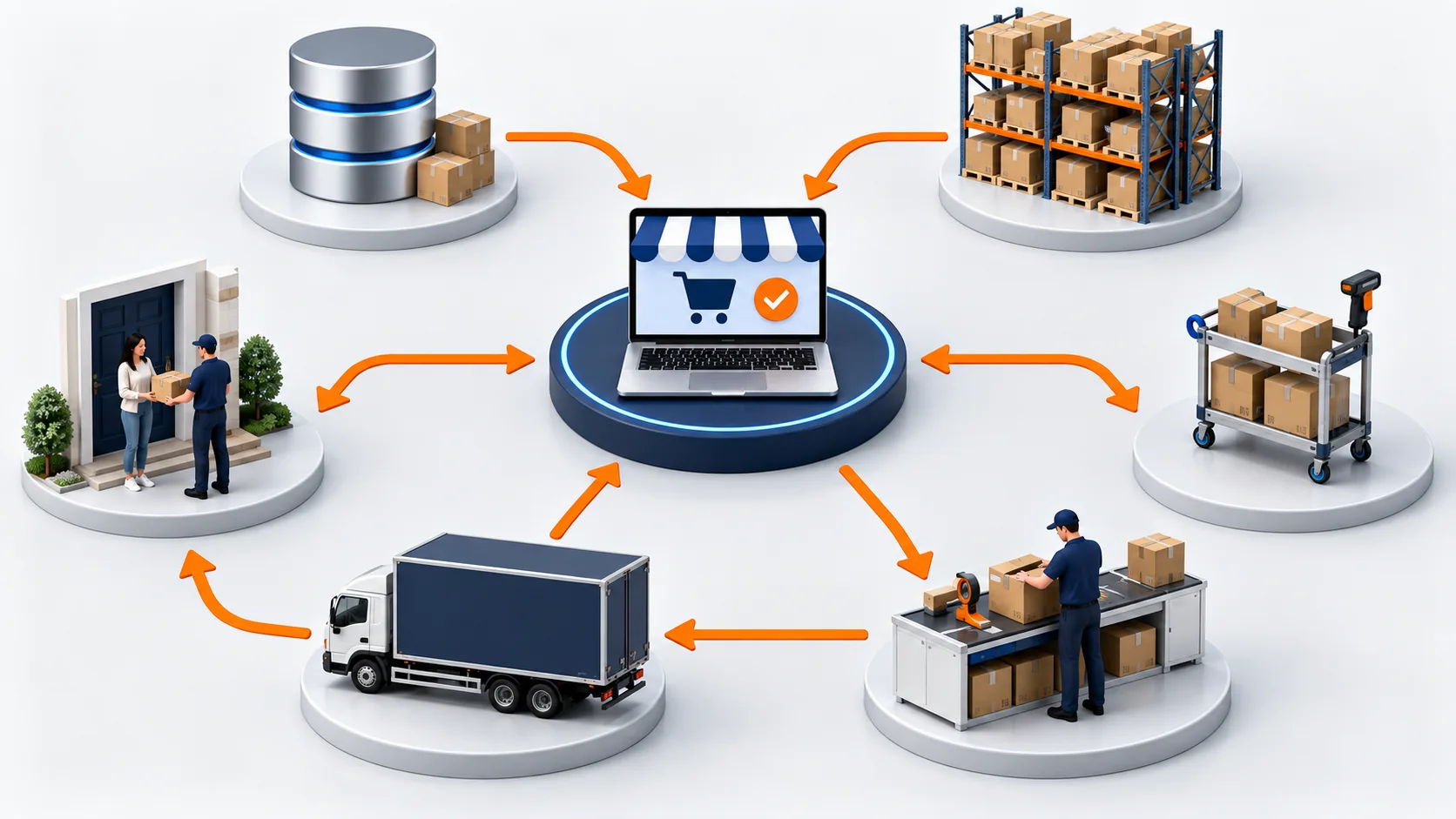
1. Mapping Orders to Parent Styles
One jacket in three colors and five sizes can represent 15 separately sellable variants. If the storefront sends only the parent style, the warehouse cannot reliably identify the customer’s chosen combination. A similar problem occurs when a new marketplace listing points to an old warehouse SKU.
Build a variant master that maps each channel’s product and variant IDs to the warehouse SKU, barcode, style, color, size, and any relevant pack configuration. Test the mapping before a collection goes live and whenever a listing or integration changes. If a line cannot be matched, hold the order for review rather than selecting a plausible-looking item.
An internal SKU and a GTIN are different identifiers. Where retail partners require GTINs, check their requirements for each separately sold variation; GS1 US explains how apparel identifiers and barcodes relate.
Ask your 3PL for: a sample variant mapping export, a rejected-order example, and a named contact for correcting mappings before release.
2. Mixing Fashion Inventory Variants
A black small and a black medium can look identical from outside a folded stack. Placing them in one unmarked bin makes a visual pick fragile, especially during a new collection launch or temporary staffing period.
Give each variant an identifiable location or a clearly separated compartment. Decide how replenishment staff verify the destination location and product label before placing stock. For particularly similar items, use shelf dividers, prominent location labels, or separate nearby sizes according to the warehouse’s layout. Follow up with cycle counts on variants that show repeated discrepancies.
Ask your 3PL for: a location report for a style’s size run, the replenishment check, and a sample discrepancy investigation. A photo of a labeled bin is helpful, but it does not replace transaction records.
3. Trusting an Unchecked Barcode
Scanning reduces reliance on eyesight only when the barcode points to the correct item. A duplicated label or a barcode hidden inside a sealed bag can undermine the check. The scanner should show or validate the ordered variant, not simply a successful read.
Check one physical example of every size and color against the master record during receiving. At picking and packing, compare the scanned identifier with the order line, and define what happens when it does not match or cannot be read. A relabeled garment should be checked again before it is returned to active stock. Decide whether the packer must also verify the visible size label for higher-risk items.
Ask your 3PL for: sample pick and pack scan events, an exception log, and the procedure for duplicate or unreadable barcodes. Run a deliberate wrong-size scan during testing to see whether the order is stopped.
4. Using One Packing Method
A heavy sweatshirt, a delicate blouse, and an accessory may need different handling. Folding against a printed design, compressing a structured garment, or allowing a damp returned item into packaging can compromise the item before the customer receives it.
Agree on a simple packing specification by product family: fold orientation, protective bag or wrap where appropriate, label placement, inserts, and outer packaging. Specify how staff identify a wet or damaged item and where it is held. Test packaging with representative items and actual shipment conditions; no single bag or folding method is right for every fabric. Verify marketplace and local packaging requirements where applicable.
Ask your 3PL for: the approved packing instructions, photos of a sample packed unit, and the process for reporting damaged or damp goods. Approve a physical sample before the first batch ships.
5. Releasing Unchecked Launch Stock
In fashion ecommerce fulfillment, a launch allocation is only useful if the units have been received, checked, and correctly assigned to sellable variants. A total carton count can conceal a shortage of the size customers expect to buy. Similarly, releasing all stock to one channel can leave none for a planned launch elsewhere.
Send the warehouse an advance breakdown by style, color, size, and quantity. Reconcile received units against that breakdown and resolve discrepancies before treating them as available. Set aside stock for a launch only after agreeing who can release it, when it becomes available, and how channel reservations appear in inventory. Check the release using a small test order before announcing the collection.
Ask your 3PL for: a receiving variance report, a variant-level inventory snapshot, and a record of the reservation and release. For decisions when channels compete for the same units, see our omnichannel order-priority guide.
6. Leaving Exchange Stock Unreserved
An exchange involves two different inventory events: the replacement size must be available for the outgoing order, while the original garment needs to be returned and inspected. If the replacement is merely shown as available but remains open for other buyers, it may sell before the exchange ships.
Choose when to reserve the replacement, at approval, after the return is scanned by the carrier, or after the warehouse receives it, based on your policy and available inventory. Give the hold an expiration and a release rule if the return does not arrive. If the replacement is unavailable, route the case to customer service for the options allowed by your policy. Do not count the returning unit as sellable until it passes inspection.
Ask your 3PL for: a sample exchange order showing the old and replacement variants, the reservation status and expiry, and the exception path when stock disappears. Confirm which system owns each step.
7. Restocking Fashion Returns Unchecked
For fashion ecommerce fulfillment, a returned garment can be unworn and ready for resale, or it can need rebagging, cleaning, further review, or disposal. Assuming all returns have the same condition risks sending a damaged or unsuitable item to the next customer.
Create agreed disposition categories and inspection criteria for each product family. Check the returned style, size, color, tags, packaging, and condition against your policy. Hold uncertain units separately until an authorized person decides what to do. Record when the item was received, inspected, reconditioned if permitted, and made available again. Set a review cadence for items accumulating in the hold queue.
Ask your 3PL for: a sample return record with variant and condition, photos where appropriate, the disposition decision, and a report of items awaiting review. Clarify who pays for rework and which treatments are permitted.
Test Fashion Fulfillment Before Launch
Use real sample products and agree on pass criteria with the warehouse. Capture order IDs, expected and scanned variants, packaging photos, timestamps, and the handling of any exception.
| Test order | What to verify | Evidence to request |
|---|---|---|
| Same style and color in two sizes | Each line resolves to the correct variant and location | Order lines and pick/pack scan records |
| Same size in two similar colors | A wrong-color scan stops or flags the order | Exception event and correction record |
| Two different garments in one order | Both items and their quantities match the parcel | Packing check and sample parcel photo |
| A new-collection item | Stock stays unavailable until the agreed release | Receiving, reservation, and release timestamps |
| Exchange from one size to another | Replacement is held under the agreed rule; original remains unavailable pending inspection | Reservation history and linked exchange/return records |
| Returned item with missing tag or damaged packaging | Unit is held and disposition follows the written policy | Inspection decision and inventory status |
Resolve any failed test, then repeat the affected scenario. Agree on an owner and a deadline for each correction. Review the same evidence after launch, particularly when new styles, channel listings, or returns policies change.
FAQ
What Is Fashion Ecommerce Fulfillment?
It is the receiving, storage, picking, packing, shipping, and returns handling involved in selling fashion products online. The operational distinction is often the need to control many closely related size, color, and style variants while maintaining garment presentation.
Does Each Size and Color Need a SKU?
Every separately sold variant should have an unambiguous internal inventory record so orders and stock can be matched correctly. Retail GTIN requirements are separate from internal SKU design; check the applicable rules and your trading partners’ requirements.
When Should Exchange Stock Be Reserved?
Reserving at approval gives the customer more certainty but holds inventory sooner; waiting for receipt reduces the hold period but can leave the replacement unavailable. Set a clear rule, expiry, and exception procedure that fits your return policy and inventory constraints.
Can a Returned Garment Be Resold?
Use written, product-specific inspection criteria and a recorded disposition. An item should return to sellable inventory only after the relevant checks and any permitted reconditioning have been completed.
Next Step
Start with one style that has several sizes and colors. Map its variants, run the test orders above, and review the evidence with your 3PL. Once the failure points are corrected, expand the process to the rest of the collection. FlexFulfills can discuss your variant handling and inventory needs; confirm the specific services and systems required for your products. You can also review seven fulfillment automation workflows for the alerts and exception handling that support those checks.