

3PL for ecommerce means outsourcing storage, packing, shipping, inventory updates, and returns to a third-party logistics provider instead of running all fulfillment in-house. For brands moving 200+ orders a day, the question usually shifts from “Can we pack these orders?” to “Can we keep delivery promises without letting warehouse work eat the company?”
3PL For Ecommerce Basics
3PL for ecommerce is an outsourced logistics model where a third-party logistics provider stores your inventory, picks and packs orders, books parcel shipping, updates tracking, and handles returns. The goal is simple: keep delivery promises while your team spends less time running a warehouse and more time selling, buying inventory, and serving customers.
3PL stands for third-party logistics. In ecommerce, that usually means the 3PL plugs into Shopify, WooCommerce, Amazon, TikTok Shop, or another sales channel, then takes over the physical work after a customer clicks “buy.”
A normal order flow looks like this:
- Inventory arrives at the 3PL warehouse.
- The 3PL receives, counts, labels, and stores each SKU.
- Your store sends orders to the warehouse management system.
- The team picks, packs, ships, and pushes tracking back to the customer.
The United States Census Bureau reported that U.S. retail ecommerce sales reached $326.7 billion in Q1 2026, equal to 16.9% of total retail sales. That growth has a boring operational side: more cartons, more carrier scans, more returns, more warehouse exceptions.
That’s where 3PL gets interesting.
When 3PL Pays Off
A 3PL starts paying off when order volume, SKU count, carrier complexity, or return volume becomes harder to manage than your growth work. A founder packing 25 orders a day can keep quality high. A team packing 250 orders a day across 80 SKUs starts losing mornings to mis-picks, address changes, carrier claims, and “where is my order?” tickets.
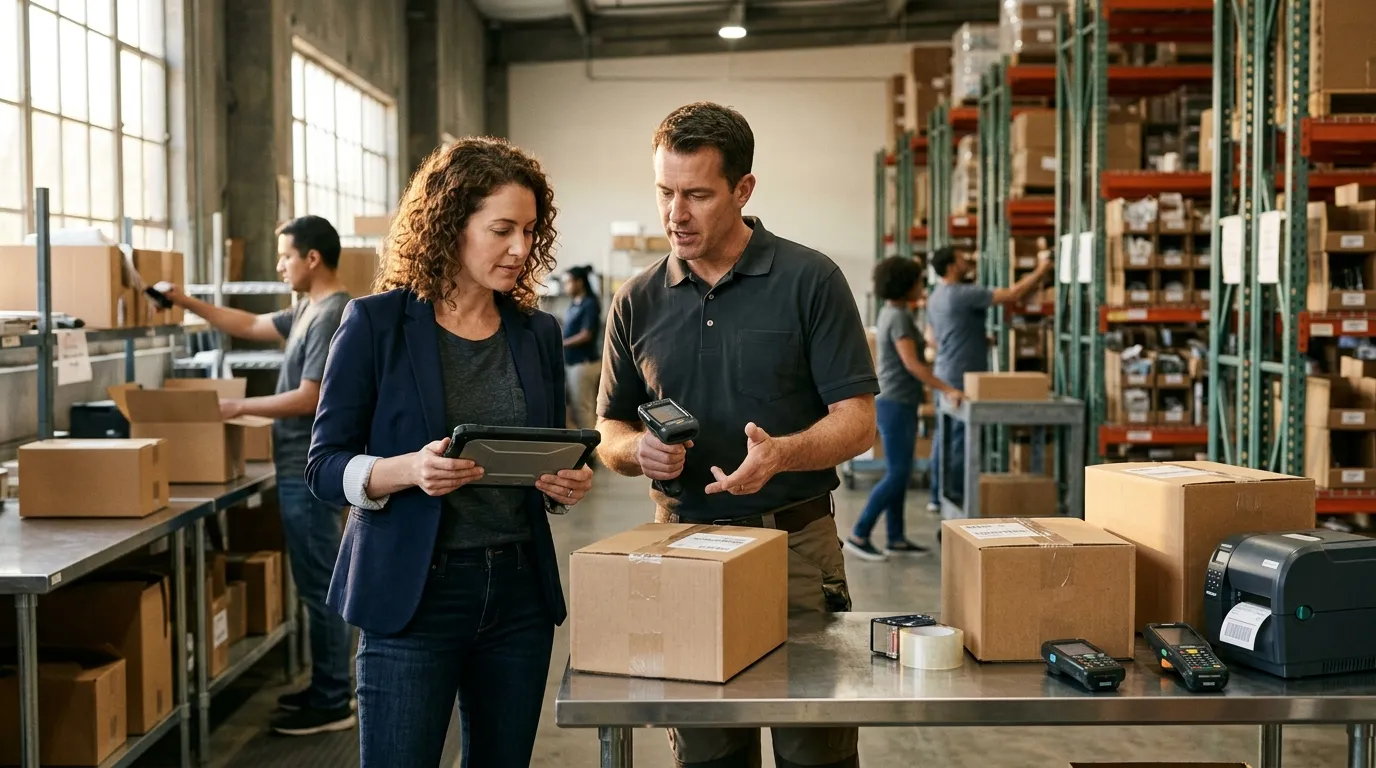
If you’re still mapping the basics of order fulfillment for ecommerce, start there first. 3PL is one way to run fulfillment, not the whole subject.
| Situation | In-house usually works | 3PL usually works better |
|---|---|---|
| Daily order volume | Under 30 orders | 100-200+ orders |
| SKU count | 1-20 simple SKUs | 50+ SKUs, bundles, variants |
| Shipping reach | One country, few zones | U.S., Europe, cross-border orders |
| Team focus | Founder-led packing | Growth, sourcing, customer support |
This advice doesn’t apply to every brand. If you sell handmade products, custom gift sets, frozen goods, hazmat items, or low-volume luxury products where every order needs human review, a standard 3PL may add friction. A hybrid model can work better: keep special orders in-house, outsource the repeatable orders.
For most scaling DTC brands, the break point arrives before the team admits it. The first signal isn’t chaos. It’s a pile of small delays that all feel “temporary.”
3PL Costs And Tradeoffs
A 3PL quote is rarely one clean number. You’re paying for warehouse space, labor, shipping labels, packaging, software, and exception handling. The low pick fee gets attention, but the real number is landed fulfillment cost per shipped order.
Common ecommerce 3PL fees include:
- Receiving: charged by pallet, carton, container, or labor hour.
- Storage: charged by pallet, bin, shelf, or cubic foot.
- Pick and pack: often $2-$5 for a basic first item, then extra for more units.
- Shipping: carrier postage through USPS, UPS, FedEx, DHL, regional carriers, or local postal networks.
- Returns: inspection, restocking, disposal, repacking, or photo checks.
- Projects: kitting, relabeling, inserts, FNSKU work, or inventory counts.
Cheap can get expensive fast. A warehouse with a low pick fee but poor zone coverage may cost more once parcels travel farther. A provider with weak inventory controls may save $0.40 per order, then cost you chargebacks and refunds after a stockout.
At that point, a custom 3pl fulfillment setup should be judged against your actual order history: last 30 days of orders, average units per order, top 20 SKUs, package weights, destination mix, return rate, and current labor cost.
The tradeoff is control. You gain capacity, carrier options, and warehouse discipline. You give up the ability to walk across the room and fix every package yourself. That can feel uncomfortable at first. It’s also the point of outsourcing.
Fulfillment Workflows Inside 3PL
The best 3PL workflows feel plain because the hard parts are handled before the order hits the floor. Product data is clean. Barcodes match. Carton counts are checked. Rules for split shipments, bundles, customs forms, and return grading are written down.
Here’s the practical workflow:
- Inbound receiving: The 3PL checks cartons against the advance shipping notice. Missing labels, mixed SKUs, or surprise overages are flagged before inventory goes live.
- Inventory control: Each SKU needs a scannable location. Cycle counts catch problems before customers buy stock that isn’t there.
- Order routing: The system chooses a warehouse, service level, and carrier based on destination, cutoff time, package size, and delivery promise.
- Returns processing: Returned products are inspected, graded, restocked, quarantined, or disposed of based on your rules.
Returns deserve more attention than most brands give them. The National Retail Federation and Happy Returns projected $890 billion in U.S. retail returns for 2024, and 76% of consumers said free returns were a key factor in where they shop. For apparel, footwear, electronics, and beauty, reverse logistics is part of the customer experience.
A simple example: a customer in Berlin buys two sizes of the same jacket and returns one. If the warehouse can inspect, restock, and update inventory within 48 hours, that returned unit can sell again during the same campaign. If it sits in a “returns later” pile for 19 days, your ads may say sold out while sellable stock is in a tote.
Tiny operational details turn into revenue.
3PL Provider Fit
Don’t choose a 3PL from a logo wall. Choose from operating fit. A beauty brand shipping lightweight bottles has different needs than a home goods brand shipping oversized lamps, and both have different needs than a supplement brand dealing with lot tracking and expiry dates.
Ask for specifics before you sign:
- What is the daily order cutoff time by warehouse?
- What was last month’s order accuracy rate?
- Which carriers are used for Zone 2, Zone 5, and international parcels?
- How are bundles, inserts, subscriptions, and split shipments handled?
- What happens when receiving finds a carton shortage?
- How fast are returns inspected and restocked?
- Can the 3PL support Shopify, Amazon, WooCommerce, TikTok Shop, and wholesale orders from the same inventory pool?
- What fees apply during peak season?
Amazon FBA works well for Amazon-first sellers because it protects Prime eligibility and marketplace speed. A multichannel 3PL works better when you care about branded packaging, DTC customer data, wholesale orders, retail replenishment, and selling outside Amazon.
When you compare top third party logistics companies, don’t rank them by warehouse count alone. A 12-warehouse network with weak account support can be worse than a 2-warehouse setup with clean data, fast issue response, and strong carrier planning.
For 2026, the best shortlist is simple: one provider that fits your current order profile, one that fits your 12-month growth plan, and one backup in case your category has special handling needs.
FAQ
Is 3PL only for large brands?
No. 3PL can work for smaller brands, but it usually makes the most financial sense once daily order volume, SKU count, or returns outgrow founder-led packing. Under 30 simple orders a day, in-house fulfillment may still be cheaper.
How much does ecommerce 3PL cost?
Ecommerce 3PL cost depends on storage, receiving, pick and pack labor, packaging, shipping zones, returns, and special projects. A basic DTC order often includes a pick fee, packaging cost, postage, and monthly storage.
Does 3PL replace Shopify shipping?
A 3PL doesn’t replace Shopify. The 3PL connects to Shopify, receives order data, ships the package, then sends tracking back to the store so the customer and support team can see order status.
Can 3PL handle international orders?
Yes, but cross-border fulfillment needs clean product data, HS codes, customs values, duties, taxes, and carrier rules. A 3PL is most useful internationally when it can match warehouse location, parcel service, and return routing to each market.
Before you choose a provider, export your last 30 days of orders and mark average order weight, top SKUs, return rate, and countries shipped. FlexFulfills can help you use that data to judge whether 3PL fits now, later, or only for part of your fulfillment mix.