
Choose an ecommerce fulfillment company by testing whether it can protect delivery promises, inventory accuracy, packaging quality, and cash flow at your next growth stage. In 2026, that means asking for hard numbers: warehouse locations, daily order capacity, order cutoffs, tracking sync, QC steps, return handling, and how costs change when your Shopify or TikTok Shop volume spikes. The stakes are bigger now. The U.S. Census Bureau reported $326.7 billion in U.S. retail e-commerce sales in Q1 2026, with e-commerce at 16.9% of total retail sales. More orders. Less patience for late shipments.
Ecommerce Fulfillment Company Criteria
- Define average and peak daily order volume.
- Match warehouse nodes to customer regions.
- Require written SLAs for receiving, picking, packing, tracking, and returns.
- Review QC, packaging, and private-label controls.
- Compare total landed cost, not pick fees alone.
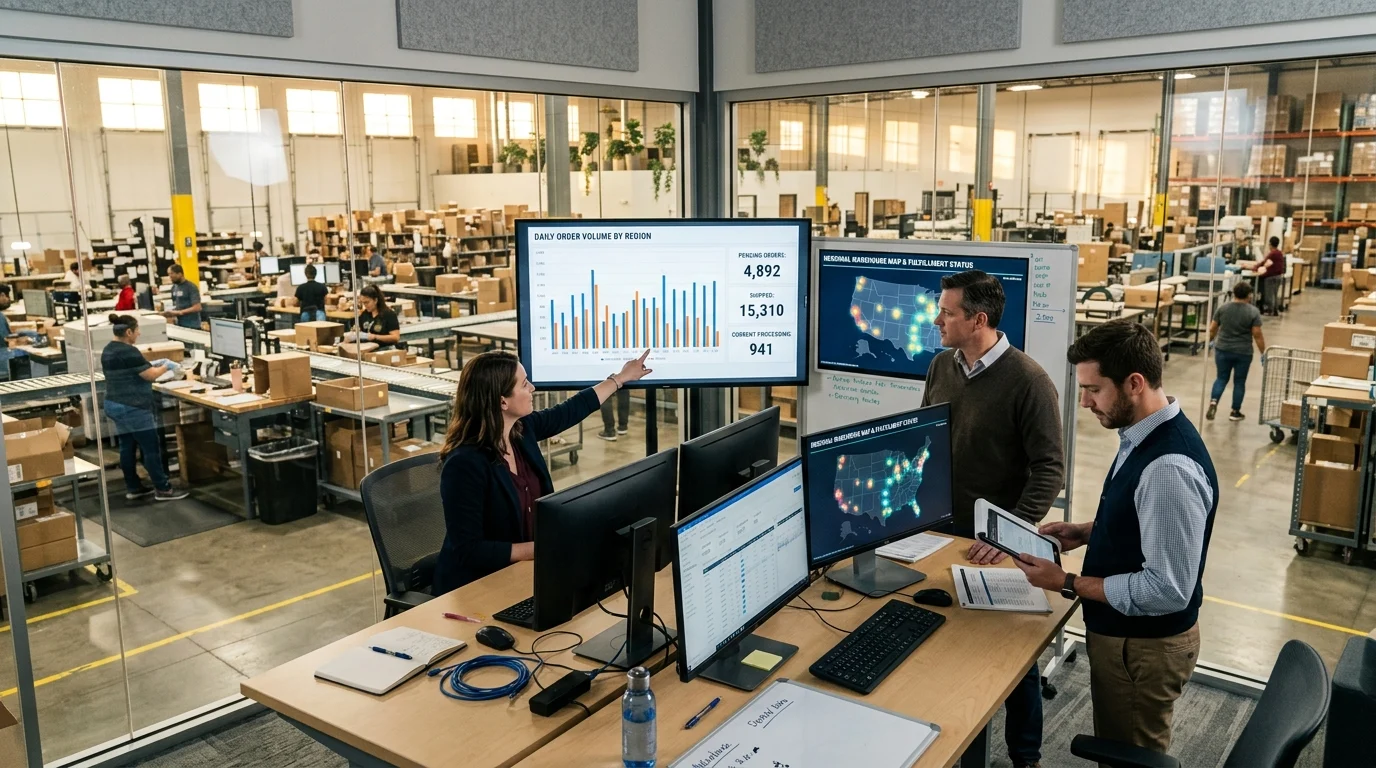
Start with the problem you’re actually trying to solve. A brand shipping 80 orders a day from one SKU doesn’t need the same setup as a TikTok Shop seller jumping from 300 to 2,000 daily orders after one creator post. The first needs accuracy and low friction. The second needs capacity, inventory buffers, carrier fallback, and someone who can answer before the refund requests start.
A strong provider should explain the full flow in plain language: supplier handoff, inbound receiving, SKU labeling, storage, pick and pack, carrier injection, tracking upload, returns, and inventory reporting. If your team still mixes up these steps, read this guide to order fulfillment for ecommerce before you sign a contract. It will make the sales calls sharper.
For brands moving from generic dropshipping to branded delivery, FlexFulfills’ custom 3pl fulfillment model connects sourcing, factory checks, QC, warehousing, packaging, fulfillment, tracking, and returns under one operating process. That matters when the bottleneck starts before the product even reaches a warehouse.
Fulfillment Models Compared
The same fee sheet can describe four very different businesses. Put the model first, then compare pricing.
| Fulfillment model | Works best when | Main tradeoff |
|---|---|---|
| Basic domestic 3PL | You already have inventory landed in the U.S. or Europe | Less help with sourcing, QC, supplier issues, and packaging production |
| Marketplace fulfillment | Most sales happen on Amazon, Walmart, or one marketplace | Less brand control and weaker fit for multi-channel DTC orders |
| China sourcing agent | You need factory access, samples, and lower product cost | Fulfillment, returns, and platform sync may be thin |
| Integrated sourcing-to-fulfillment partner | You sell cross-border, need branded packaging, and want fewer handoffs | Requires tighter planning around inventory and production timelines |
If you’re comparing ShipBob, ShipMonk, Amazon Multi-Channel Fulfillment, Flexport, and China-based fulfillment partners, compare the operating model before the price. A lower storage fee doesn’t help if your supplier misses carton labels, your packaging arrives late, or tracking numbers don’t sync to Shopify on time.
For a broader vendor shortlist, our article on the top third party logistics companies is better for comparing named providers. This article is for the decision process: what to ask, what to reject, and where cost hides.
Costs, SLAs, and Control
Cheap pick fees get expensive when late orders trigger refund requests. Ask for the full cost stack: receiving, storage, pick and pack, packaging material, kitting, inserts, carrier labels, duties, returns, inventory counts, disposal, account management, and special projects. Then ask which costs change at 500, 1,000, and 5,000 orders per day.
The carrier promise needs evidence. A provider should be able to explain delivery ranges by lane, not just say “fast shipping.” FlexFulfills states 5-10 day delivery to the U.S. and Europe, shipping to 50+ countries, and warehouse coverage across China, the U.S., and Europe. For cross-border brands, that range is often more useful than a cheap 15-25 day shipping line that creates customer support drag.
Use this cost check before comparing proposals:
| Cost area | Ask this before signing |
|---|---|
| Storage | Is it billed by pallet, bin, cubic meter, or SKU? |
| Fulfillment | Are inserts, bundles, and branded mailers included? |
| Shipping | Are rates quoted by actual weight, dimensional weight, or blended lane? |
| Returns | Who inspects, restocks, photographs, or disposes of returned items? |
| Exceptions | What happens when an address fails, stock is short, or a SKU is mislabeled? |
One legal point is practical, not theoretical. The Federal Trade Commission says sellers need a reasonable basis for shipment promises, and delays can require customer notice, cancellation rights, and refunds. Your fulfillment partner affects what you can promise on the product page.
Sourcing and Quality Control
This is where scaling brands feel the pain first. You sell a product bundle. The supplier ships the wrong insert. The polybag doesn’t match the suffocation warning requirement. One carton has mixed colors. Your ad account is still spending.
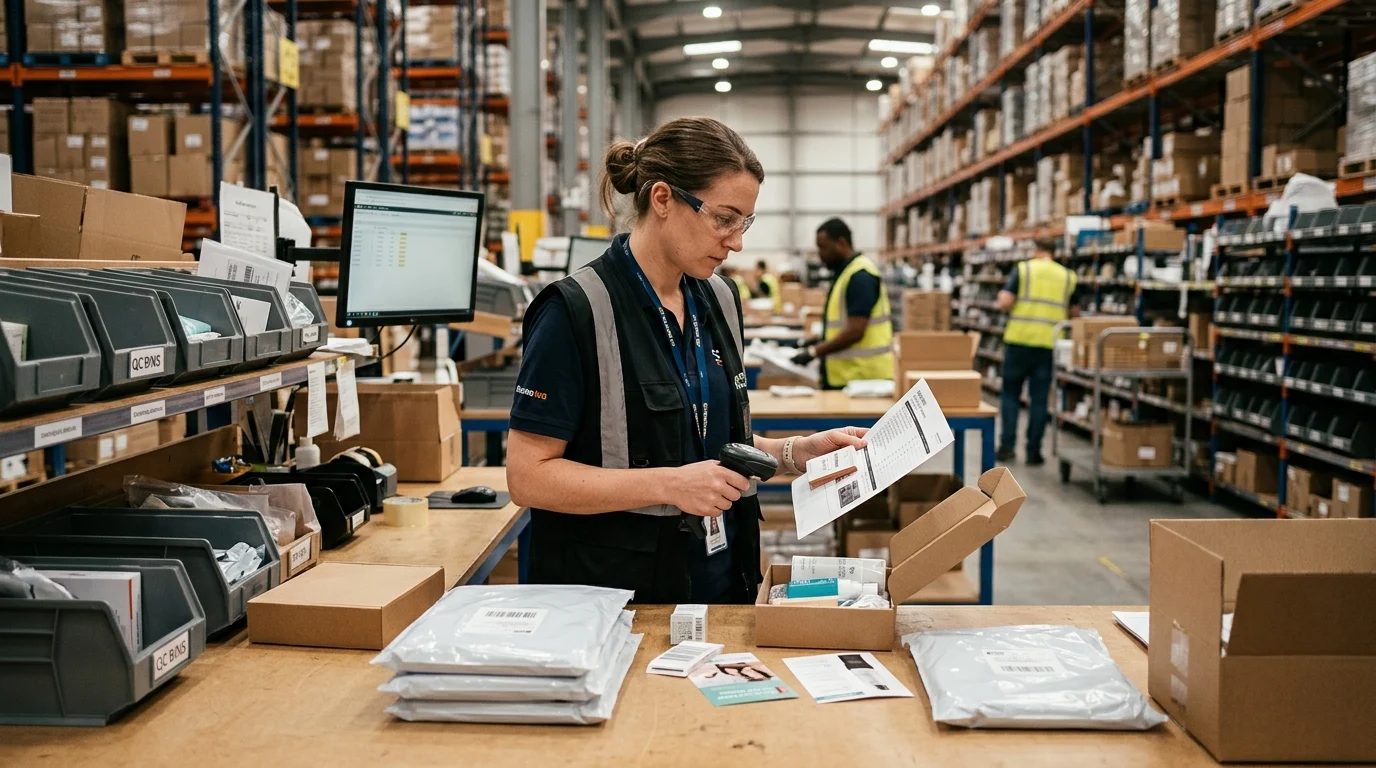
A fulfillment company that only touches the order after inventory arrives can’t fix upstream mistakes. For private-label sellers sourcing from China, ask whether the partner can verify factories, consolidate samples, negotiate costs, inspect goods, confirm packaging, and hold inventory before orders go live. FlexFulfills uses China sourcing access with global fulfillment nodes, so the same team can manage supplier coordination and outbound delivery.
Quality control should be visible. FlexFulfills emphasizes 100% manual product inspection before shipment, plus personalized QC photos or packaging checks when needed. That’s useful for products where a small defect becomes a public review problem: beauty tools, pet accessories, electronics add-ons, apparel, and giftable items with custom packaging.
This advice applies less if you sell a commodity SKU from a stable domestic supplier and don’t need branded packaging. In that case, a straightforward U.S. 3PL may be enough. Keep it simple when simple works.
Questions Before Signing
Ask questions that force an operator to show the floor process. Sales decks are polished. Exception handling tells you how the company really runs.
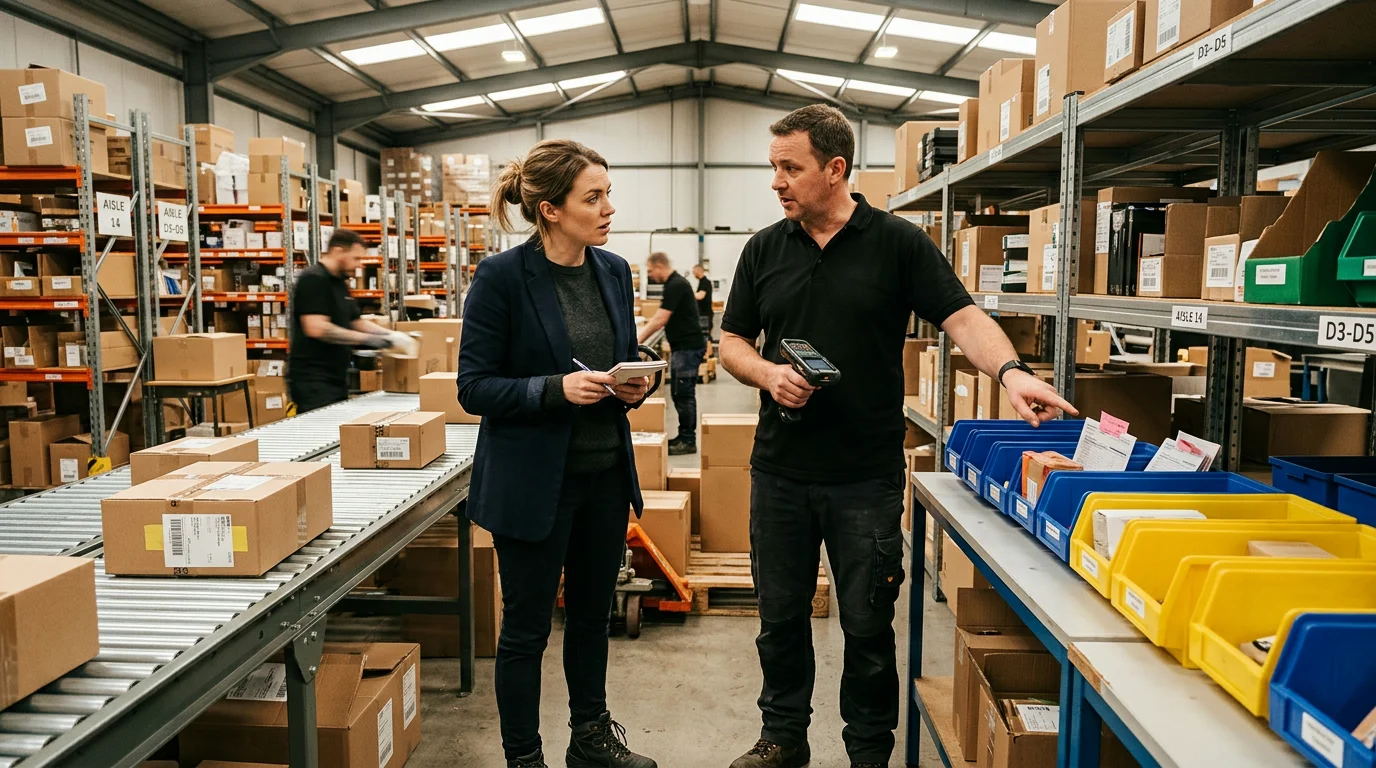
Bring your last 30 days of order data to every sales call: order count, top SKUs, destination countries, return rate, current delivery time, average support tickets, and peak-day volume. Then ask for answers tied to those numbers.
Use this shortlist:
- What daily order volume can your current team handle without adding temporary labor?
- What are your same-day cutoff times by warehouse?
- How do you sync tracking to Shopify, TikTok Shop, Amazon, and WooCommerce?
- What happens when inventory in the system doesn’t match physical stock?
- Can you send QC photos before bulk shipment or before customer dispatch?
- Which carriers do you use for U.S., EU, and rest-of-world lanes?
- Who owns customer-facing delay communication: your team, our team, or both?
- What fees appear only after launch?
The best answer includes numbers, screenshots, process owners, and limits. “We can handle it” isn’t an answer. “We can process 1,500 orders per day from this node with a 2 p.m. local cutoff, and overflow goes to this carrier lane” is an answer.
When FlexFulfills Fits
FlexFulfills fits brands that sell real volume and need control before the order reaches the warehouse. That includes Shopify brands scaling paid ads, TikTok Shop sellers dealing with sudden spikes, dropshipping sellers moving into branded packaging, and private-label teams sourcing from China.
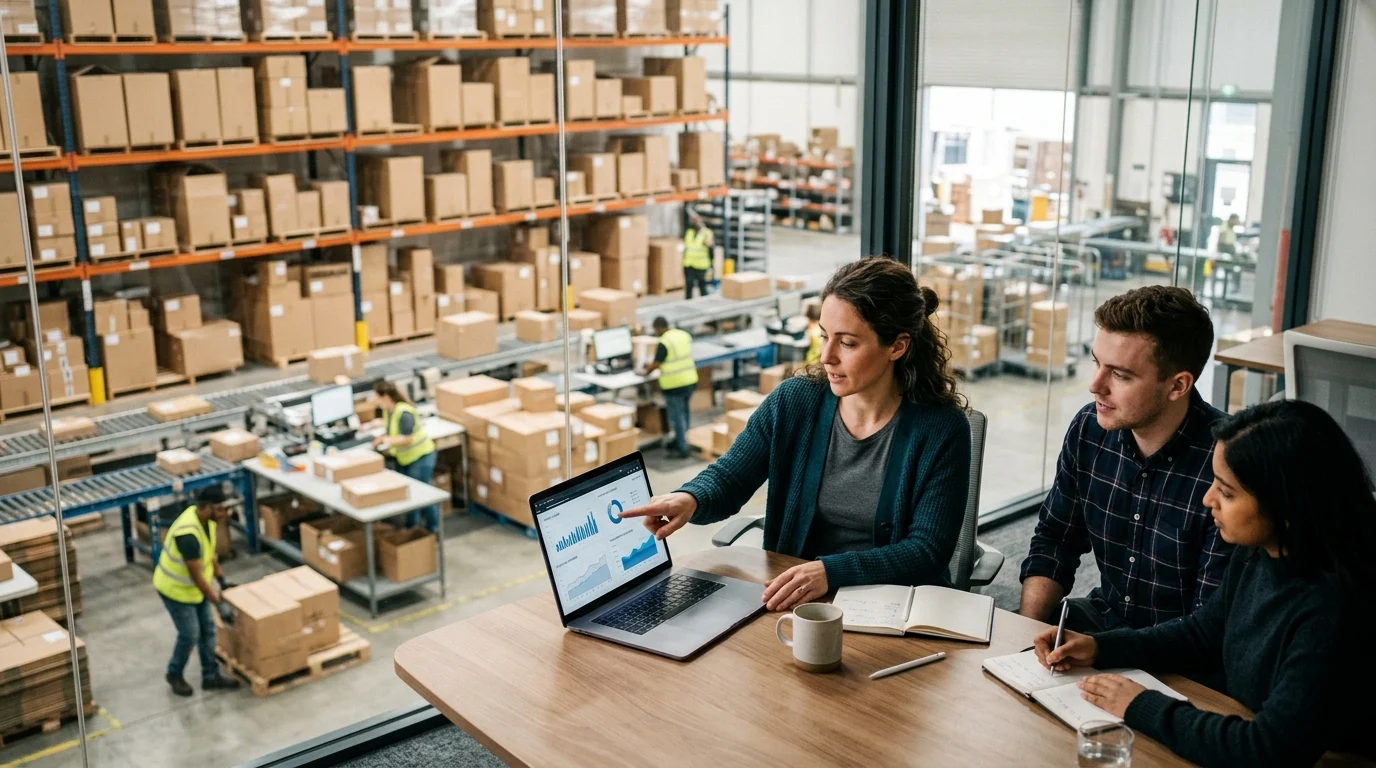
The fit is weaker if you only need pallet storage in one domestic warehouse, don’t need sourcing, don’t need QC, and ship almost everything through Amazon FBA. For that setup, Amazon Multi-Channel Fulfillment or a local 3PL near your main customer base may be simpler.
Where FlexFulfills is strongest: connected operations. Supplier sourcing, factory verification, sample consolidation, QC, warehousing, custom packaging, fulfillment, tracking, returns, and inventory support sit in one chain. Fewer handoffs means fewer places for blame to hide.
FAQ
What is an ecommerce fulfillment company?
An ecommerce fulfillment company stores inventory, picks and packs orders, ships products, updates tracking, and often handles returns. Some providers also support sourcing, quality control, branded packaging, and cross-border logistics.
How much should fulfillment cost?
Costs depend on storage, order volume, packaging, destination, weight, returns, and service level. Compare total landed cost per delivered order, not just the pick-and-pack fee.
Is 3PL better than dropshipping?
A 3PL is better when you need faster shipping, branded packaging, inventory control, and quality checks. Dropshipping can work for testing demand, but it usually gives weaker control over delivery and customer experience.
Can fulfillment companies handle packaging?
Yes, some fulfillment companies handle custom mailers, inserts, bundles, labels, and private-label packaging. Ask whether packaging is produced, stored, checked, and packed by the same operating team.
How fast should ecommerce delivery be?
For competitive DTC brands, 5-10 day delivery is a practical cross-border target for the U.S. and Europe. Domestic delivery can be faster, but only if inventory is already near the customer.
If you’re choosing a fulfillment partner now, send FlexFulfills your last 30 days of orders, top five SKUs, current supplier country, target markets, packaging requirements, and delivery promise. We’ll map the sourcing-to-fulfillment path and show where FlexFulfills can reduce handoffs before your next volume jump.