
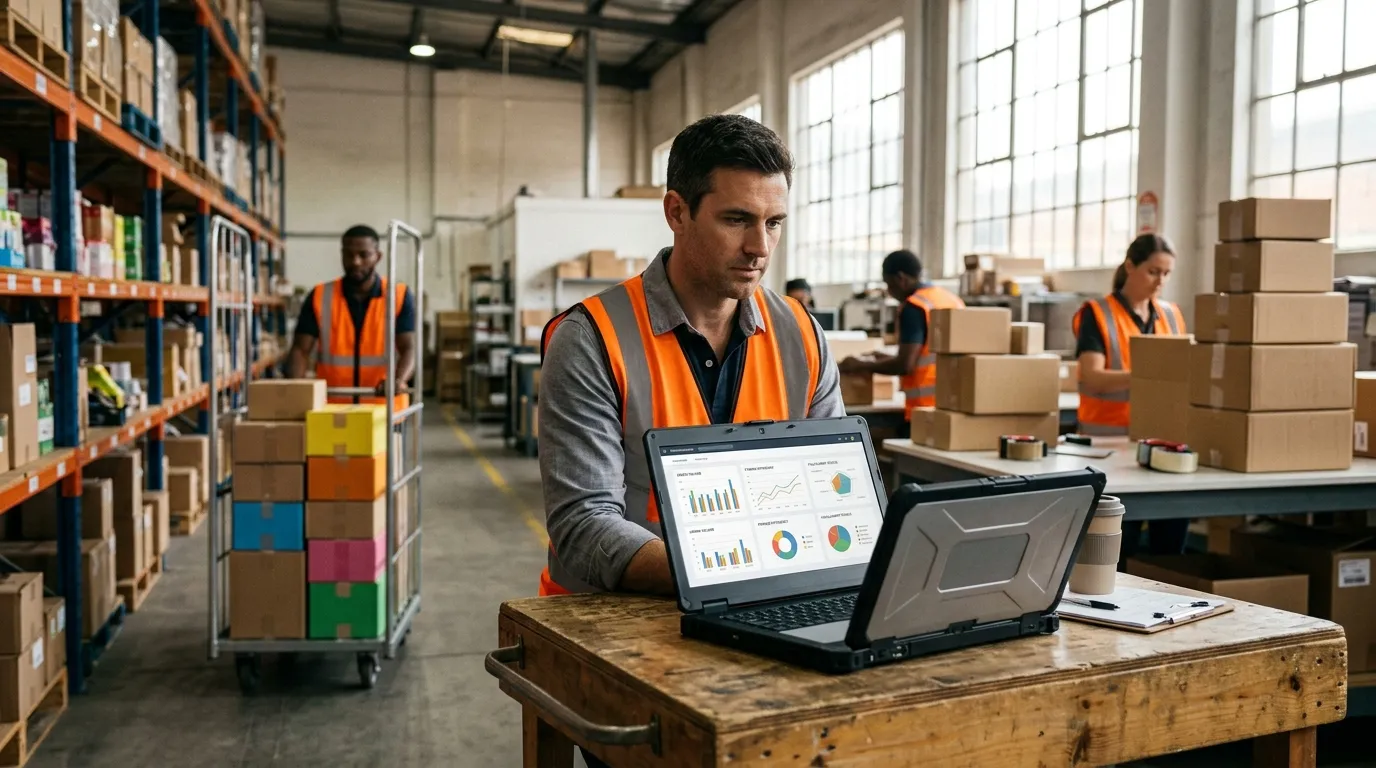
At 200+ orders/day, a third party logistics provider is usually the better fit if your team is missing carrier cutoffs, running out of warehouse space, or spending founder time on packing work instead of growth. Keep fulfillment in-house only if your product needs heavy customization, your order profile is simple, or you already have trained warehouse leadership. Online demand is no side channel: the U.S. Census Bureau reported U.S. retail e-commerce sales of $326.7 billion in Q1 2026, equal to 16.9% of total retail sales.
Third Party Logistics Provider Verdict
At 200+ orders/day, choose a third party logistics provider when daily shipping work is capping growth, error rates are rising, or you need multi-channel delivery without hiring a warehouse team. Keep fulfillment in-house when packaging is highly custom, inventory is low-SKU and predictable, or brand experience depends on hand finishing.
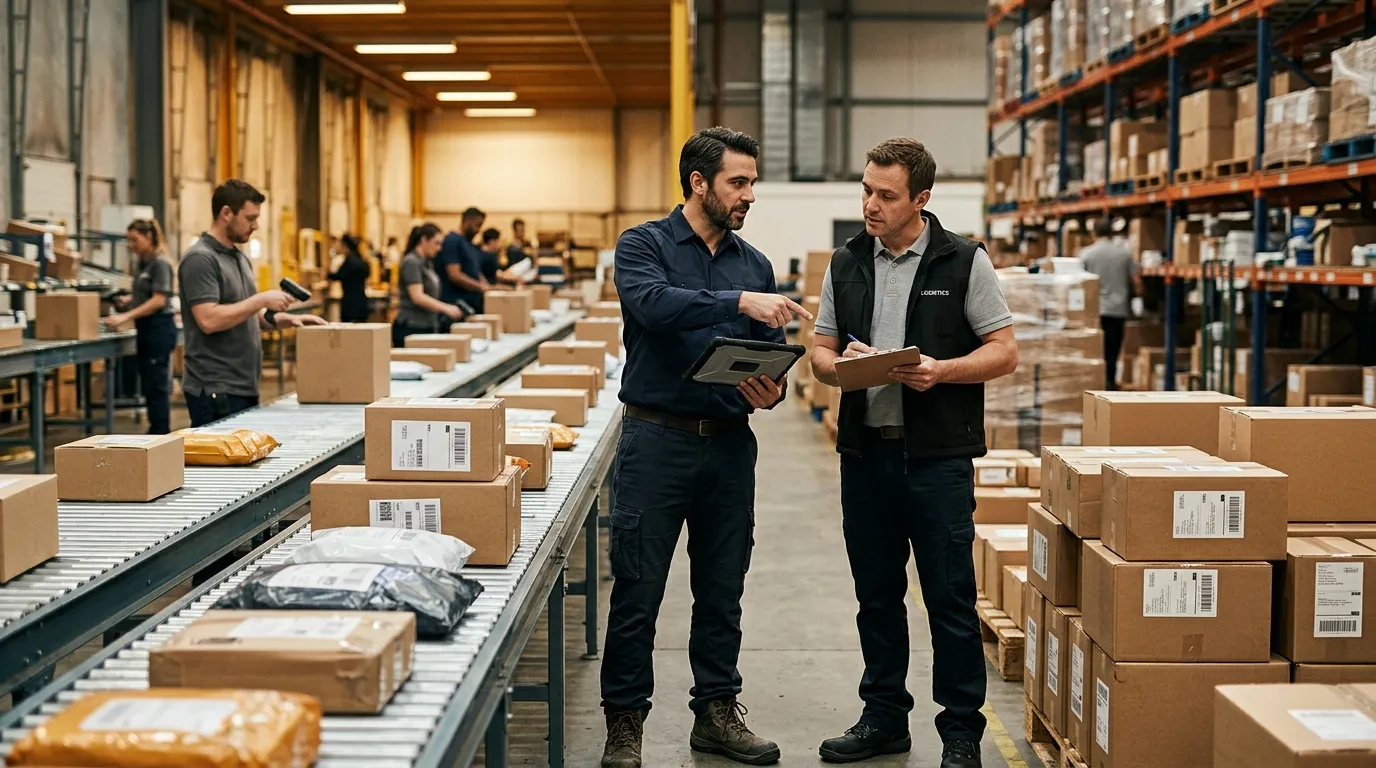
| Your situation at 200+ orders/day | Better fit | Why |
|---|---|---|
| Shopify, Amazon, TikTok Shop, and wholesale orders all run at once | 3PL | One inventory system can feed multiple channels |
| Your team ships late during promotions | 3PL | Labor and packing stations can flex faster |
| Every box needs handwritten notes or complex gift wrapping | In-house | Brand control may outweigh labor cost |
| You ship 20 SKUs with predictable volume | In-house | Simplicity lowers the value of outsourcing |
| You need U.S., Europe, and cross-border coverage | 3PL | Network design matters more than one warehouse lease |
The 200-order mark is awkward. At 50 orders/day, a tight team can pack after lunch and still answer customer tickets. At 500 orders/day, nobody serious debates whether fulfillment needs systems. But at 200, the pain arrives in pieces: one missed FedEx pickup, two inventory mismatches, 41 weekend orders waiting Monday morning.
That’s the point where the choice becomes less about cost per order and more about management attention. If your head of growth is taping cartons at 6:30 p.m., the fulfillment model is already taxing revenue.
Cost Math at 200 Orders
Two hundred orders/day is about 6,000 orders/month if you ship every day, or roughly 4,400 orders/month on a five-day operating week. That volume can support an in-house setup, but only if you count the real cost.
In-house fulfillment costs include warehouse rent, racks, packing benches, barcode scanners, label printers, scales, WMS software, labor, overtime, temp help, insurance, supplies, carrier pickups, damages, shrinkage, and manager time. The sneaky line item is exception handling. One address issue can eat six minutes. Multiply that by 30 cases a day and you just lost three labor hours.
A 3PL quote usually looks cleaner: receiving, storage, pick and pack, packaging, shipping labels, returns, and special projects. Cleaner doesn’t always mean cheaper. A brand with tiny products, low return rates, and simple packaging may beat 3PL pricing in-house for a while.
Use this quick screen before you compare proposals:
- If labor is your biggest cost and volume swings by 2x to 4x during launches, outsourcing starts to make sense.
- If storage is your biggest cost and inventory sits for 120+ days, fix buying first.
- If shipping rates are your biggest cost, compare carrier mix, zones, dimensional weight, and packaging size before judging pick fees.
- If errors are your biggest cost, the winner is the model with better scanning, bin control, and accountability.
When you want outsourced warehousing, pick-pack, inventory sync, B2B prep, and returns in one operating model, FlexFulfills’ custom 3PL fulfillment is built for brands that have outgrown ad hoc packing but still need flexible service.
Control, Speed, and Errors
It’s 4:45 p.m. There are 87 paid orders still unpicked. UPS arrives at 5:15. Customer support is asking why yesterday’s VIP order still has no tracking number. Someone prints labels in batches, someone else grabs inventory from memory, and a third person says, “I think the black medium is in the overflow area.”
That’s how fulfillment errors happen.
In-house fulfillment gives you direct control. You can walk the aisle, touch the product, change packaging today, and catch weird edge cases before they become tickets. For high-touch products like limited-edition beauty kits, luxury accessories, fragile ceramics, or influencer boxes, that control can matter.
A good 3PL gives you different control: system control. Barcode scans, SLA reporting, inventory counts, order status, return disposition, carrier performance, and cut-off discipline. You may not be standing beside the packing bench, but you should be able to see what happened, when it happened, and who touched the order.
If the term still feels fuzzy, the earlier explainer on third party logistics provider definition breaks down the core functions: warehousing, inventory management, picking, packing, shipping, and returns.
The tradeoff is real. With in-house fulfillment, you can fix a single order fast. With 3PL fulfillment, you can prevent more of those single-order problems from happening in the first place.
Global Growth and Returns
Once your brand sells into 50+ countries, fulfillment stops being just “ship the box.” You’re dealing with customs data, country restrictions, landed-cost expectations, return addresses, marketplace rules, and packaging that survives longer routes.
A U.S.-only in-house warehouse can work for a brand selling mostly domestic lightweight goods. It gets harder when 18% of orders go to Europe, Australia, Canada, and the Middle East. International customers don’t care that customs delayed the parcel. They see the brand name on the tracking page.
Returns are the same kind of problem. At small volume, returns are a bin near the office door. At 200+ orders/day, returns need grading rules: restock, refurbish, quarantine, dispose, resend, or hold for customer support. Fashion, footwear, beauty, supplements, and electronics all need different return logic.
A strong 3PL should ask about this before quoting:
- Average daily orders and peak-day orders
- SKU count, variant depth, and lot or expiry rules
- Order split across DTC, Amazon, Walmart Marketplace, and wholesale
- Return rate by product category
- Countries shipped and target delivery time
- Kitting, inserts, branded packaging, and special handling
Once outsourcing is clearly the right path, comparing the top third party logistics companies helps you shortlist providers by warehouse coverage, platform fit, service model, and category experience.
When In-House Still Wins
In-house fulfillment still wins when the warehouse is part of the product experience.

A handmade jewelry brand shipping 220 orders/day may want the founder’s team checking stones, tying ribbon, and packing limited-run drops in a very specific way. A regulated supplement brand may need tighter batch handling than a general 3PL can offer without custom SOPs. A B2B parts seller with 95% repeat orders, five carton sizes, and local freight pickup may not gain much from outsourcing.
There’s also a cash point. If you already own the space, already employ the warehouse team, and already have clean systems, moving to a 3PL just because you crossed 200 orders/day may add complexity. Outsourcing should remove operational drag. If it creates more meetings, more exceptions, and less visibility, the provider is wrong or the timing is wrong.
The test is simple: can your in-house operation hit same-day or next-day shipping, maintain accurate inventory, absorb a 3x promo spike, and keep leadership out of daily packing? If yes, keep it. If no, start modeling 3PL costs now, before holiday volume makes the decision for you.
3PL Selection Checklist
Don’t pick a 3PL from a pretty sales deck. Ask operational questions. Boring questions. The kind that reveal whether the provider can handle your next 12 months, not just your current order count.
Use this checklist before signing:
- Which ecommerce platforms and marketplaces connect natively?
- What is the same-day shipping cutoff by warehouse?
- How are receiving errors, shortages, and overages reported?
- Can inventory be segmented by channel, lot, expiry date, or wholesale account?
- What happens during a 3x order spike?
- Who writes and approves packing SOPs?
- How are returns graded and photographed?
- Which carriers are used for domestic, international, and oversized shipments?
- What fees apply to kitting, inserts, relabeling, storage, and long-term inventory?
- How fast can you get inventory, data, and SOPs out if you leave?
The last question matters. A serious provider will answer it plainly. You’re not planning a breakup on day one; you’re checking whether the operation is mature enough to give you control over your own inventory.
FAQ
Is 3PL cheaper than in-house?
3PL can be cheaper when labor, shipping zones, storage, and error costs are rising faster than order volume. In-house can cost less when products are simple, space is already paid for, and the team ships accurately without overtime.
What order volume needs 3PL?
Most ecommerce brands should evaluate 3PL options around 100 to 300 orders/day. The right trigger is pain, not volume alone: late shipments, inventory errors, space limits, poor carrier rates, or leaders spending time on warehouse work.
Can 3PL handle branded packaging?
Yes, many 3PLs can handle branded boxes, inserts, tissue, stickers, bundles, and subscription kits. Ask for exact SOP examples and fees because custom packaging can slow packing speed and change per-order cost.
Is in-house fulfillment more accurate?
Not automatically. In-house teams can be accurate with barcode scanning, bin locations, cycle counts, and trained staff. A 3PL can be more accurate if it has better systems and clearer accountability than your current setup.
How fast can 3PL start?
A basic 3PL launch can take 2 to 6 weeks after contracts, platform connection, inventory transfer, SOP approval, and test orders. Complex kitting, wholesale routing, international shipping, or returns rules can push onboarding longer.
Before you choose, export your last 30 days of orders and calculate four numbers: orders/day, average shipping cost, fulfillment labor hours, and error or return tickets. If those numbers point to operational strain, FlexFulfills can help you compare in-house fulfillment against a 3PL model built for scaling ecommerce brands.